Definition & Meaning
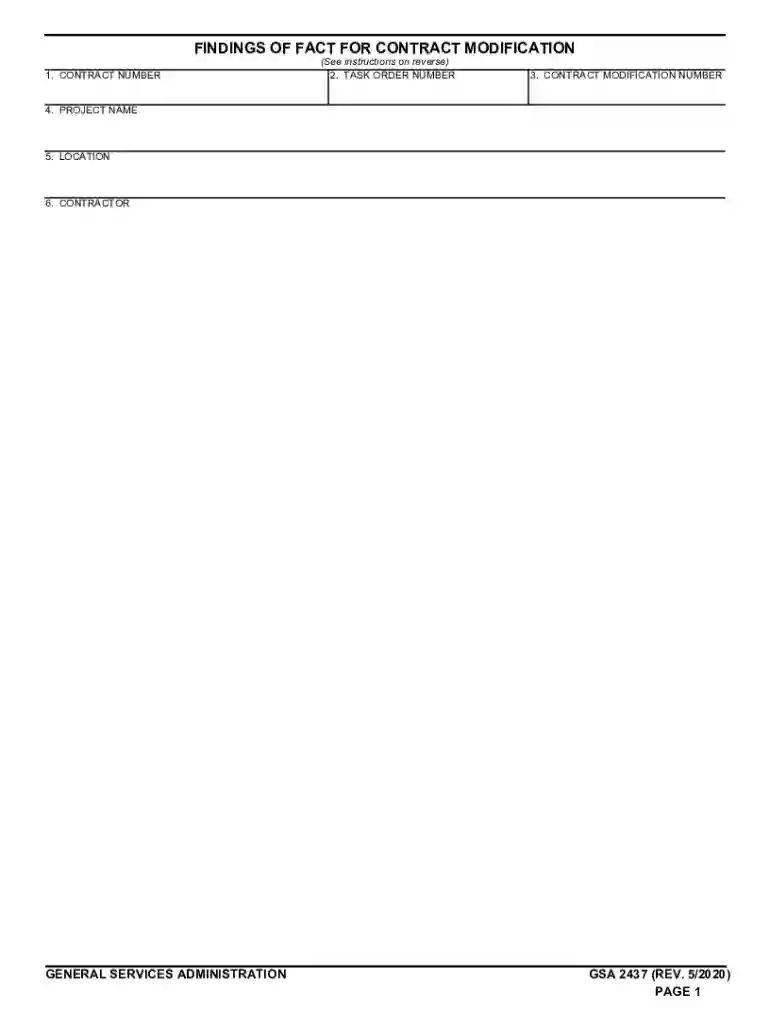
The "Findings of Fact for Contract Modification - GSA" serves as an official document that records necessary information related to modifications in a construction contract managed under the General Services Administration (GSA). This document provides a formal outline of changes, including contract and task order numbers, reasons for the modification, descriptions of the changes, and justifications for extending contractor time. This ensures that all modifications comply with federal regulations and standards, safeguarding legal integrity for both parties involved in the contract.
Comprehensive Details
- Contract and Task Order Numbers: These identifiers are crucial for tracking and referencing specific contracts and their associated tasks within the GSA system.
- Reasons for Modifications: This section outlines the circumstances necessitating changes, such as unforeseen site conditions, design adjustments, or regulatory updates.
- Descriptions of Changes: Detailed explanations of what the modifications entail, including any alterations to scope, specifications, or timeline.
- Justifications for Extending Time: When additional time is required to implement changes, the findings of fact document must provide valid justifications, ensuring mutual agreement and compliance.
How to Use the Findings of Fact for Contract Modification - GSA
Implementing this form effectively involves understanding its role in the contract adjustment process and ensuring accurate completion to maintain legal and operational consistency. Users should carefully document each required element to capture a full account of the contract changes.
Usage Guidelines
- Identify Necessity: Determine the changes needed and why they are imperative for project success.
- Detail All Changes: Explicitly outline all aspects of the modification in the document, ensuring clarity and completeness.
- Compile Justification: Develop a comprehensive justification for the changes to ensure all stakeholders agree with the necessity and scope of modifications.
- Review and Approval: Submit the completed findings of fact for review and approval by authorized GSA officials to formalize the modification.
Steps to Complete the Findings of Fact for Contract Modification - GSA
Filling out this document requires precision and thoroughness to ensure all aspects of the contract modification are clear and legally compliant.
Procedural Steps
- Collect Necessary Information: Gather all contract-related data, including current terms, task details, and reasons for proposed changes.
- Document Changes and Justifications: Clearly articulate the specific changes required, the reasons behind these changes, and any time extensions.
- Review for Accuracy: Double-check all information for accuracy and completeness before submission.
- Submit for Review: Forward the completed document to the appropriate GSA contact for review and approval, including any required supplementary documentation.
Key Elements of the Findings of Fact for Contract Modification - GSA
The document's structure and specific content requirements ensure that all relevant details are captured for effective contract management.
Important Components
- Modification Details: Include a comprehensive explanation of what the modification encompasses, such as scope changes or budget adjustments.
- Rationale for Changes: Provide detailed reasons that justify the necessity of modifications.
- Impact Assessment: Evaluate how the changes will affect project timelines, budgets, and deliverables.
- Stakeholder Agreement: Include statements or signatures from stakeholders indicating their understanding of and agreement with the proposed changes.
Typical Users
- Contractors: To formally propose adjustments and extensions with full explanation and justification.
- Project Managers: To align project execution with adjusted contracts and ensure compliance.
- GSA Officials: To review and authorize requested modifications, ensuring that federal requirements and standards are maintained.
Legal Use of the Findings of Fact for Contract Modification - GSA
This document holds legal significance as it formalizes changes in contractual agreements under federal law. Compliance with regulatory requirements is essential to avoid disputes and potential legal actions.
Important Legal Considerations
- Regulatory Compliance: All modifications must align with federal laws and GSA policies.
- Documentation Validity: Ensure the document contains all necessary information and is executed with legal authority.
- Conflict Resolution: Acts as a formal record to help resolve any disputes regarding contract changes.
Examples of Using the Findings of Fact for Contract Modification - GSA
Several real-world scenarios illustrate the usage of this document to control and implement contract changes effectively.
Practical Applications
- Unforeseen Site Conditions: Changing timelines or budgets due to unexpected site characteristics discovered after project initiation.
- Regulatory Changes: Adjusting project parameters to comply with new regulations introduced during the project lifecycle.
- Design Developments: Modifying contract terms due to design updates from architects or engineers.
Important Terms Related to Findings of Fact for Contract Modification - GSA
Understanding certain terms associated with this document is crucial for effective use.
Key Definitions
- Task Order Number: A unique identifier that relates to specific tasks under a larger contract.
- Modification: Any alteration to the contract’s original terms, including scope, timeline, or budget.
- Justification: A detailed explanation supporting the need for contract changes.
Required Documents
Supporting documents often accompany the findings of fact to provide a comprehensive view of the modification process and its implications.
Necessary Documentation
- Original Contract: A copy of the signed agreement to verify original terms.
- Amendments: Any prior changes to the contract for context.
- Supporting Evidence: Documents such as site reports or regulatory updates that justify modifications.
Through these sections, users of the "Findings of Fact for Contract Modification - GSA" gain a clear understanding of how to address and document contractual changes, ensuring compliance with both GSA and broader federal requirements.