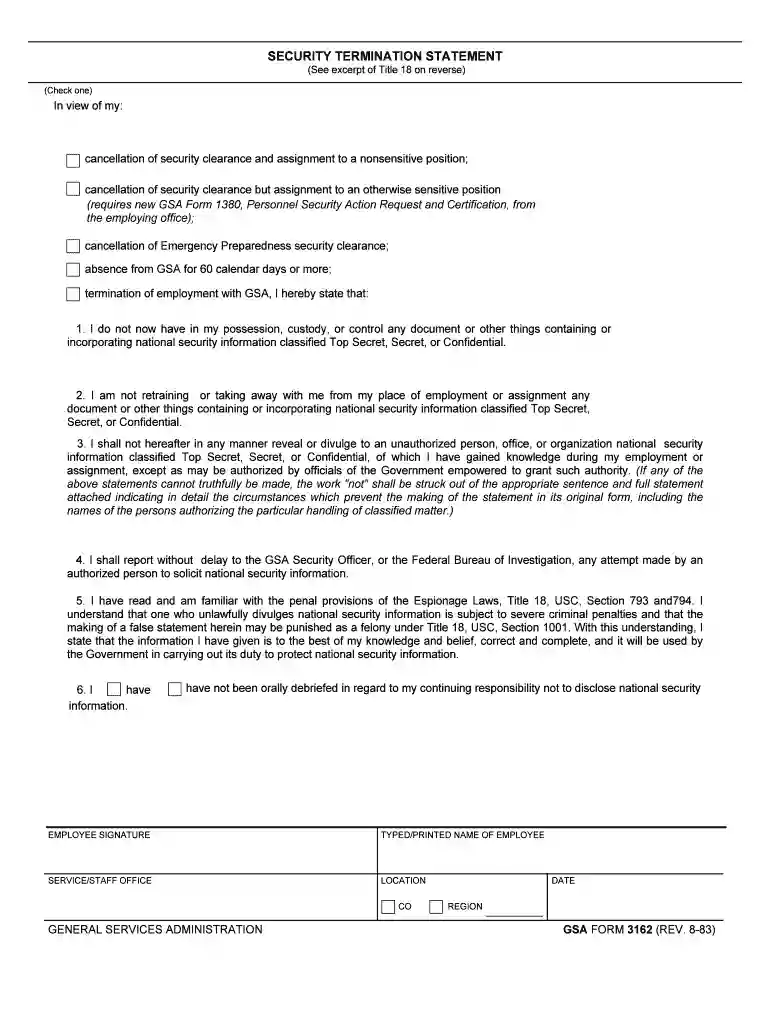
(See excerpt of Title 18 on reverse) 2026

Get Form
(See excerpt of Title 18 on reverse) Preview on Page 1

Here's how it works

01. Edit your form online
Type text, add images, blackout confidential details, add comments, highlights and more.

02. Sign it in a few clicks
Draw your signature, type it, upload its image, or use your mobile device as a signature pad.

03. Share your form with others
Send it via email, link, or fax. You can also download it, export it or print it out.

Definition & Meaning

The phrase "(See excerpt of Title 18 on reverse)" typically refers to a section of a document where legal information, particularly an excerpt from Title 18 of the United States Code, is provided for reference. Title 18 is primarily concerned with crimes and criminal procedure, encompassing various federal criminal laws.


Importance of Title 18

  • Legal Framework: Title 18 provides the framework for criminal offenses, outlining the legal parameters for acts deemed illegal at the federal level.
  • Critical for Compliance: Understanding specific sections can be crucial for compliance with federal laws, especially for entities dealing with legal processes or national security.
  • Usage in Forms: This reference is commonly included in forms to inform the signatory of legal implications or responsibilities related to the document.

Relevance in Security Termination Statements

  • National Security: In contexts like security termination statements, Title 18 may address laws related to espionage, unauthorized disclosure of classified information, and penalties for such actions.
  • Informational Guide: The excerpt ensures that individuals are aware of federal statutes that may affect their obligations and behavior following employment termination.

Key Elements of the (See excerpt of Title 18 on reverse)

Typical Inclusions

  1. Legal Penalties: Outlines potential repercussions for non-compliance with related statutes.
  2. Security Obligations: Information about continued confidentiality requirements post-employment.
  3. Reporting Obligations: Directions for reporting unauthorized solicitations or disclosures.

Example Components from Title 18

  • Espionage: Sections detailing acts of espionage and related offenses.
  • Confidentiality: Guidelines for maintaining the confidentiality of classified information.
  • Legal Definitions: Definitions of key legal terms and concepts relevant to security clearance.

Steps to Complete the (See excerpt of Title 18 on reverse)

General Process

  1. Review Excerpt: Thoroughly read the provided excerpt to understand legal obligations.
  2. Acknowledge Understanding: Many forms require individuals to affirm their understanding of the legal elements involved.
  3. Sign and Date: Sign the document to acknowledge receipt and comprehension of the Title 18 excerpt.

Special Considerations

  • Seek Legal Advice: When in doubt, consult with a legal professional to interpret specific legal language and its implications.
  • Ensure Comprehension: Make sure the signatory fully understands their duties and potential legal consequences outlined in the document.

Important Terms Related to (See excerpt of Title 18 on reverse)

Common Legal Terms

  • Classified Information: Data or material deemed sensitive for national security, requiring limited access.
  • Unauthorized Disclosure: Releasing or communicating information without official permission, typically subject to legal penalties.
  • Security Clearance: A designation granted to individuals allowing them access to classified information based on their eligibility and need-to-know.

Legal Implications

  • Consequences: Provides an understanding of both civil and criminal penalties possible under federal law.
  • Federal Compliance: Stresses the importance of adhering to federal regulations for individuals exiting positions with access to sensitive information.

Legal Use of the (See excerpt of Title 18 on reverse)

Application in Employment Termination

  • Employer Practices: Employers may include this reference to reinforce the legal importance and serious nature of information security.
  • Employee Responsibilities: Outlines responsibilities related to information handling post-employment.

Case Studies

  • Real-world Scenarios: Examples of cases where former employees faced legal action due to breaches outlined in Title 18.
  • Legal Precedents: Examination of court decisions that highlight the significance of Title 18 in federal jurisdiction.

Who Typically Uses the (See excerpt of Title 18 on reverse)

decoration image ratings of Dochub

Common Users

  1. Government Employees: Individuals working with or having access to classified national security information.
  2. Contractors: Entities engaged in government contracts that involve sensitive data.
  3. Legal Professionals: Lawyers advising clients regarding compliance with federal laws.
decoration image

Organizational Use

  • Security Departments: For informing staff about security measures and federal legal requirements.
  • Human Resources: Utilized during the offboarding process to legally protect the organization and ensure compliance.

Penalties for Non-Compliance

Legal Repercussions

  • Criminal Charges: Violations could lead to charges such as espionage, resulting in fines or imprisonment.
  • Civil Liabilities: In some cases, individuals may face civil action or be liable for damages due to unauthorized disclosures.

Deterrence

  • Strict Penalties: The potential for severe penalties serves as a deterrent against non-compliance with federal security laws.
  • Enforcement: Government agencies vigorously enforce these laws to protect national security interests.

State-Specific Rules for the (See excerpt of Title 18 on reverse)

Variations by State

  • State Adaptations: Although Title 18 is federal law, some states may have additional regulations that mirror or augment these measures, especially in employment-related contexts.
  • Local Implementation: Differences in how federal laws are executed or emphasized at the state level, impacting document completion or understanding.

Examples

  • State-specific Documentation: Some states may require additional forms or acknowledgments to complement the federal requirements described in Title 18 excerpts.
  • Jurisdictional Differences: Illustrative cases where federal laws intersect with state regulations, affecting application and enforcement.
be ready to get more

Complete this form in 5 minutes or less

Get form

Got questions?

We have answers to the most popular questions from our customers. If you can't find an answer to your question, please contact us.
Contact us
Chapter 113B of Title 18 of the U.S. Code identifies certain federal criminal offenses under the heading of terrorism.12 Some of the provisions in Chapter 113B expressly relate to international conduct or foreign terrorist organizations, but many others can apply to conduct with either an international or domestic
Title 18 consists of five parts. Four of these, Parts I through IV, concern crimes, criminal procedure, prisons and prisoners, and juvenile delinquency, respectively, and were included in the original title when it was enacted in 1948.
US Code Title 18 Section 113. (a) Whoever, within the special maritime and territorial jurisdiction of the United States, is guilty of an assault shall be punished as follows: (1) Assault with intent to commit , by imprisonment for not more than twenty years.

Security and compliance

At DocHub, your data security is our priority. We follow HIPAA, SOC2, GDPR, and other standards, so you can work on your documents with confidence.
Learn more
ccpa2
pci-dss
gdpr-compliance
hipaa
soc-compliance