
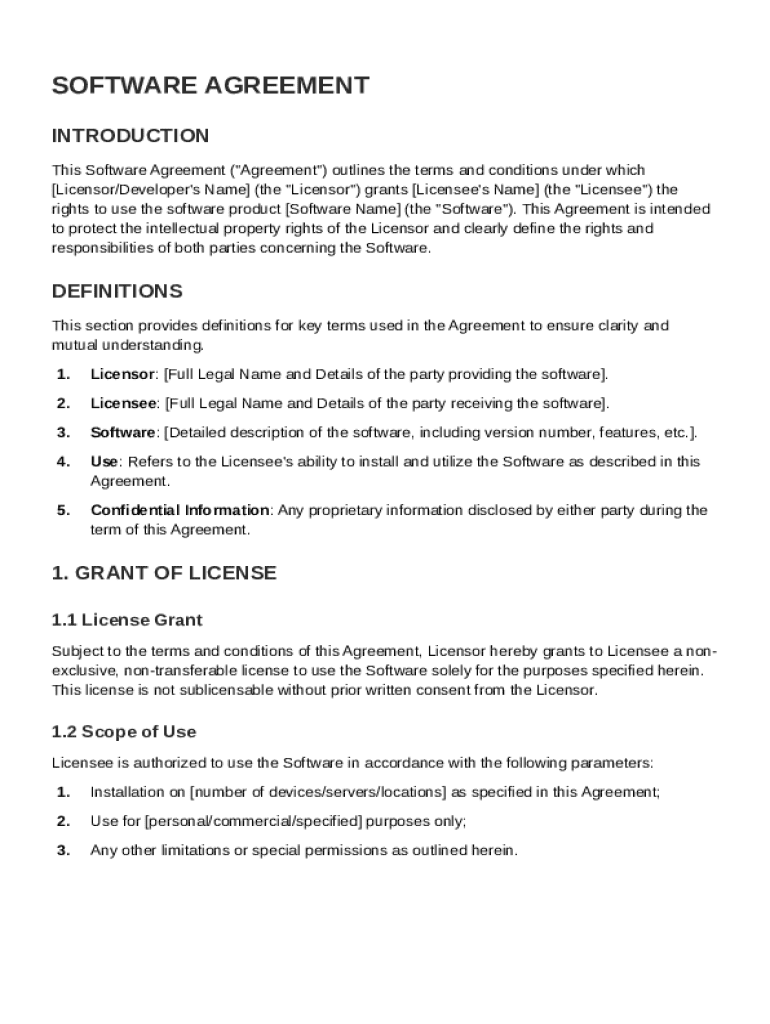







Definition and Purpose of the Software Agreement Template
The Software Agreement Template is a legal document that delineates the terms and conditions under which a Licensor grants a Licensee rights to utilize a specific software product. This template serves as a foundational guideline for establishing clear legal and operational expectations between the parties involved. It encompasses a wide range of areas, including payment terms, intellectual property rights, confidentiality protocols, warranties, and dispute resolution procedures. The primary objective is to safeguard the interests of the Licensor by ensuring their intellectual property is protected while granting limited usage rights to the Licensee.
- Key Terms: The template defines crucial terminologies such as 'Licensor,' 'Licensee,' and 'Software Product,' which establish the context of the agreement.
- Rights and Obligations: It clarifies the responsibilities and privileges of both parties, outlining what each can expect from the other within the contractual relationship.
How to Use the Software Agreement Template
Utilizing the Software Agreement Template effectively involves several key steps designed to customize the document to suit the specific needs of the involved parties while maintaining compliance with legal standards.
- Review: Begin by thoroughly examining the template to understand its structure and standard provisions.
- Customization: Tailor the template by adding specific details about the software product, such as its name, version, and unique functionality.
- Input Party Details: Fill in the names and contact information of the Licensor and Licensee.
- Specify Terms: Clearly specify the license terms, including duration, renewal options, and any usage restrictions.
- Consult Legal Counsel: Although templates provide a good starting point, it's advisable to consult with legal professionals to ensure the agreement is comprehensive and legally sound.
- Final Review and Sign: Both parties should review the final document to confirm accuracy before signing, ensuring all terms are mutually agreed upon.
Key Elements of the Software Agreement Template
The Software Agreement Template comprises several critical components that form the backbone of the contractual arrangement.
- Non-Exclusive License: Most templates offer a non-exclusive license, allowing the Licensor to license the software to multiple entities while granting the Licensee usage rights.
- Intellectual Property Rights: Clearly states that all intellectual property rights remain with the Licensor, even if minor modifications are permitted.
- Confidentiality: Includes clauses that restrict the Licensee from disclosing proprietary information about the software.
- Payment Terms: Outlines the financial obligations of the Licensee, including pricing, payment schedules, and any penalties for late payments.
- Warranties and Liability: Covers any express or implied warranties and delineates the limits of liability for both parties.
Steps to Complete the Software Agreement Template
Successfully completing the Software Agreement Template involves a detailed and methodical approach:
- Identify Parties: Clearly state the full legal names and details of the Licensor and Licensee.
- Describe Software: Provide a thorough description of the software being licensed, including its functionality and purpose.
- Set License Scope: Define the scope of the license, including any geographical or user limitations.
- Outline Payment Details: Specify the payment terms and conditions, including the currency and method of payments.
- Include Confidentiality Clauses: Insert clauses regarding the handling and protection of sensitive information.
- Finalize and Sign: Ensure that both parties have reviewed, understood, and agreed to the terms before affixing their signatures.
Legal Use of the Software Agreement Template
When employing the Software Agreement Template, it is crucial to adhere to legal standards to ensure its enforceability and validity.
- Compliance with Laws: The agreement should comply with local, state, and federal laws applicable to software and intellectual property rights.
- Document Retention: Keep a signed copy for record-keeping purposes, ensuring that it can be referenced in case of disputes.
- Acknowledgment of Terms: Both parties should acknowledge and accept all terms, which is typically done through signatures and dates.
- Use in Disputes: The agreement can serve as vital evidence in legal proceedings involving breaches or other disagreements.
Important Terms Related to Software Agreement Template
Several critical terms are frequently encountered in a Software Agreement Template, and understanding them is key to utilizing the agreement effectively:
- Licensor: The party that owns the software rights and licenses it to another party.
- Licensee: The entity granted rights to use the software under specific terms.
- Non-Exclusive License: A license that allows the Licensor to license the same software to others.
- Intellectual Property: Refers to creations of the mind, including inventions, literary works, designs, and software, protected by law.
- Confidential Information: Any information considered proprietary or sensitive, which the Licensee must protect from unauthorized disclosure.
Who Typically Uses the Software Agreement Template
The Software Agreement Template is a versatile document employed by a diverse range of entities across various industries.
- Software Publishers: Companies that develop and sell software products, ensuring their rights and interests are protected.
- Corporations: Businesses that acquire software for operational needs and must outline usage conditions.
- Startups: Emerging companies that rely on bespoke or widely available software without hefty development costs.
- Educational Institutions: Organizations that use educational software under specific licensing agreements.
- Non-Profits: Entities that need structured agreements to use software for charitable and operational activities.


State-Specific Rules for the Software Agreement Template
While the Software Agreement Template is generally applicable across different jurisdictions, certain states in the U.S. might impose unique requirements or considerations.
- California: Requires clear language on consumer data privacy and protection under its stringent privacy laws.
- New York: May include additional clauses to address specific Intellectual Property rights unique to New York law.
- Texas: Could require specific disclaimers relating to warranties and limited liability.
Understanding and integrating state-specific rules into the Software Agreement Template can help ensure its compliance and enforceability across different legal landscapes.




