01. Edit your form online
Type text, add images, blackout confidential details, add comments, highlights and more.

Type text, add images, blackout confidential details, add comments, highlights and more.

Draw your signature, type it, upload its image, or use your mobile device as a signature pad.

Send it via email, link, or fax. You can also download it, export it or print it out.
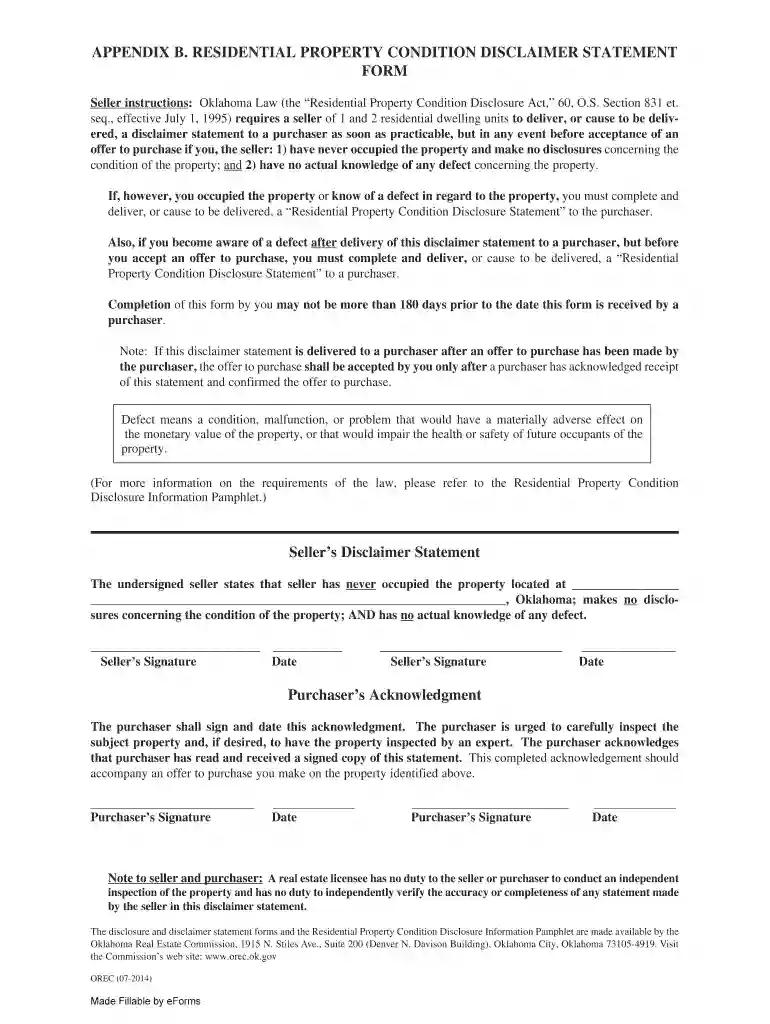
The Oklahoma Property Condition Disclaimer Statement is a vital element of the Oklahoma Residential Property Condition Disclosure Act. This document is specifically designed to inform potential buyers about the condition of the property they are interested in purchasing. If the seller has never occupied the property and claims no knowledge of any property defects, this statement allows them to disclaim responsibility for providing detailed property condition information. It is essential for both sellers and buyers to understand how this document operates within the larger context of real estate transactions.
Using the Oklahoma Property Condition Disclaimer Statement involves several specific steps. Sellers should complete and provide this form before accepting any offers if they choose to disclaim property condition knowledge. To do this correctly, sellers should:
The key elements of the Oklahoma Property Condition Disclaimer Statement include:
Completing this disclaimer statement involves a few critical steps:
The legal use of this disclaimer is grounded in compliance with the Oklahoma Residential Property Condition Disclosure Act. Sellers who have not occupied the property and are unaware of defects can use this form legally to limit their disclosure obligations. However, falsely claiming lack of knowledge when facts exist can lead to potential legal ramifications, emphasizing the importance of honest completion.
In Oklahoma, specific state rules govern the use of this disclaimer statement:
Consider the case of a real estate investor who owns multiple rental properties. If they decide to sell a property that they have never personally lived in, they can use the disclaimer statement to simplify the transaction. The investor completes the disclaimer, acknowledging the lack of personal knowledge about the property's condition, and provides it to a potential buyer, who acknowledges receipt and then proceeds with an independent inspection.
We've got more versions of the Oklahoma Property Condition Disclaimer Statement form. Select the right Oklahoma Property Condition Disclaimer Statement version from the list and start editing it straight away!
| Versions | Form popularity | Fillable & printable |
|---|---|---|
| 2014 | 4.8 Satisfied (75 Votes) |
At DocHub, your data security is our priority. We follow HIPAA, SOC2, GDPR, and other standards, so you can work on your documents with confidence.