
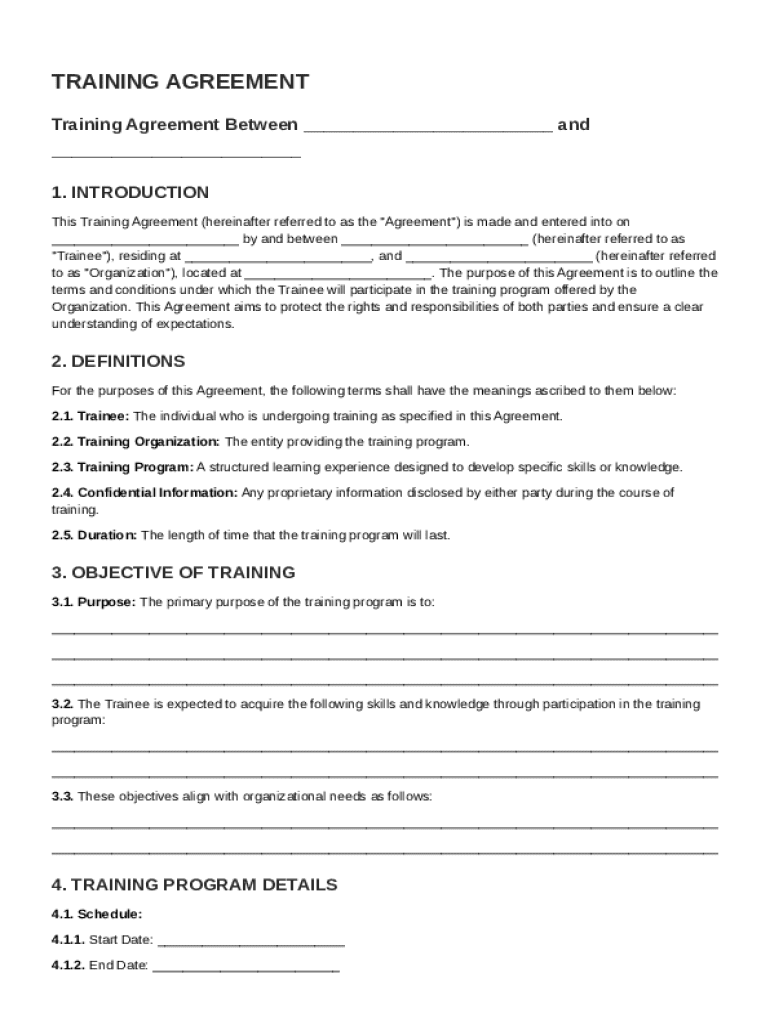







Definition and Scope of a Training Agreement Template
A Training Agreement Template serves as a formal document that outlines the terms, conditions, and obligations of both the Trainee and the Organization during a training program. This document includes crucial elements such as:
- Definitions and Objectives: Clarifying the purpose and goals of the training helps ensure both parties align on expectations.
- Parties Involved: Clearly identifies the organization providing the training and the individual trainee.
- Roles and Responsibilities: Details the obligations and duties of both the trainee and the organization during the training period.
This agreement aims to protect the rights of both parties while ensuring mutual understanding and commitment to the program's success.
Key Components of the Training Agreement Template
The Training Agreement Template is made up of several essential sections designed to cover all mandatory aspects of a training program:
- Confidentiality Clause: Protects sensitive information disclosed during training.
- Compensation Details: Outlines any financial compensation or benefits provided to the trainee.
- Termination Conditions: Specifies the terms under which the agreement may be ended prematurely by either party.
- Dispute Resolution: Highlights the process for resolving disagreements during the training.
These components ensure comprehensive coverage of all potential scenarios that may arise during the training period.
Utilization and Practical Applications
Organizations and individuals alike benefit from using a Training Agreement Template to delineate the framework of training activities clearly:
- Ensures Clarity: By specifying terms, both parties understand their roles and expectations, reducing the likelihood of disputes.
- Facilitates Record-Keeping: Acts as an official documentation of the training relationship.
- Promotes Transparency: Offers explicit details regarding training objectives, enhancing trust and reliability.
Utilization of this template is fundamental for any formal training process to be documented and understood.
Steps to Effectively Complete the Training Agreement Template
Completing the Training Agreement Template involves several key steps:
- Identify Parties: Clearly state the names of the trainee and the organization.
- Define Training Content: Detail the objectives and outline of the training program.
- Outline Responsibilities: Specify duties, schedules, and expectations for each party.
- Detail Compensation: Provide specifics on any remuneration or benefits.
- Security Measures: Include confidentiality agreements if training involves sensitive information.
- Legal Review: Ensure the legal compliance of all terms with applicable laws.
Each step ensures the template accurately reflects the intentions and obligations of the involved parties.
Who Uses the Training Agreement Template
The Training Agreement Template is commonly used by a variety of professionals and organizations:
- Human Resources Departments: To facilitate employee training and development programs.
- Educational Institutions: For internships or practical training programs involving students.
- Corporate Trainers: As part of structured onboarding programs for new hires.
This template is a versatile tool for those engaged in formalized training arrangements to ensure all necessary conditions are met.
Legal Implications and Compliance
Using a Training Agreement Template entails several legal considerations:
- Governing Law: The agreement should conform to applicable state or federal laws where the training occurs.
- Binding Nature: Once signed, the document becomes a legal instrument that enforces the terms agreed upon.
- Dispute Resolution: Provides a clear process for resolving conflicts, potentially mitigating costly legal disputes.
Legal compliance ensures both parties are protected and reduces potential risks associated with the training relationship.
Examples and Case Studies
Real-world applications of the Training Agreement Template demonstrate its versatility:
- Corporate Training Programs: Used by Fortune 500 companies to standardize employee onboarding and professional development.
- Apprenticeship Models: Employed by trade unions to formalize training for new apprentices, ensuring consistency and quality.
- Internship Arrangements: Utilized by universities to define student participation in external training environments.
These examples highlight the template's adaptability to various training contexts and needs.
State-Specific Regulations and Adjustments
Navigating state-specific rules is vital when implementing a Training Agreement Template:
- State Labor Laws: Varying regulations may affect aspects of compensation, working hours, and legal obligations.
- Licensing and Accreditation Requirements: Certain states may impose additional criteria for trainers or programs to be authorized.
- Confidentiality and Non-Compete Clauses: Enforceability might differ based on jurisdiction.
Understanding local regulatory requirements ensures that the template meets legal standards in each specific location.
Digital Compatibility and Usage
For seamless integration into digital workflows, understanding digital compatibility is crucial:
- Online Platforms: Ensures the template works effectively with platforms like DocHub, allowing for easy editing and sharing.
- Cloud Storage Integration: Facilitates storing and managing completed agreements using services like Google Drive or Dropbox.
- Electronic Signatures: Legally binding signature options provide ease of use and assurance of authenticity.
Incorporating digital tools enhances workflow efficiency and security while utilizing the template.




