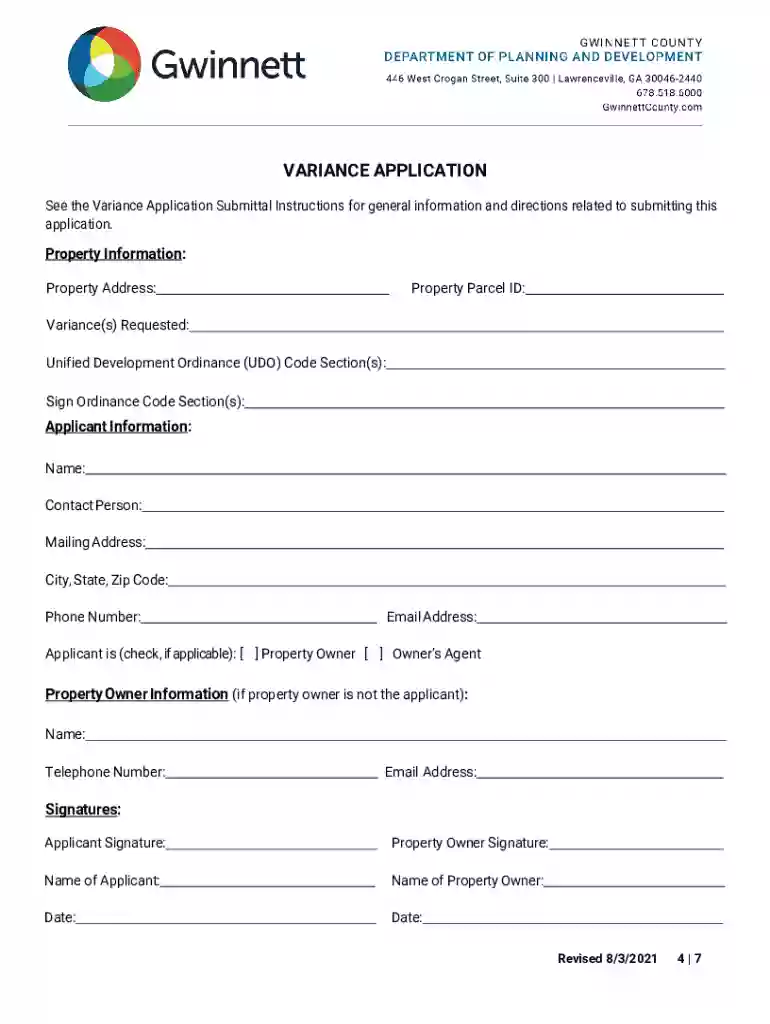
Variance Application Submittal BLM Solar Energy Program 2026

Get Form
Variance Application Submittal BLM Solar Energy Program Preview on Page 1

Here's how it works

01. Edit your form online
Type text, add images, blackout confidential details, add comments, highlights and more.

02. Sign it in a few clicks
Draw your signature, type it, upload its image, or use your mobile device as a signature pad.

03. Share your form with others
Send it via email, link, or fax. You can also download it, export it or print it out.

Definition and Purpose of Variance Application Submittal BLM Solar Energy Program

The Variance Application Submittal for the Bureau of Land Management (BLM) Solar Energy Program is a structured request process enabling applicants to deviate from standard solar energy regulations on public lands. This application serves as a formal petition for alterations in land use guidelines specifically within the framework of solar energy projects managed by the BLM. The application process is critical in ensuring that proposed solar projects comply with environmental and planning mandates while accommodating unique project needs that might not fit within the existing regulatory framework.

Applicants often seek variances to address site-specific challenges that prevent full compliance with zoning or environmental regulations. For instance, geographic anomalies or unique ecological considerations may necessitate a departure from typical land use stipulations. The application allows stakeholders to present their case for variance and demonstrate how they plan to mitigate potential environmental impacts while contributing to sustainable energy goals.

Steps to Complete the Variance Application Submittal

Successfully completing the Variance Application for the BLM Solar Energy Program involves several precise steps designed to ensure comprehensive evaluation and accountability. Here’s a breakdown of the process to guide applicants:

  1. Pre-Application Meeting:

    • Initiate the process with a mandatory meeting with BLM representatives.
    • Discuss project specifics and understand key regulatory expectations.
  2. Documentation Preparation:

    • Gather all necessary documents including project plans, environmental impact assessments, and proposed variance details.
    • Ensure detailed justification and impacts of the proposed variance.
  3. Filing the Application:

    • Complete the application form with accurate information.
    • Submit the application along with all supporting documents.
  4. Public Notification:

    • Comply with public notification requirements, ensuring transparency and community engagement.
    • Publish notices in relevant local and regional media outlets if required.
  5. Review and Hearing Process:

    • Engage with the BLM review team during the assessment phase.
    • Attend public hearings if scheduled, to present the variance request.
  6. Approval & Implementation:

    • Await the decision from the BLM, which may include additional conditions or recommendations.
    • On approval, implement the project in accordance with the granted variance conditions.

Required Documents for Application Submission

Completing the variance application necessitates submitting a range of documents that provide a thorough view of the proposed solar energy project and justify the need for the variance. Key documents include:

  • Project Description and Objectives:

    • Clearly outline the project's scope, objectives, and anticipated benefits.
  • Site Plans and Maps:

    • Provide detailed site maps and plans indicating the location, layout, and any environmentally sensitive areas.
  • Environmental Impact Assessments:

    • Submit comprehensive assessments detailing how the project will affect local ecosystems, wildlife, and habitats.
  • Variance Justification Statement:

    • Offer a detailed rationale for the requested variance, highlighting site-specific conditions necessitating deviations from standard regulations.
  • Mitigation Plans:

    • Include strategies aimed at minimizing environmental impacts and ensuring project sustainability.

Submission Methods for the Variance Application

Applicants can submit the Variance Application for the BLM Solar Energy Program through multiple methods to ensure accessibility and convenience:

  • Online Submission:

    • Use the BLM's online portal for a convenient and environmentally friendly submission process.
    • Ensure all documents are digitized and organized per the BLM's digital submission guidelines.
  • Physical Mailing:

    • Alternatively, compile all necessary documents and mail them to the designated BLM office.
    • Make copies to retain for personal records.
  • In-Person Delivery:

    • For assurance of receipt and to potentially address immediate questions, consider delivering the application in person to the BLM office.

Business Entities that Benefit from Variance Applications

The variance application process is instrumental for various business entities involved in renewable energy projects. These include:

  • Utility Companies:

    • Engage in large-scale solar projects that may require variance to accommodate unique site challenges.
  • Private Solar Developers:

    • Smaller developers can leverage variances to expand operations into areas with stringent land-use restrictions.
  • Investment Firms in Renewable Energy:

    • Firms investing in solar projects can benefit from variance applications by optimizing project viability and returns.

Application Process and Approval Time

Navigating the application process efficiently is essential for timely project implementation. Understanding the typical timeline and phases can help manage expectations:

  • Initial Application Review:

    • Following submission, expect an initial review period where the BLM assesses the application for completeness.
    • Typical duration: 30-60 days.
  • Detailed Evaluation and Public Commentary:

    • The BLM conducts an in-depth review and may seek public comment or conduct hearings.
    • Duration may vary based on complexity, often extending several months.
  • Final Decision and Notification:

    • The decision timeline can vary, influenced by the variance's scope and environmental considerations projected.
    • Expect feedback or a decision several months post-public consultation.

Examples and Case Studies of Successful Variance Applications

Real-world examples offer insights into the practical application and benefits of securing a variance for solar projects:

  • Example 1: Desert Installation:

    • A large solar developer received a variance to install alongside a habitat protection zone, leveraging detailed mitigation plans to gain approval.
  • Example 2: Mountainous Terrain:

    • A project located in rugged terrain was granted a variance to adjust setback requirements due to the unique topographical challenges.

Such examples illustrate adaptive approaches businesses have taken to align project goals with environmental stewardship while adhering to regulatory frameworks.

be ready to get more

Complete this form in 5 minutes or less

Get form

Got questions?

We have answers to the most popular questions from our customers. If you can't find an answer to your question, please contact us.
Contact us
Solar Variation describes the change in the Suns radiation output. The Sun is fundamentally the source of all energy on the Earth and so regardless of other limiting and even amplifying factors, if the amount of radiation from the Sun is changed then it has a knock on effect on insolation and therefore temperature.
THE SUN PROVIDES THE ENERGY THAT DRIVES THE EARTHS CLIMATE system. Variations in the composition and intensity of incident solar radiation hitting the Earth may produce changes in global and regional climate which are both different and additional to those from man-made climate change.
The total variation in solar irradiance is about 1.3 watts per square meter during one sunspot cycle. This is a small change compared to the 100s of watts we experience during seasonal and latitude differences, but it may have an impact on our climate.
Every 22 years, the Suns magnetic field completely reverses. Magnetic north becomes magnetic south and vice versa. Other than having something to do with sunspot activity, astronomers do not believe that this flipping affects our weather in any way.
Variance areas are BLM-administered lands in Arizona, Colorado, Nevada, New Mexico, Utah, and parts of California not covered by the DRECP Record of Decision (ROD) that are: outside of solar energy zones (SEZs), and.

Security and compliance

At DocHub, your data security is our priority. We follow HIPAA, SOC2, GDPR, and other standards, so you can work on your documents with confidence.
Learn more
ccpa2
pci-dss
gdpr-compliance
hipaa
soc-compliance