






Definition & Meaning
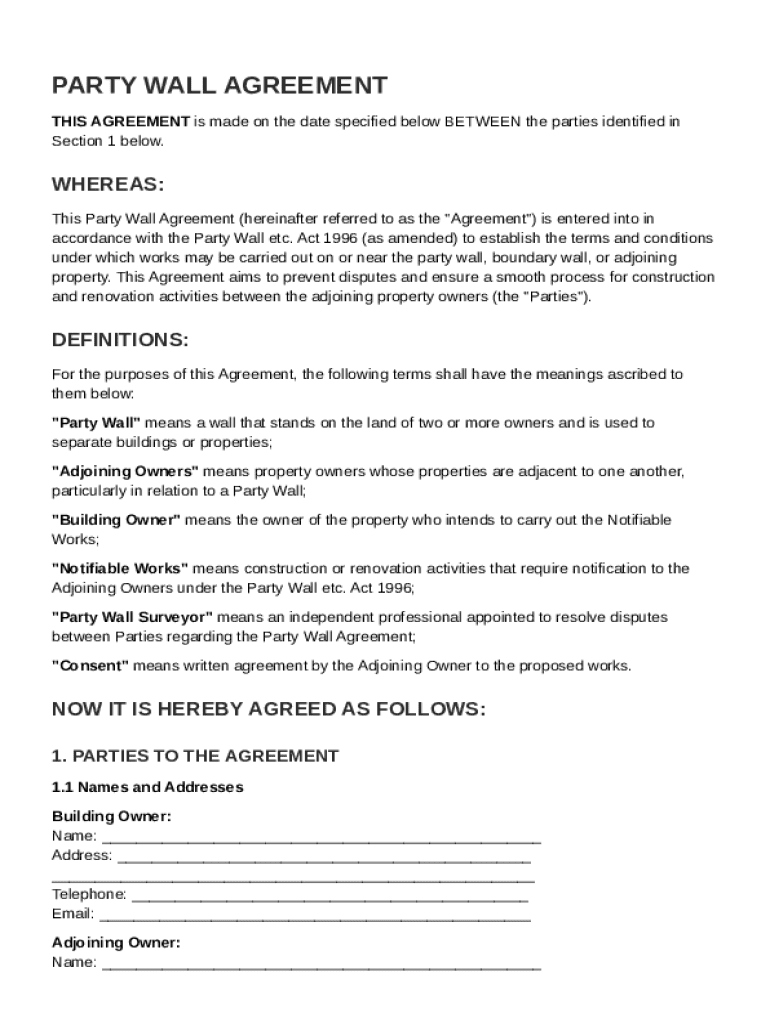
A Party Wall Agreement Template serves as a foundation for establishing terms related to construction or renovation work concerning shared or adjoining walls. Under the Party Wall etc. Act 1996, these templates help ensure that both the Building Owner and the Adjoining Owner are aware of and consent to the terms that govern modifications affecting a common wall. This document is critical in defining each party's responsibilities, preventing disputes, and setting legal precedence for handling construction-related matters.
Key Components
- Rights and Obligations: Clearly outlines the duties of both the Building Owner, who initiates the work, and the Adjoining Owner, impacted by the construction activities.
- Access Rights: Defines how and when each owner can access the property for the purposes of the construction.
- Notification Procedures: Details the timeline and methods of communication necessary to keep all parties informed about the work.
- Dispute Resolution: Sets up a framework for resolving disagreements through mediation or arbitration.
How to Use the Party Wall Agreement Template
The Party Wall Agreement Template is a practical tool that guides users through creating a detailed, customized contract between neighboring property owners. Here's how to effectively utilize this template:
-
Preparation: Collect all necessary property details, such as addresses, the nature of the proposed work, and any relevant timelines.
-
Customization: Modify the template to reflect the specific conditions of the project, including the scope of work and potential impacts on both properties.
-
Consultation: It is advisable to consult a legal professional to ensure that all modifications comply with local regulations and adequately protect both parties' interests.
-
Review: Both parties should review the document thoroughly, making sure all terms are clearly understood and agreed upon.
-
Finalization: Once both parties are satisfied, the final step is to sign the document. Each party should keep a copy for their records.
Importing into DocHub
- Import your template file directly or start with a blank document to customize it using DocHub's suite of tools.
- Use features such as text additions, digital signatures, and annotations to complete your Party Wall Agreement efficiently.
Steps to Complete the Party Wall Agreement Template
Completing a Party Wall Agreement Template involves several systematic steps to ensure accuracy and legal compliance:
-
Determine Project Scope: Identify the specific construction or renovation activities to be undertaken.
-
Identify Parties Involved: Clearly state the full names and contact details of the Building and Adjoining Owners.
-
Set Timelines and Dates: Define the start and end dates of the work, including dates for key milestones and when notifications will be sent.
-
Access Arrangements and Notices: Outline how and when each party can access the other's property for construction purposes and describe the notice provisions.
-
Modify as Needed: Make amendments suited to unique circumstances or additional agreements reached between parties.
-
Legal Review and Validation: Have an attorney review the agreement to ensure it adheres to legal standards and consider having it notarized for additional validity.
Key Elements of the Party Wall Agreement Template
The Party Wall Agreement Template is composed of various critical elements that ensure comprehensive coverage and clear understanding between parties:
- Details of the Property: Exact addresses and a description of the parties' properties involved.
- Description of Proposed Works: An explicit account of the planned construction or renovations ensuring all involved parties know what to expect.
- Work Schedule: Establishes a timeline for beginning, duration, and expected completion.
- Legal Clauses: Includes provisions related to liabilities, unforeseen damages, and renovations impacting the adjoining property.
- Confidentiality & Dispute Resolution: Mechanisms for confidentiality and processes to resolve any potential disputes.
Important Terms Related to Party Wall Agreement Template
Understanding the terminology is crucial for proper compliance with the Party Wall Agreement:
- Party Wall: A shared wall between two neighboring properties.
- Building Owner: The individual or entity undertaking construction work.
- Adjoining Owner: The neighbor impacted by the adjacent construction.
- Surveyor: A professional tasked with assessing the impact and compliance of the proposed works.
- Notice Period: The legally mandated time frame within which a Building Owner must inform an Adjoining Owner about planned works.
Legal use of the Party Wall Agreement Template
The Party Wall Agreement Template has significant legal importance as it complies with the requirements set by the Party Wall etc. Act 1996:
- Legal Standing: By setting terms that are legally recognized, it provides a formal channel for both parties to express their rights and responsibilities.
- Evidence in Disputes: Serves as an official document in case of disputes, providing evidence of agreed terms and conditions.
- Protection from Legal Penalties: Helps prevent potential fines or legal ramifications associated with non-compliance to local construction laws.
Who Typically Uses the Party Wall Agreement Template
This template is utilized by a range of individuals and entities interested in performing construction activities affecting shared properties:
- Homeowners: Individuals engaging in home improvements or structural changes impacting a shared boundary.
- Property Developers: Companies involved in the development of residential or commercial properties with adjoining boundaries.
- Construction Companies: Firms hired by building owners to execute renovation work needing documented consent.
- Architects and Engineers: Professionals ensuring designs are compliant with the necessary legal requirements and effectively communicated to property owners.


Examples of Using the Party Wall Agreement Template
Real-world scenarios demonstrate the utility and application of the Party Wall Agreement template:
- Home Renovations: A homeowner planning to build an extension that shares a boundary wall would utilize this agreement to formalize arrangements with their neighbor.
- Commercial Developments: During the expansion of a retail property, developers can use the agreement to set terms with adjacent business owners, ensuring the construction does not disrupt operations.
- Historic Buildings: Property owners embarking on restoration might employ this to negotiate terms that safeguard historic structures while allowing necessary updates or repairs.