
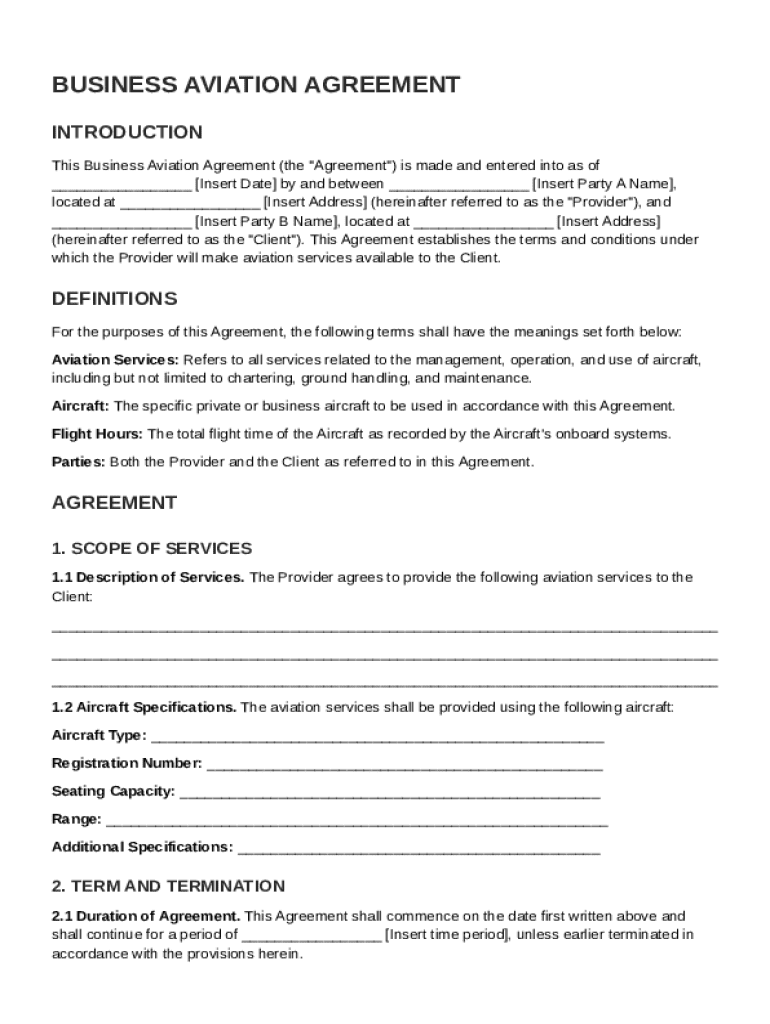







Key Elements of the Business Aviation Agreement Template
The Business Aviation Agreement Template is a crucial document that outlines the terms and conditions of aviation services between a provider and a client. It includes several essential elements that ensure both parties are clear on their roles and obligations. Key components include:
-
Scope of Services: This section details the specific aviation services provided by the operator, such as charter flights, aircraft management, or maintenance services. It specifies the type of aircraft involved and any limitations or exclusions to the services.
-
Aircraft Specifications: This includes detailed information about the aircraft, such as model, year of manufacture, and registration number. It may also cover equipment, capacity, and operational guidelines.
-
Payment Terms: This part of the agreement outlines the financial responsibilities of the client, including payment methods, schedules, and penalties for late payments. It can also address currency, taxes, and any additional costs.
-
Duration and Termination: Here, the agreement specifies the length of the contract and conditions under which it can be terminated, either by mutual consent or due to breach of contract. This includes notice periods and any applicable fees.
-
Confidentiality Obligations: Both parties agree to maintain the confidentiality of sensitive information shared during the course of their business relationship, which includes client details and proprietary company data.
-
Liability and Indemnification Clauses: This section addresses the responsibilities of each party in the event of accidents, negligence, or other liabilities. It also defines indemnification terms, protecting both parties from certain legal responsibilities.
Steps to Complete the Business Aviation Agreement Template
Filling out a Business Aviation Agreement Template requires careful attention to detail to ensure accuracy and completeness. Below are the general steps involved:
-
Gather Necessary Information: Before starting, collect all required details about the aircraft, services, and both parties involved. This may include business licenses, aircraft registrations, and contact information.
-
Customize the Scope of Services: Modify the template to reflect specific services offered, tailoring the document to the particular arrangement and any special conditions agreed upon.
-
Fill Out Payment Terms: Clearly define the financial arrangements, including fees, payment schedules, and additional expenses. Ensure alignment with any oral agreements or external documentation.
-
Specify Duration and Termination Conditions: Detail the contract term and termination options, incorporating clauses for early termination and dispute handling if applicable.
-
Obtain Necessary Approvals: Ensure both parties thoroughly review the completed template and agree on all terms. This often includes reviews by legal advisors or company executives.
-
Sign the Agreement: Once everything is reviewed and finalized, both parties must sign the document. Depending on preferences, this can be done electronically or physically.
-
Distribute and Store Copies: Provide both parties with copies of the signed agreement and store them securely for future reference and legal compliance.
Who Typically Uses the Business Aviation Agreement Template
A variety of businesses and individuals make use of Business Aviation Agreement Templates, depending on their specific aviation needs. Common users include:
-
Corporate Flight Departments: Companies with their own aircraft fleets use these agreements to manage relationships with service providers for charter operations or aircraft management.
-
Charter Operators: Organizations offering charter services require such agreements to ensure clear terms with clients, detailing what services are provided and at what cost.
-
Aircraft Owners: Individuals or entities who own aircraft often use these agreements to hire services for management, maintenance, or lease arrangements.
-
FBOs (Fixed Base Operators): These businesses, which provide a range of services at airports, utilize these templates for handling various client interactions efficiently.
-
Aircraft Management Companies: Companies specializing in managing aircraft fleets require robust agreements to outline their responsibilities to aircraft owners and third-party service providers.


Legal Use of the Business Aviation Agreement Template
The Business Aviation Agreement must comply with relevant legal standards to ensure enforceability and protection for all parties involved. Key considerations include:
-
Compliance with Aviation Regulations: The agreement must adhere to rules set by aviation authorities such as the Federal Aviation Administration (FAA), including safety and operational standards.
-
State Law Requirements: Regional legal differences may apply, so it is imperative to adjust the template to comply with state-specific contract laws and business regulations.
-
Contractual Validity: For the agreement to be legally binding, it must include all critical elements of a valid contract, such as offer, acceptance, and consideration.
-
Electronic Signatures: With modern digital solutions, electronic signatures are recognized under the ESIGN Act, allowing legally binding signing online.
-
Resolution of Disputes: Ensure there is clarity on how disputes will be handled, such as through arbitration, mediation, or litigation, and specify the applicable jurisdiction.
Important Terms Related to the Business Aviation Agreement Template
Understanding the terminology used in the Business Aviation Agreement Template is crucial for effective application and compliance. Key terms include:
-
Provider and Client: These terms refer to the entity offering aviation services and the party receiving them, respectively. They are central to defining responsibilities and liabilities.
-
Service Level Agreement (SLA): A part of the contract that specifies service expectations. It might detail performance metrics, delivery timelines, and remedies for unmet conditions.
-
Force Majeure: This clause addresses extraordinary events or circumstances beyond control, such as natural disasters or government actions, that may affect the agreement's performance.
-
Indemnity: A contractual obligation whereby one party agrees to compensate the other for certain potential losses or damages.
-
Confidentiality Agreement: A section devoted to protecting sensitive business information shared between parties from unauthorized disclosure.
Examples of Using the Business Aviation Agreement Template
The template can be adapted to a range of scenarios within the business aviation industry. Notable examples include:
-
Charter Arrangements for Corporate Travel: Companies regularly charter flights for executives, using a business aviation agreement to establish service terms, confidentiality assurances, and cost management.
-
Management Contracts for Personal Aircraft: Aircraft owners may hire management companies to handle operations, maintenance, and staffing, detailed in these agreements to ensure service quality and owner peace of mind.
-
Leasing Agreements for Fleet Expansion: Organizations looking to temporarily expand their fleet without purchasing new aircraft use these templates to outline lease terms and operational responsibilities.
-
Partnerships between FBOs and Service Providers: Fixed Base Operators partner with maintenance and fueling services, using contracts to ensure compliance with safety standards and reliable client service.
State-Specific Rules for the Business Aviation Agreement Template
When using the Business Aviation Agreement Template, it’s essential to consider state-specific rules that may impact the contract:
-
Regulatory Requirements: Each state may have unique requirements regarding contract formation, enforceability, and sector-specific regulations impacting aviation agreements.
-
Tax Implications: Taxation on aviation services or aircraft may vary by state, influencing how costs are calculated and who bears the financial responsibility within the agreement.
-
Legal Precedents: State laws and case precedents might affect contract interpretation and enforcement, requiring compliance with local judicial standards.
-
Insurance Considerations: Different states may have specific insurance requirements concerning liability, coverage limits, and policyholder responsibilities.
Incorporate these elements to ensure comprehensive understanding and alignment with legal standards across jurisdictions.
Software Compatibility for Business Aviation Agreement Template
Using the Business Aviation Agreement Template efficiently can be enhanced by leveraging compatible software solutions:
-
Document Editing Platforms: Tools like Microsoft Word and Google Docs are ideal for customizing the template, offering ease of use and collaboration features.
-
PDF Management Software: Programs like Adobe Acrobat or DocHub provide robust functionality for editing, filling, and signing PDF versions of the agreement.
-
Cloud Storage Services: Utilizing services such as Dropbox, Google Drive, or OneDrive ensures secure storage and easy access for all parties involved.
-
Electronic Signature Solutions: Platforms like DocHub, DocuSign, or HelloSign allow for streamlined and legally compliant electronic signing processes.
Business Types That Benefit Most from the Business Aviation Agreement Template
Several business types find the Business Aviation Agreement Template particularly beneficial:
-
Airlines and Charter Services: Organizations offering passenger or cargo charter flights require clear terms to manage customer expectations and operational risks.
-
Corporate Entities with Private Jets: Businesses that maintain their aircraft fleet need structured agreements for service partnerships, ensuring cost-efficiency and professionalism.
-
Aviation Firms and Operators: Companies providing a range of aviation-related services, such as maintenance or crew training, rely on agreements to formalize client engagements.
-
Logistics and Freight Companies: Logistics businesses that charter flights for freight transport use these agreements for detailing cargo specifications and service conditions.
These templates ensure structured, clear, and compliant arrangements that protect both the service providers and their clients.




