



01. Edit your form online
Type text, add images, blackout confidential details, add comments, highlights and more.

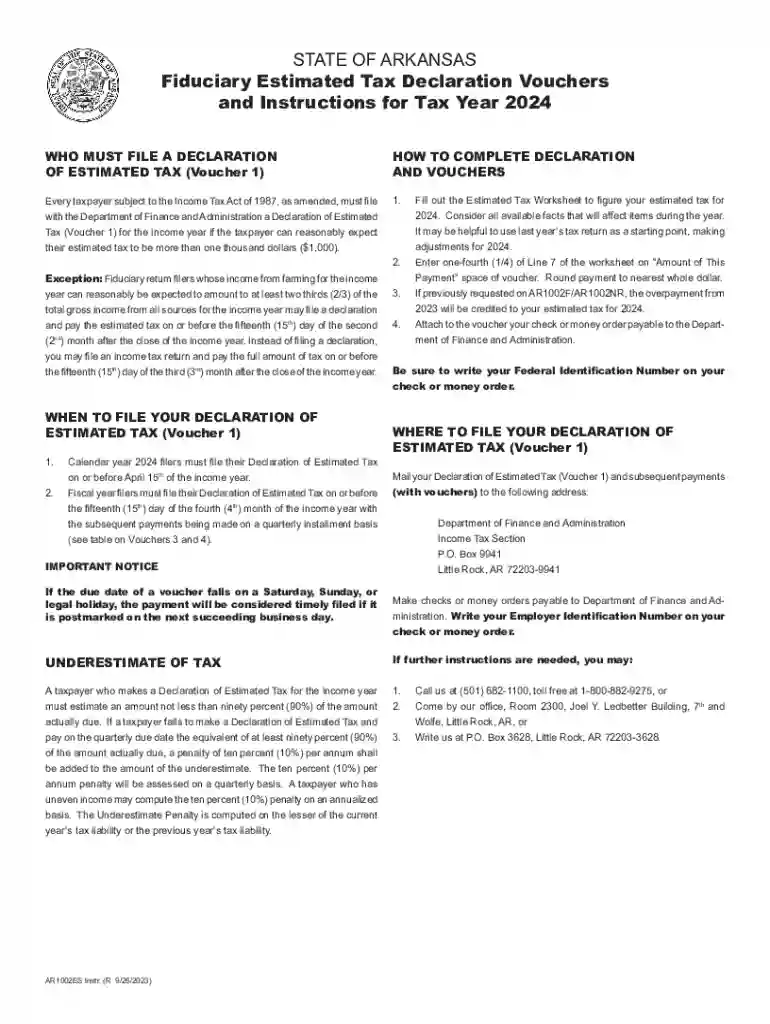
Type text, add images, blackout confidential details, add comments, highlights and more.

Draw your signature, type it, upload its image, or use your mobile device as a signature pad.

Send it via email, link, or fax. You can also download it, export it or print it out.
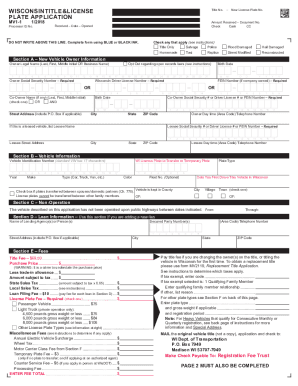
The exception for fiduciary return filers whose income stems primarily from farming is a specific tax provision that allows certain fiduciaries to benefit from unique filing criteria. Fundamentally, this exception acknowledges the distinct income structure associated with farming activities, which often involves fluctuating revenues and seasonal income variations. This provision is crucial for fiduciaries managing estates or trusts with significant farming income, ensuring they comply with tax obligations while accounting for these economic irregularities. Understanding this exception aids fiduciaries in optimizing their tax reporting and aligning with IRS regulations.
Fiduciary return filers eligible for this exception must meet specific criteria to qualify. Primarily, a significant portion of the income from the estate or trust must originate from farming activities. The Internal Revenue Service (IRS) defines farming income as revenue derived from agricultural production, livestock, dairy, poultry, fish, or fruits and vegetables. Eligibility may also be influenced by other factors, such as the percentage of total income attributed to these activities. Familiarity with these criteria ensures fiduciary filers can efficiently utilize the exception to align their tax filings appropriately.


The IRS provides comprehensive guidelines for fiduciary return filers availing this exception, detailing the required documentation and filing procedures. Fiduciaries need to follow these guidelines meticulously to prevent errors that could lead to penalties or audits. These guidelines encompass specific forms, such as 1041—U.S. Income Tax Return for Estates and Trusts, alongside any necessary schedules relevant to farming income. The IRS emphasizes accurate record-keeping and transparency in reporting to uphold compliance, particularly given the complex nature of farming income.
Filing deadlines for fiduciaries using this exception are determined by the fiscal or calendar year of the estate or trust. Generally, the deadline aligns with the standard tax filing date of April 15. However, extensions or alternative deadlines may apply depending on specific circumstances related to the farming income. Fiduciaries should stay informed of these deadlines to ensure timely submission and avoid potential penalties for late filing. Monitoring IRS announcements and updates can provide crucial information about any changes affecting filing timelines.
Completing the filing process for fiduciaries leveraging this exception involves several key steps:
Document Gathering: Collect all relevant financial records, including income statements and expense receipts related to farming activities.
Form Selection: Use the appropriate IRS forms, such as Form 1041, alongside any additional schedules that apply to agricultural income nuances.
Accurate Reporting: Provide a precise account of all income and deductions related to farming, ensuring compliance with IRS guidelines.
Verification: Cross-check all entries against source documents to confirm accuracy and integrity of the tax return.
Submission: Ensure timely filing by the appropriate deadlines, considering any extension requests if needed.
Different states may have variations in how the exception is implemented for fiduciary return filers. Some states might offer additional exemptions or have specific forms that complement the federal filing requirements. Understanding state-specific rules is essential for fiduciaries, especially if the estate or trust operates in multiple jurisdictions. This knowledge can aid in seamless integration of state and federal tax obligations, ensuring complete compliance with all applicable laws.
Non-compliance with the fiduciary return filing requirements can result in various penalties. These may include fines for late submissions, inaccuracies, or failure to report specific farming income precisely. The severity of penalties can vary based on the extent of non-compliance and whether errors were intentional or accidental. It is vital for fiduciaries to familiarize themselves with these potential repercussions and take preventive measures by ensuring accuracy and timeliness in their tax filings.
Examples provide clarity on the practical application of the exception. Consider a fiduciary managing an estate primarily involved in agriculture. With fluctuating seasonal sales, accurate reporting of income becomes complex. Utilizing the exception allows the fiduciary to align with an alternate filing schedule that considers these income fluctuations, ensuring that tax obligations reflect the estate's true financial position. Such scenarios underline the practical benefits and necessity of the exception in managing tax responsibilities efficiently.
Legal use of this exception is grounded in full compliance with existing tax codes and regulations. Fiduciaries must ensure all filings accurately reflect the estate or trust's farming activities, supported by comprehensive documentation. Misuse or inaccurate application could lead to legal challenges or audits by the IRS. Therefore, understanding the fine legal nuances, coupled with meticulous record-keeping and adherence to guidelines, is vital for fiduciaries to leverage the exception legally and effectively.
We've got more versions of the Exception: Fiduciary return filers whose income from farming for the income form. Select the right Exception: Fiduciary return filers whose income from farming for the income version from the list and start editing it straight away!
At DocHub, your data security is our priority. We follow HIPAA, SOC2, GDPR, and other standards, so you can work on your documents with confidence.



by JT Carter 1937 Cited by 1 The Maryland Act expressly exempts all income re- ceived from intangible personal property by a Maryland corporate trustee
ExceptionCommunity Income. Trusts and estates. Use Schedule F (Form 1040) to report farm income and expenses. Your deduction cant exceed 25% of your gross


