




01. Edit your rabies certificate template online
Type text, add images, blackout confidential details, add comments, highlights and more.

Type text, add images, blackout confidential details, add comments, highlights and more.

Draw your signature, type it, upload its image, or use your mobile device as a signature pad.

Send free printable rabies certificate via email, link, or fax. You can also download it, export it or print it out.
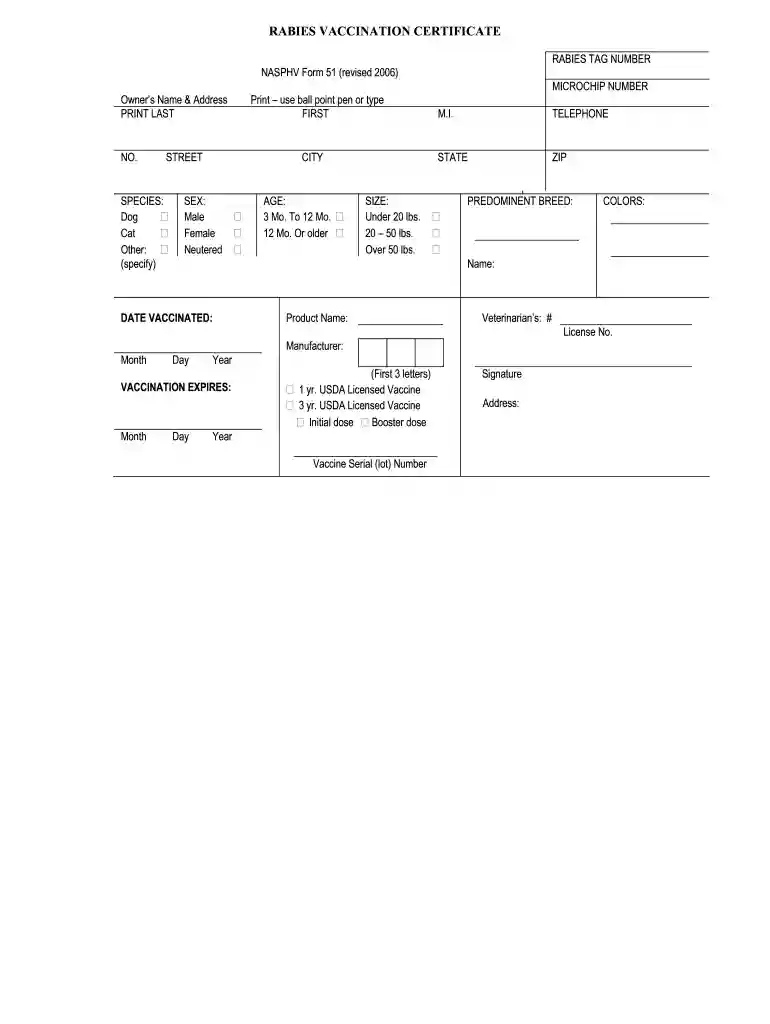
A rabies certificate 2006 form is a document that serves as proof of a pet's rabies vaccination. This certification includes key information such as the pet owner's details, the pet's species, sex, age, size, and predominant breed. Alongside the vaccination details, the certificate lists the specific vaccine administered, the date of vaccination, the veterinarian's license number, and the expiration date of the vaccine. This form is critical for travel, boarding, or any situation that requires verification of rabies vaccination due to the potentially fatal nature of the disease and its public health implications.
Understanding the importance of a rabies vaccination certificate emphasizes the need for pet owners to keep this document updated and accessible. Rabies vaccination not only protects pets but also plays a vital role in community health, preventing the spread of this zoonotic disease.
Obtaining the rabies certificate 2006 form typically involves a visit to a licensed veterinarian. Pet owners should ensure their animals are vaccinated against rabies according to the schedule recommended by local animal health authorities. The process usually involves the following steps:
Schedule an Appointment: Contact a licensed veterinarian to arrange a vaccination visit for your pet.
Vaccination: During the appointment, the veterinarian will administer the rabies vaccine, ensuring it meets local guidelines and laws.
Issuance of Certificate: After vaccination, the veterinarian will issue the rabies certificate. This document may be provided in printed form or as a digital copy, depending on the clinic's policies.
It's important to keep a copy of the certificate in a safe place for easy access, especially when undertaking activities like travel or boarding.
Completing the rabies certificate 2006 form involves specific details that must be accurately filled out to ensure compliance with local regulations. Here are the steps to effectively complete the form:
Owner Information: Fill in the pet owner’s full name, address, and contact information. This ensures the certificate is traceable to the correct pet owner.
Pet Information: Provide detailed information about the pet, including species (dog, cat, etc.), breed, age, weight, and sex. Accuracy in this section helps in identifying the pet.
Vaccination Details: Include the product name of the rabies vaccine, the date of administration, and the veterinarian’s license or practice number. This information verifies the medical legitimacy of the vaccination.
Signature and Date: The veterinarian or their representative must sign and date the form to validate it. This signature confirms that the vaccination has been completed according to health standards.
Record Keeping: Keep a copy of the completed certificate for your records and provide another copy as required for travel or registration with local authorities.
Properly following these steps ensures that the rabies certificate is emblematic of compliance with both pet health standards and public safety regulations.
The rabies certificate 2006 form contains several key elements that must be present to ensure its validity. These elements include:
Owner Information: Full contact details of the pet owner, which aids in correspondence and identification.
Pet's Identification: Details about the pet, including species, breed, and a unique identifier such as a microchip number.
Vaccination Information: Manufacturer details, vaccination date, and expiration date; this essential information indicates when a rabies shot is effective and when re-vaccination is necessary.
Veterinarian's Credentials: License number or registration of the administering veterinarian or clinic, which authenticates the certificate.
Signature of Veterinarian: The representative’s signature and date on the certificate validate that the vaccine was administered and that the information is accurate.
These elements work together to establish a reliable document that meets legal and health requirements regarding pet vaccinations.
The rabies certificate 2006 form is not merely an administrative form; it holds significant legal importance. In various scenarios, this document serves as proof of compliance with state and federal regulations regarding rabies vaccinations. Here are key points regarding its legal usage:
Travel Requirements: Many states and countries require a current rabies certificate for animals when traveling across borders. This requirement helps prevent the spread of rabies among wildlife and domestic animals.
Pet Boarding and Grooming: Many facilities require proof of rabies vaccination before they will accept pets for boarding or grooming. This protects all animals in their care.
Liability and Insurance: In the event of a rabies outbreak or if a pet bites someone, having a valid rabies certificate protects the pet owner from legal liability and potential fines.
Local Ordinances: Many municipalities and counties have laws mandating pet vaccinations. Failing to produce a valid certificate can result in fines or other legal actions.
Understanding these legal implications ensures that pet owners are compliant with laws and helps promote public health.
When dealing with the rabies certificate 2006 form, familiarizing yourself with specific terminology can enhance understanding. Here are some important terms:
Rabies: A viral disease that affects the central nervous system, primarily transmitted through the bite of an infected animal. Vaccination is critical for prevention.
Vaccination: The process of administering a vaccine to stimulate an individual's immune system to develop protection against disease.
Certification: The formal confirmation that a pet has been vaccinated against rabies, typically provided by a licensed veterinarian.
Zoonotic Disease: Diseases that can be transmitted from animals to humans, such as rabies, highlighting the importance of vaccination and documentation.
Veterinarian's License Number: A unique identifier for a veterinarian, ensuring that only qualified professionals administer vaccines and issue certificates.
By grasping these terms, pet owners can better navigate the process surrounding rabies vaccinations and certificate requirements.
The rabies certificate 2006 form has practical applications in everyday situations. Here are several illustrative examples:
Traveling with Pets: If a pet owner is traveling by air or crossing state lines, airlines and authorities often request a rabies certificate to ensure the animal has been vaccinated.
Dog Parks: Many public dog parks require proof of rabies vaccination to ensure that all dogs are protected against the virus, fostering a safer environment for pets.
Adoption Procedures: Animal shelters and rescue organizations typically require a rabies certificate before finalizing adoptions, ensuring that the animal is vaccinated prior to being placed in a new home.
Local Licensing: Many jurisdictions require pet owners to present a rabies certificate when registering their pets. This helps local governments keep track of vaccination rates and public safety.
Each of these scenarios demonstrates the practical importance and necessity of the rabies certificate 2006 form in various aspects of pet ownership.
We've got more versions of the rabies certificate template form. Select the right rabies certificate template version from the list and start editing it straight away!
At DocHub, your data security is our priority. We follow HIPAA, SOC2, GDPR, and other standards, so you can work on your documents with confidence.




I keep a paper license and rabies certificate until no longer needed. Ill be recycling 2006 licenses and certificates today. I keep the 2007-9 licenses as the
Apr 14, 2006 All agencies and veterinarians should use NASPHV Form 51, Rabies Vaccination Certificate, or equivalent which can be obtained from vaccineRead more
May 9, 2008 National Stroke Awareness. Month May 2008. May is National Stroke Awareness Month. In 2008, an estimated 780,000 persons in the UnitedRead more


