
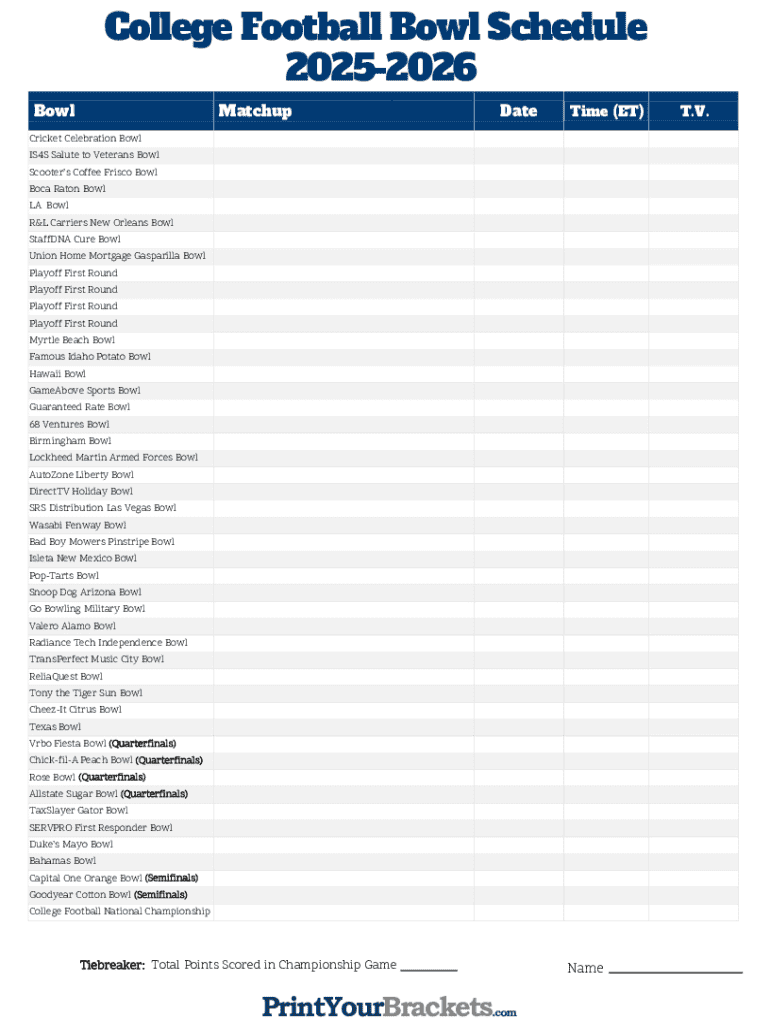







Definition & Significance of the College Football Bowl Schedule
The College Football Bowl Schedule is an essential resource for fans, players, and analysts of college football, outlining the matchups, dates, and times for bowl games. These bowl games are postseason matches that typically feature teams with winning records. The culmination of these events is the College Football National Championship, a pivotal game determining the national champion of college football for the season. The schedule serves not only as a guide for planning game viewership but also as a tool for understanding team pairings and postseason structure.
Key Components of the Schedule
- Matchups: Each bowl features specific teams based on conference standings and selections.
- Dates and Times (ET): Games are scheduled with kickoff times typically ranging from late December through early January.
- National Championship: This game represents the apex of the college football season, showcasing the two best teams as determined by playoff performance.
How to Use the College Football Bowl Schedule
The schedule is a valuable tool for fans planning to view games, travel to events, or follow their favorite teams. Understanding how to utilize it can enhance the overall experience.
Step-by-Step Usage Guide
- Identify Key Games: Focus on games involving favored teams or highly anticipated matchups.
- Coordinate Viewing Plans: Use the schedule to plan social gatherings or travel arrangements for attending games.
- Track Team Progress: Follow the progression leading to the national championship for insights into team performances.
Obtaining the College Football Bowl Schedule
Accessing the schedule is straightforward, with several reliable sources providing accurate and up-to-date information.
Sources for the Schedule
- Official NCAA Website: Offers comprehensive details on all games, teams, and results.
- Sports News Websites: Platforms like ESPN and Sports Illustrated frequently update their schedules with expert analysis.
- College Athletic Websites: Individual college websites often provide detailed schedules for their respective teams.
Who Typically Uses the College Football Bowl Schedule
The schedule attracts a diverse audience, each leveraging it for different purposes.


Primary Users
- Sports Fans: Utilize the schedule to plan game viewership and participate in discussions.
- Players and Coaches: Use it for preparation and strategizing for postseason games.
- Broadcasters: Reference the schedule to organize coverage and programming.
- Analysts and Commentators: Analyze matchups and historical performance based on scheduled games.
Key Elements of the College Football Bowl Schedule
A comprehensive understanding of the schedule involves identifying its most critical features.
Essential Features
- Bowl Names and Locations: Each bowl has historical significance and is hosted at a specific venue.
- Selection Criteria: Teams are chosen based on performance and specific criteria established by conferences.
- Broadcast Networks: Games are televised on various networks, important for viewers planning to follow live broadcasts.
Important Terms Related to the College Football Bowl Schedule
Grasping the terminology associated with the schedule aids in deeper understanding and appreciation.
Common Terms
- Bowl Game: A postseason game typically involving teams with successful records.
- Playoff System: The format determining which teams compete for the national championship.
- Conference Invitation: The process by which teams are selected to participate in specific bowl games based on their conference and performance.
Examples of Using the College Football Bowl Schedule
To fully appreciate the utility of the schedule, consider practical scenarios.
Real-World Use Cases
- Travel Plans: Fans traveling to games can use the schedule to book flights and accommodations.
- Event Hosting: Sports bars and other venues can organize events around key matchups.
- Family Gatherings: Families might plan reunions during major bowl games, enhancing shared experiences and tradition.
Digital vs. Paper Version of the Schedule
Though digital versions have become popular, both formats offer distinct advantages.
Advantages of Each Format
- Digital: Easily accessible on smartphones and updated in real time with changes in times or matchups.
- Paper: Offers a tangible reference that can be displayed or noted upon, ideal for those who prefer offline planning.




