







Definition & Meaning
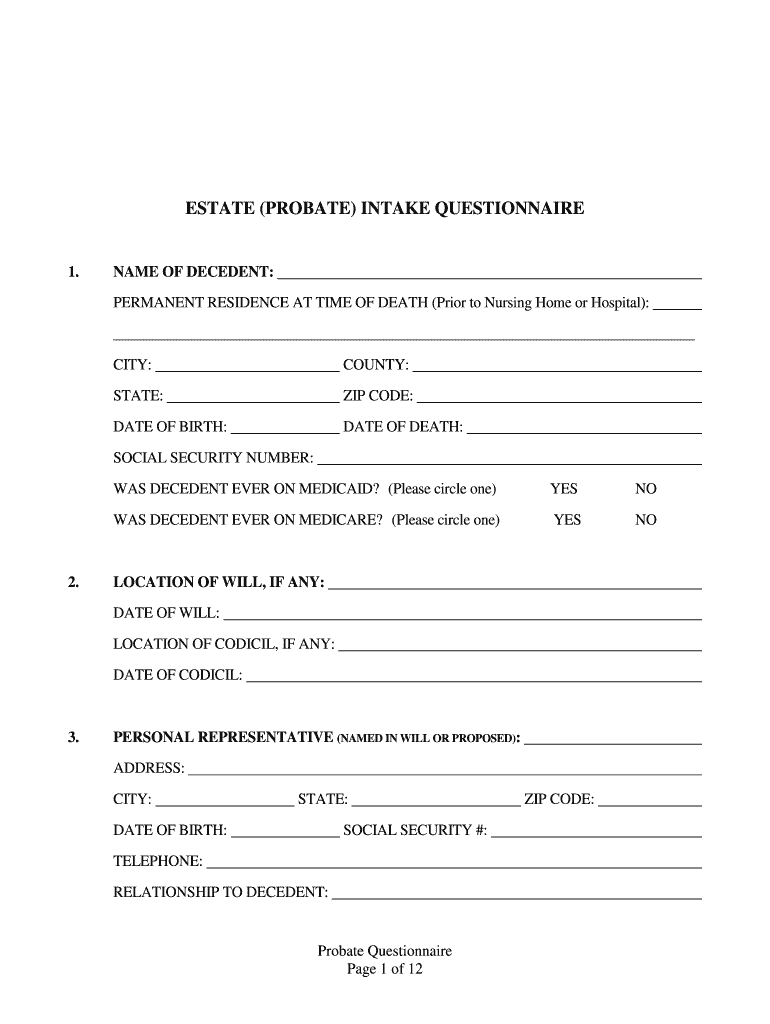
An Estate (Probate) Intake Questionnaire serves as a critical document in the probate process, capturing essential details about a decedent's estate to facilitate its management and distribution per legal requirements. It includes comprehensive sections detailing the decedent's personal information, asset distribution intentions, and associated debts, guiding attorneys and representatives in fulfilling their roles effectively.
The form is aimed to streamline the probate process by ensuring all pertinent information is gathered at the outset. Proper completion of this questionnaire aids in identifying the correct approach to estate management, minimizing legal complications, and ensuring alignment with the decedent's wishes or state laws. This document is typically used as part of the initial client intake process by law firms specializing in probate and estate management.
Practical Examples
- A newly deceased individual's family uses the questionnaire to compile information about the decedent's bank accounts, real estate holdings, and personal property, which is then used to determine the value of the estate.
- An estate attorney leverages the form data to prepare necessary legal filings required for court probate proceedings.
How to Use the Estate (Probate) Intake Questionnaire - Studenberg Law
When employing the Estate (Probate) Intake Questionnaire, accuracy in data provision is paramount. Each section of the form is designed to ensure comprehensive data collection. Follow these steps for effective use:
- Gather Preliminary Information: Before filling in the form, collect all necessary personal data of the decedent, such as full name, Social Security number, date of birth, and date of death.
- Document Representatives and Beneficiaries: Detail the names and contact information of persons who will represent or benefit from the estate.
- List of Assets and Debts: Include all real and personal property, financial accounts, valuable objects, and any outstanding debts.
- Review for Completeness: Check for any omitted details that might cause delays in the probate process.
The compiled information serves as a foundational reference for legal proceedings related to the estate. Attorneys and representatives rely on this data to ensure the legal compliance of the estate's management and distribution.
Key Elements of the Estate (Probate) Intake Questionnaire
The Estate (Probate) Intake Questionnaire from Studenberg Law includes several critical components designed for thorough estate analysis:
- Personal Details: Full information about the deceased, including date of death.
- Estate Representatives: Contact details and authority documentation of executors or appointed representatives.
- Beneficiary Information: Names and relationships of all individuals who will receive assets.
- Assets: Comprehensive inventory list, including real estate, bank accounts, stocks, and personal possessions.
- Debts and Liabilities: Detailed accounting of any debts owed by the estate, such as mortgages, loans, or credit card balances.
- Final Documents: Checklist of documents such as wills, trusts, and power of attorney agreements.
Each element captures the necessary data that will guide the legal proceedings and ensure smooth management and distribution of the estate.
Steps to Complete the Estate (Probate) Intake Questionnaire - Studenberg Law
- Collect Essential Documents: Gather any existing wills, titles, loan documents, and identification papers for accuracy in reporting.
- Fill Personal Information: Begin by completing the decedent's personal details, ensuring all identifiers are properly entered.
- List Assets and Debts: Accurately record all known assets and financial liabilities. It's crucial to ensure every asset and debt is reported for accurate legal processing.
- Define Beneficiaries and Representatives: Clearly specify who will represent and benefit from the estate, including relationships and contact details.
- Submit the Questionnaire: Once completed, review for accuracy, sign if required, and deliver it to your legal representative or the appropriate office handling the probate.
The correct and timely completion of these steps ensures smoother probate proceedings.
Legal Use of the Estate (Probate) Intake Questionnaire - Studenberg Law
The Estate (Probate) Intake Questionnaire acts as a legally significant document in probate court proceedings, serving to inform the court about the estate's attributes and beneficiaries. This official use:
- Ensures Probate Compliance: Confirm that the estate is distributed according to legal mandates and any existing will.
- Supports Legal Filings: Provides necessary information to complete court filings and other legal documents related to the probate process.
- Prevents Disputes: By clearly documenting the decedent's wishes and estate details, potential family disputes or challenges can be mitigated.
Proper completion and use of this document provide the necessary legal framework for effective estate management.
Who Typically Uses the Estate (Probate) Intake Questionnaire - Studenberg Law
The primary users of the Estate (Probate) Intake Questionnaire include:
- Estate Attorneys: Legal professionals responsible for managing probate cases, ensuring compliance with state laws, and advising clients on estate matters.
- Executors: Individuals appointed in the will as the estate's representative, tasked with managing affairs and distributing assets as delineated.
- Beneficiaries: Heirs or individuals benefitting from the estate, who may use the questionnaire to verify proper representation of their interests.
- Probate Court Personnel: Judges or clerks who examine estate documents to validate and oversee the legality of probate actions.
Each user group interacts with the form based on their role in the probate process, contributing to its successful completion and utility.


Required Documents
The completion of the Estate (Probate) Intake Questionnaire necessitates supporting documentation, including:
- Original Will: The foundational document outlining the decedent's distribution wishes.
- Death Certificate: Official proof of death needed for initiating probate proceedings.
- Financial Statements: Banking, investment, and loan documents to establish asset and debt values.
- Property Deeds or Titles: Legal proof of ownership necessary for the transfer of real and personal property.
- Identification Documents: Driver's licenses, birth certificates, or social security numbers for authenticating identities.
Having these documents at hand facilitates the accurate completion of the form and expedites the probate process.
State-Specific Rules for the Estate (Probate) Intake Questionnaire - Studenberg Law
Completion and submission of the estate questionnaire may be subject to variations based on state-specific probate laws:
- Probate Thresholds: Each state may have different values at which property must enter probate; knowing these thresholds helps determine if informal or formal proceedings are needed.
- Executor Qualifications: States differ in requirements for who can serve as an executor, affecting who fills out the questionnaire.
- Property Ownership Laws: Community property states require unique considerations when listing marital assets.
- Filing Deadlines: Specific deadlines in each state necessitate timely submission to avoid probate delays and penalties.
Understanding these state-specific nuances ensures compliance and expedites the probate process through informed form completion.




