Definition & Meaning
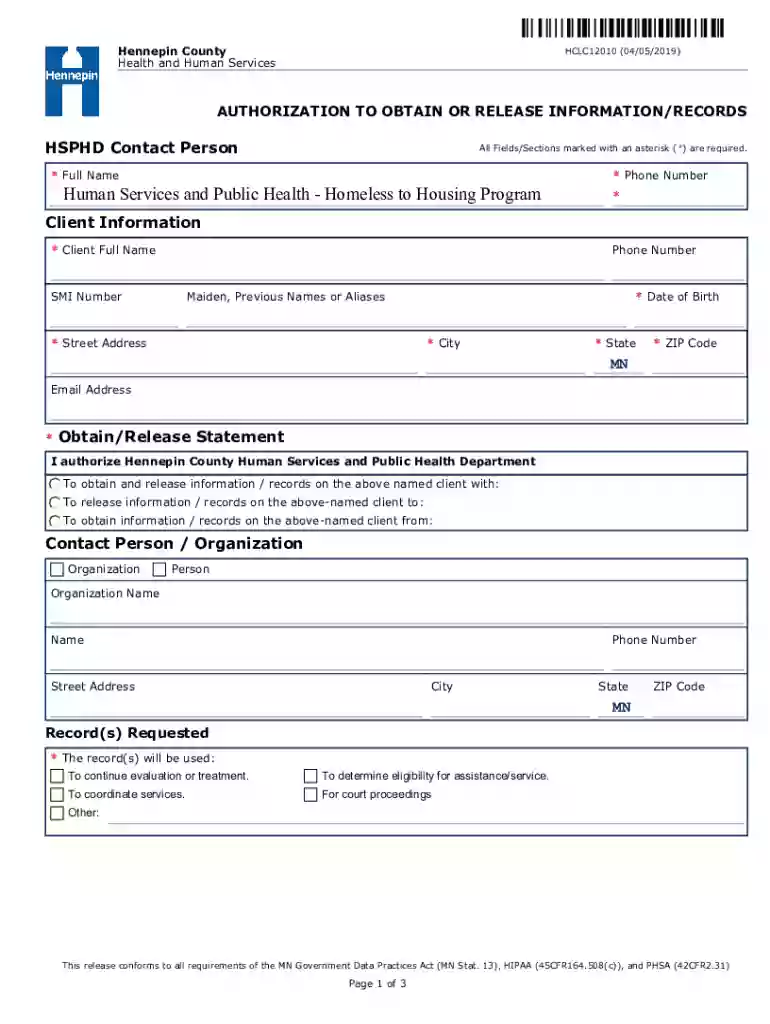
The "Authorization to Obtain or Release Information Records - HCLC12010" is a crucial document used to authorize the release or acquisition of personal information necessary for evaluating services, coordinating treatments, or determining eligibility for various programs. It serves as a formal consent form, permitting specific parties to access sensitive records while ensuring compliance with legal privacy protocols.
Purpose and Scope
- Allows medical or service providers to access needed information for treatment plans.
- Facilitates social service agencies in coordination and evaluation processes.
- Ensures proper handling and transfer of sensitive data according to privacy laws.
Privacy Compliance
- Adheres to regulations such as HIPAA for healthcare-related data.
- Outlines specific details on the type of information shared and limitations.
How to Use the Authorization Form
The form can be used in scenarios where consent is needed to share personal information between different entities, such as between healthcare providers or social service agencies.
Steps for Utilization
- Identify the records necessary for sharing or obtaining.
- Complete the client and contact details section accurately.
- Specify the types of records to be released or obtained.
- Obtain necessary signatures to validate the authorization.
How to Obtain the Authorization Form
The form "AUTHORIZATION TO OBTAIN OR RELEASE INFORMATION RECORDS - HCLC12010" is generally available through social service agencies or healthcare institutions that require such documentation.
Steps to Acquire
- Visit the Hennepin County Health and Human Services.
- Request the form from the respective department or download it from their official website if available.
- Reach out to affiliated service providers for assistance in acquiring the form.
Steps to Complete the Authorization Form
Filling out the form accurately is vital for the release or acquisition of information without legal issues.
Detailed Instructions
- Client Information: Enter personal details such as name, date of birth, and contact details.
- Recipient Fields: Specify which entities will receive or provide the records.
- Purpose Specification: Clearly outline why the information is needed.
- Signatures: Ensure all required parties sign and date the form to make it effective.
Why Should You Use This Authorization Form
Using this authorization form ensures that information sharing is done legally and ethically, maintaining the confidentiality and privacy of individuals involved.
Benefits
- Protects personal information by ensuring consent is granted before any transfer.
- Helps in compliance with state and federal privacy laws.
- Streamlines service coordination and improves communication between parties.
Important Terms Related to the Authorization Form
Understanding specific terminology related to the form can aid in its correct usage.
Key Terms
- Data Privacy: Refers to safeguarding personal information.
- Disclosure: The act of making information available to others.
- Authorization Period: Duration for which the consent is valid, typically until case closure or one year.
Legal Use of the Authorization Form
This form has specific legal frameworks under which it operates, especially regarding information privacy and security laws.
Compliance and Regulations
- Must comply with statutes such as the HIPAA.
- Legal implications if used improperly, which may include penalties or revocation of services.
Key Elements of the Authorization Form
Recognizing the essential parts of the form helps in ensuring all necessary sections are filled, complying with legal and operational requirements.
Primary Components
- Identification Sections: Information about the client and entities involved.
- Information Types: Specifies what type of records can be released.
- Signing Requirements: Includes a space for all required signatures for acknowledging the consent.
Who Typically Uses the Authorization Form
This form is predominantly used by individuals and professionals dealing with sensitive personal information where sharing is required under informed consent.

Typical Users
- Medical professionals needing patient history or records.
- Social service agencies evaluating service eligibility.
- Legal entities involved in cases requiring background and supporting documentation.
State-Specific Rules for the Authorization Form
While the form serves a uniform purpose, different states might have additional stipulations governing its use.
Variations Based on Jurisdiction
- States may have specific privacy acts that influence the form's implementation.
- Ensures compliance according to the regional data protection requirements, especially for sensitive types of personal data.