






Definition and Purpose of Oyster Bay Town Planning and Development Form
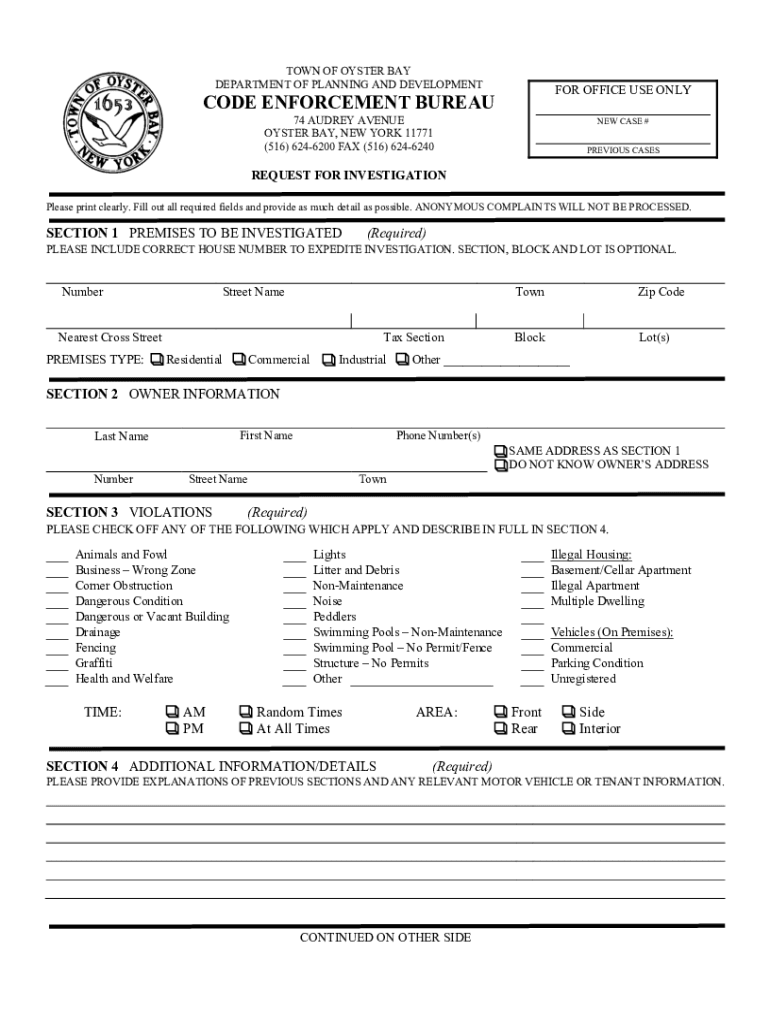
The Oyster Bay Town Planning and Development form is a critical document used by residents to report zoning violations, dangerous conditions, and illegal housing activities within the Town of Oyster Bay. It serves as a formal request for investigation by the Code Enforcement Bureau to ensure compliance with local regulations. The form captures detailed information, including the location of the alleged violation, details about the property owner, and specific complaints. Complainant identification is required to maintain a structured and traceable process.
Detailed Information Requirements
- Premises Details: The form requires explicit details about the location, including address and any identifying features of the property in question.
- Owner Identification: Information about the property owner, including name and contact details, must be documented.
- Violation Description: Complainants must provide a clear description of the violation, such as zoning infringements or unsafe conditions.
Importance of Detailed Reporting
Accurate and thorough completion of the Oyster Bay Town Planning and Development form is essential for effective enforcement. Precise data allows the Code Enforcement Bureau to prioritize and address issues expediently and ensures that complainants are providing valuable information for legal compliance checks.
How to Use the Oyster Bay Town Planning and Development Form
Using the Oyster Bay Town Planning and Development form involves a systematic approach. It begins with gathering all necessary information about the involved parties and the specific nature of the complaint.
Step-by-Step Completion Guide
- Identify the Property: Clearly state the address and relevant details about the property.
- Document the Violation: Provide a detailed description of the issue, including the type of infraction, and past occurrences if any.
- Provide Complainant Information: Submit personal identification details, as anonymous submissions are not accepted.
- Submit the Form: Follow submission instructions for either electronic or paper form submissions.
Common Mistakes to Avoid
- Incomplete Forms: Ensure all sections are filled to prevent delays in processing.
- Lack of Specificity: Avoid vague descriptions; provide detailed accounts of observed violations for clarity.
Steps to Obtain the Oyster Bay Town Planning and Development Form
Acquiring the appropriate Planning and Development form for Oyster Bay is the first step in the reporting process.
Where to Access
- Town’s Official Website: Forms are available for download from the town's website under the Planning and Development section.
- Town Hall Offices: Hard copies can be picked up in person at designated town hall offices.
Required Preparation
Before obtaining the form, gather all necessary information related to the complaint. This preparation ensures an efficient form-filling process once the document is in hand.
Key Elements of the Oyster Bay Town Planning and Development Form
Understanding the structure and key components of the form is crucial for effective utilization.
Form Sections
- Contact Information: Includes fields for both the complainant and property owner details.
- Violation Details: Specific sections for outlining the nature of the complaint.
- Signature and Date: Required fields to validate and authorize the submission.
Variability in Information
Different forms may have variable fields depending on the type of violation reported, such as zoning vs. illegal construction, ensuring the process is catered to specific regulatory needs.
Legal Use and Confidentiality
The Oyster Bay Town Planning and Development form must be used in accordance with legal guidelines to maintain its integrity in enforcement actions.
Legal Framework
- Confidentiality Assurance: While the form requires identification, confidentiality is maintained unless legal proceedings necessitate disclosure.
- Legitimate Use: Forms should solely be used for lawful reporting; malicious or false reports are subject to legal repercussions.
Implications of Non-Compliance
Failure to accurately complete or misuse the form may result in invalid reports and legal liabilities for false reporting, undermining efforts to maintain community standards.
Examples of Using the Oyster Bay Town Planning and Development Form
Real-world applications of the form are varied, serving different community purposes.
Case Studies
- Zoning Violations: Reports involving unauthorized business operations in residential areas.
- Safety Concerns: Instances such as unsafe building conditions or unpermitted structural changes.
- Illegal Housing: Complaints regarding unregistered rental properties or unauthorized housing units.
Impact on Community Regulation
These examples highlight the form’s role in fostering regulated development and ensuring safety and compliance within the Oyster Bay community.
Form Submission Methods
Submission options for the Oyster Bay Town Planning and Development form reflect modern access needs.
Options Available
- Online Submission: Electronic forms can be submitted via the town's website, reflecting a commitment to technological accessibility.
- Mail: Completed paper forms can be sent via postal service for traditional submission preference.
- In-Person: Direct submission at town hall offices for immediate processing and receipt confirmation.
Submission Tips
- Check Submission Guidelines: Ensure all submission requirements are met, including any necessary attachments or supporting documents.
- Confirmation of Receipt: When submitting in person, request a receipt or confirmation of submission for record-keeping.
Important Terms Related to the Form
Understanding common terms associated with the Oyster Bay Town Planning and Development form provides clarity and aids in accurate completion.
Key Terminology
- Zoning: Refers to land use regulation defining permitted activities on specific parcels.
- Compliance: Adherence to established town regulations and ordinances.
- Code Enforcement: The bureau responsible for investigating and resolving reported violations.
Application of Terms
Grasping these terms ensures clear communication and effective interaction with the Code Enforcement Bureau during investigations and follow-up actions.