






Definition & Meaning
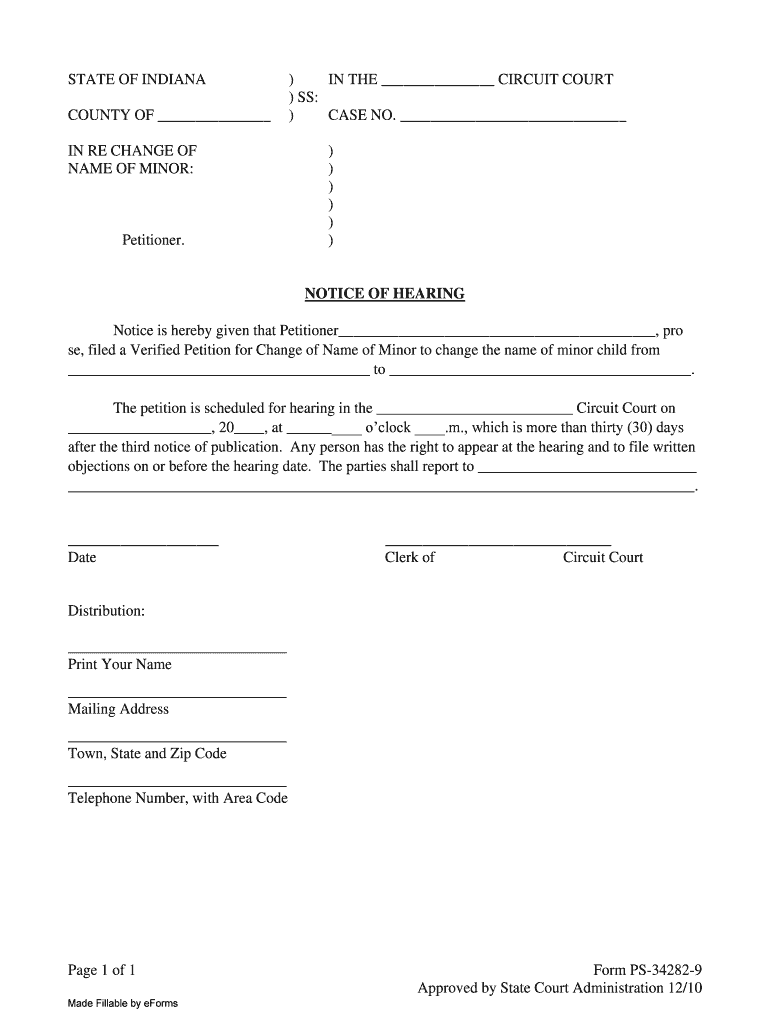
The "Indiana - Notice of Hearing (No Consent)" is a legal document utilized in the state of Indiana to notify involved parties of an upcoming hearing regarding a petition. It is specifically tailored for cases where a change is sought, such as the change of name for a minor child, and where consent may not be readily available from all concerned parties. This notice serves as an official communication to inform interested individuals of the time, date, and location of the hearing. It also outlines the purpose of the hearing and provides details on how stakeholders can participate or express objections.
How to Use the Indiana - Notice of Hearing (No Consent)
To effectively use the notice, the petitioner must ensure that all required details are accurately filled out. This includes the name of the court, the names of involved parties, and the proposed changes being sought. The form should be submitted well in advance to allow adequate time for service to all relevant parties. The notice can also be used to inform uninvolved parties who may have a legitimate interest in the case. Before use, ensure compliance with state regulations regarding service of notice and required response times.
Steps to Complete the Indiana - Notice of Hearing (No Consent)
-
Gather Information: Collect all necessary details about the case, including petitioner information, current and proposed changes, and contact details of parties involved.
-
Fill Out the Form: Enter the collected information into the form, ensuring accuracy and completeness to avoid delays in processing.
-
Submit the Form: Depending on court requirements, submit the completed form to the appropriate legal or governmental body.
-
Serve Notice to Parties: Ensure that all involved parties receive a copy of the notice. This can be done through personal delivery, certified mail, or as directed by the court.
-
Await Confirmation: Confirmation of the hearing details may be received once the notice is processed, along with instructions for attending or objecting to the hearing.
Important Terms Related to Indiana - Notice of Hearing (No Consent)
- Petitioner: The person or entity filing the notice.
- Respondent: Individuals who may need to consent or object to the proposed change.
- Objection: A formal protest against the proposed changes within the notice period.
- Hearing: A scheduled court session to discuss and possibly decide on the petition.
- Service of Notice: The process of delivering notice to involved parties as per legal requirements.
Legal Use of the Indiana - Notice of Hearing (No Consent)
The notice provides a legal framework for court hearings where consent from one or more parties may not be given. It upholds due process by ensuring all parties are informed and given a chance to participate or protest. Operating within legal boundaries, as specified by Indiana law, it forms part of the due diligence process necessary for fair hearings. Non-compliance can result in legal penalties or dismissal of the petition.
State-Specific Rules for the Indiana - Notice of Hearing (No Consent)
Indiana mandates the use of this notice in accordance with specific state laws governing hearings without consent. Each district or circuit court may have distinct submission guidelines or deadlines. Familiarity with local rules ensures compliance and validity of the notice. Understanding state-specific laws around safeguarding the interests of minors or vulnerable parties is crucial for petitioners.
Examples of Using the Indiana - Notice of Hearing (No Consent)
- Change of Name: For minors needing a name change where one parent is unreachable or refuses consent.
- Guardianship Cases: Where the court needs to appoint a guardian without consent from all relevant parties.
- Child Custody Modifications: When adjustments to custody arrangements are required but not agreed upon by all parents.
Required Documents
To accompany the Indiana notice, gather pertinent documents such as identification proof, birth certificates, or previous court orders relevant to the case. These documents substantiate the petition and provide necessary background information for the court to consider during the hearing.
Filing Deadlines / Important Dates
Maintaining awareness of specific filing deadlines is essential to ensure timely hearing scheduling. Each court may have unique calendars, and submitting the notice well ahead of these deadlines is best practice. Deadlines often align with the statutory waiting period required for service of notice to the involved parties.
Form Submission Methods (Online / Mail / In-Person)
Different courts may permit various submission methods for the notice. Common options include mailing the completed notice, submitting it in person at the court clerk’s office, or filing online where electronic filing systems are available. Confirm the accepted methods with the court to guarantee proper handling of your notice submission.
Penalties for Non-Compliance
Failure to comply with the regulations associated with the "Indiana - Notice of Hearing (No Consent)" can lead to several penalties. These may include the dismissal of the petition, rescheduling of the hearing, or even legal action against the petitioner for failing to serve notice adequately. Understanding and adhering strictly to all form and service requirements ensures lawful and effective submission.