Definition & Meaning
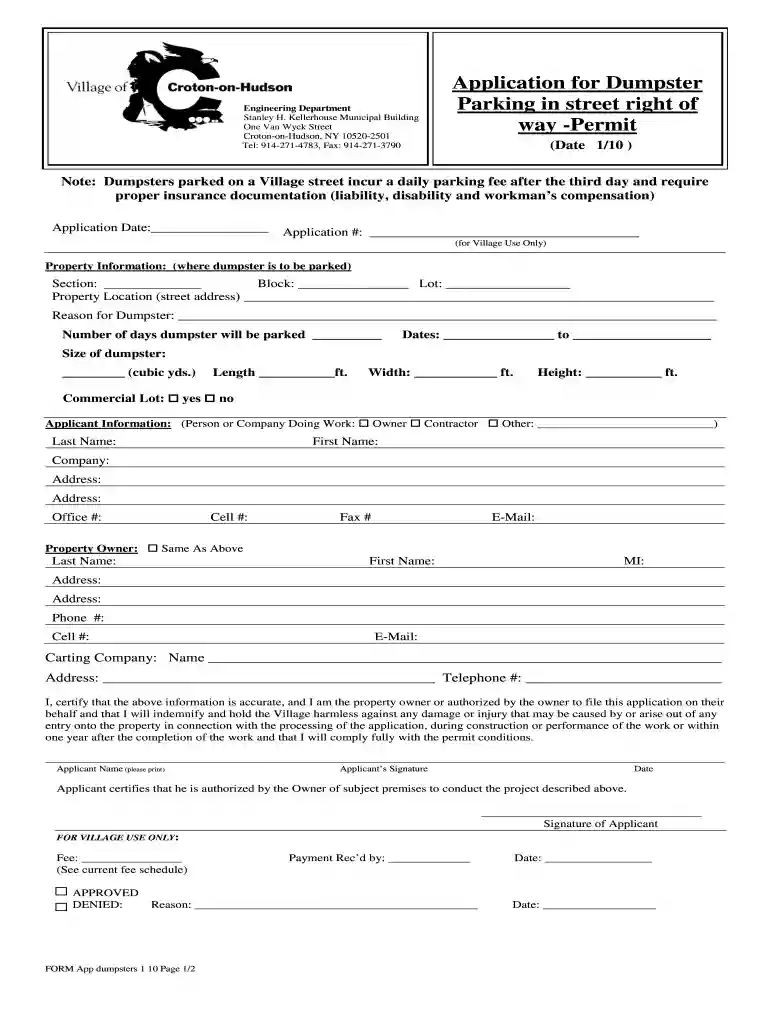
An application for the Dumpster Engineering Department in the street is a formal request to obtain a permit to place a dumpster on a public street. This type of form is typically used in urban settings where space is limited, and dumpsters are necessary for large-scale waste management projects, such as home renovations or community cleanups. The application ensures that all necessary regulations are observed, helping to maintain safety, order, and compliance with local laws.
Purpose of the Form
- Permit Regulation: This application is crucial for regulating the placement of dumpsters on public streets to avoid obstructions and ensure public safety.
- Legal Compliance: It helps the applicant comply with local ordinances and obtain legal permission for temporary dumpster placement.
- Community Impact: The form addresses potential impacts on traffic, parking, and accessibility in densely populated areas.
How to Use the Application for Dumpster Engineering Department in Street
Step-by-Step Process
- Identify Needs: Determine the necessity for a street-placed dumpster based on the scope and scale of waste management needs.
- Download the Form: Obtain the application form from the relevant municipal authority or its designated website.
- Fill Out the Form: Provide all required information accurately, including personal details, property information, and the intended use of the dumpster.
- Submit the Application: Send the completed form to the appropriate department via specified submission methods.
Critical Details
- Property Information: Include address, dimensions, and location specifics where the dumpster will be placed.
- Usage Intent: Specify the reason for the dumpster, such as construction debris removal or community event cleanup.
Steps to Complete the Application for Dumpster Engineering Department in Street
Detailed Instructions
-
Personal Information: Clearly print the applicant's name, address, and contact information for accountability and follow-up.
-
Property Details: Describe the property's location, referencing nearby landmarks or cross streets for clarity.
-
Dumpster Specifications: Specify the dumpster size and dimensions to ensure compliance with street space availability.
-
Project Details: Outline the scope of the project requiring the dumpster, including estimated start and end dates.
-
Sign and Date: Sign the application to affirm that all provided information is accurate to the best of your knowledge.

Common Mistakes to Avoid
- Incomplete Information: Ensure all sections are filled out to prevent delays in processing.
- Inaccurate Details: Double-check property and contact details for accuracy.
Why You Should Apply for a Dumpster Permit
Benefits of Compliance
- Legal Protection: Applying for and obtaining a permit protects against fines and legal issues associated with unauthorized street obstruction.
- Project Planning: A permit helps coordinate the logistics of waste management, contributing to efficient project timelines.
Impacts of Non-Compliance
- Fines and Penalties: Non-compliance can lead to monetary penalties and forced removal of the dumpster.
- Safety Concerns: Improper dumpster placement can lead to accidents or injuries, for which the responsible party may be liable.
Who Typically Uses the Application for Dumpster Engineering Department in Street
Common User Profiles
- Construction Companies: Often require multiple dumpsters for debris removal during building phases.
- Event Organizers: May need temporary waste management solutions for community events or festivals.
- Homeowners: Engage in home renovations or large-scale cleanouts that necessitate temporary dumpster placement.
Key Elements of the Application for Dumpster Engineering Department in Street
Essential Components
- Applicant Information: Verification of the individual or company responsible for the dumpster.
- Purpose Statement: Clearly defined reason for application to justify the need for the permit.
- Location and Timing: Detailed description of the placement site and duration to ensure proper logisitics are in place.
Supporting Documentation
- Insurance Information: Proof of insurance may be required to protect against damages.
- Maps or Diagrams: Visuals that detail the intended placement area for the dumpster.
Required Documents
Essential Papers
- Proof of Identity: Such as a driver’s license or business identification for verification purposes.
- Project Plan: Detailed outline or plan of the waste management needs supporting the use of a dumpster.
Additional Requirements
- Insurance Certificates: Showing coverage for potential accidents or damage.
- Permit Fees: Payment records or fee agreements as applicable.
Application Process & Approval Time
From Application to Approval
-
Initial Review: Municipal officers review applications for completeness within a specified timeframe, typically one to two weeks.
-
Inspection: In some cases, an onsite inspection is required to assess suitability for dumpster placement.
-
Final Decision: Approval or denial notification is sent to the applicant, often with specific conditions attached to approved permits.
Potential Delays
- Incomplete Applications: Missing information can significantly delay processing.
- High Submission Volumes: Cities with frequent construction can have longer processing times due to high application volumes.