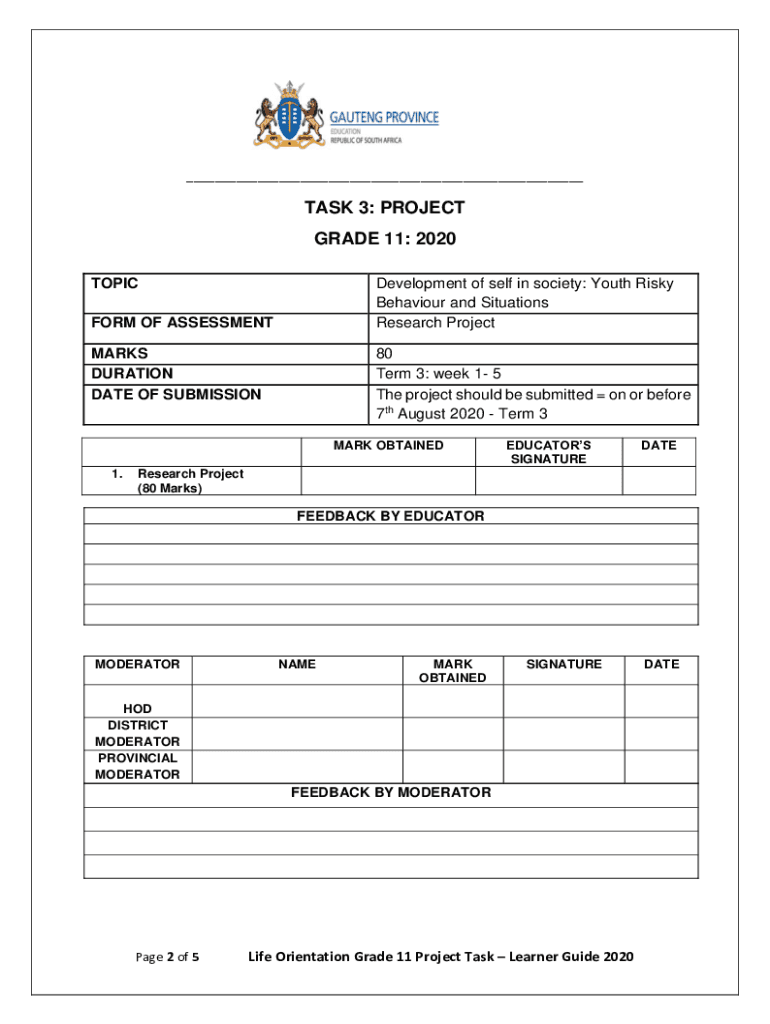







Understanding the Life Orientation Task 3 Project 2024 Memorandum for Grade 11
The Life Orientation Task 3 Project for Grade 11, slated for 2024, is an educational guide focused on various psychosocial issues affecting youth. It emphasizes real-world problems like substance abuse, peer pressure, and personal safety to enhance youths' lifestyles. This memorandum is designed as a PDF document, widely accessible for students and educators, facilitating a structured approach to addressing sensitive topics in an educational setting.
Key Components of the Project
-
Research on Youth Risky Behaviors: Essential for students, this component involves investigating behaviors such as substance use, risky sexual conduct, and issues with personal safety. The aim is to analyze the impact of these behaviors and suggest ways to mitigate risks.
-
Assessment Criteria: The project evaluates students on their ability to research, analyze, and propose solutions effectively. This includes examining the societal impacts and presenting comprehensive action plans.
-
Promoting Healthier Lifestyles: By educating students on various issues, the project seeks to arm youths with knowledge leading to informed decision-making and healthier lifestyle choices.
How to Use the Life Orientation Task 3 Project 2024 Memorandum
The memorandum serves as a guide for students tasked with completing their Grade 11 Life Orientation project. It outlines step-by-step processes for carrying out research, analyzing information, and drafting comprehensive reports.
Steps to Follow
- Read the Guidelines: Begin with a thorough understanding of the provided memorandum, focusing on the outline and criteria.
- Select a Topic: Choose a youth-risky behavior or situation for in-depth study from the suggested list.
- Conduct Research: Use credible sources to gather data, ensuring a comprehensive understanding of the chosen topic.
- Analyze the Impacts: Discuss how these issues affect individual and societal well-being.
- Draft a Report: Compile findings, analysis, and proposed solutions into a structured report.
- Review and Edit: Ensure the report aligns with the memorandum guidelines and criteria before submission.
Steps to Complete the Form
Completing the Life Orientation Task 3 Project 2024 involves several steps. It requires thorough preparation, from understanding project requirements to delivering a final report.
Detailed Completion Process
- Understanding the Requirements: Grasp the objectives, themes, and subjects to be covered in the project.
- Developing a Research Plan: Outline your approach, including the resources and methods you will use.
- Data Collection and Analysis: Gather data through various means such as surveys, interviews, or literature reviews, and analyze it systematically.
- Drafting and Revising: Write the initial draft, focusing on clarity and coherence, then refine it for quality and precision.
- Final Submission: Ensure everything meets the criteria outlined in the memorandum before submitting.
Importance of the Life Orientation Task 3 Project
This project plays a crucial role in shaping students' perspectives on significant societal issues by encouraging critical thinking and problem-solving.
Benefits
- Enhanced Awareness: Increases students' understanding of real-world challenges.
- Skill Development: Encourages research, analysis, and reporting skills essential for academic and personal growth.
- Social Responsibility: Fosters a sense of responsibility and proactive attitudes towards societal problems among students.
Who Uses the Life Orientation Task 3 Project 2024 Memorandum?
Primarily used by Grade 11 students and educators, this document is instrumental in guiding academic projects focused on societal and personal development.
User Profiles
- Students: Utilize it to guide their research and project development.
- Educators: Leverage the memorandum to instruct and evaluate student performance.
- Education Administrators: Use it to ensure educational standards and project relevance.
Key Elements of the Memorandum
The memorandum includes specific sections that guide the structure and content of the project.
Essential Sections
- Introduction: Outlines the project's goals and focus areas.
- Project Themes: Details key topics and issues to be explored.
- Assessment Criteria: Provides the basis on which students will be evaluated.
- Submission Guidelines: Explains the process and format for project delivery.
Examples of Risky Behaviors Covered
The memorandum encourages exploring various risky behaviors to understand their implications better.
Common Risks
- Substance Use: Investigating causes and effects of drug and alcohol use.
- Peer Pressure: Analyzing its role in influencing negative behaviors.
- Unsafe Sexual Practices: Addressing the consequences and promoting safe practices.
Legal and Ethical Use of the Document
The memorandum must be used ethically, respecting educational integrity standards set for academic projects.
Guidelines for Use
- Adhere to plagiarism rules and cite sources appropriately when conducting research.
- Ensure solutions proposed are realistic and culturally sensitive.
- Respect participant confidentiality if conducting interviews or surveys.