






Definition & Meaning
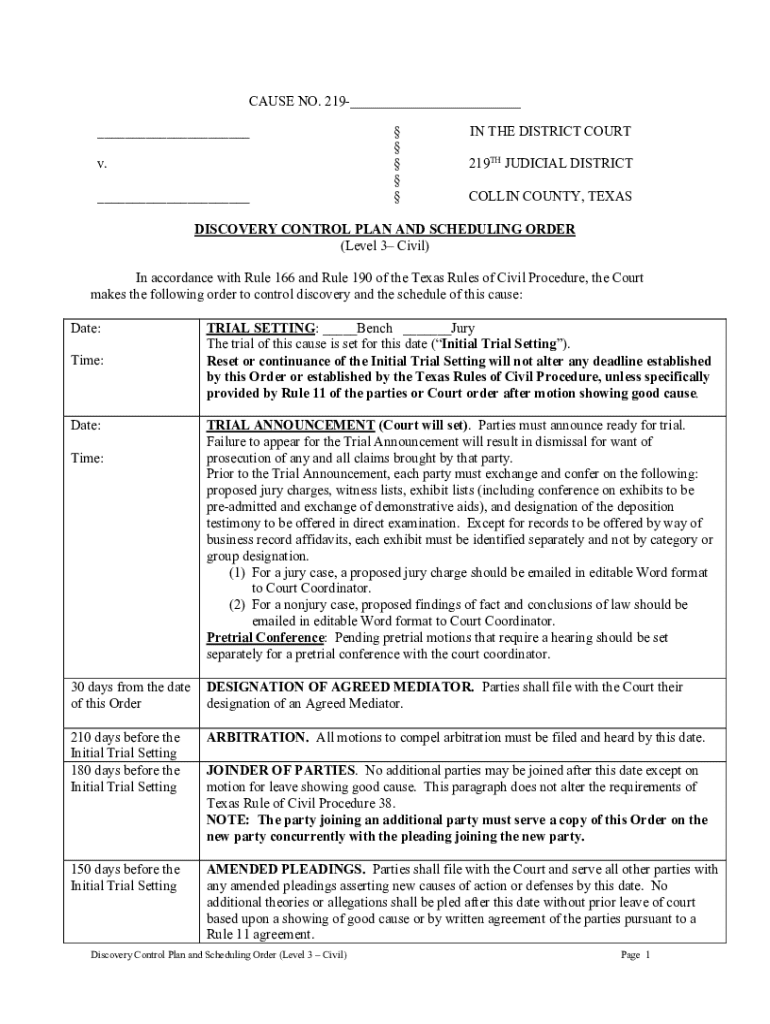
The "Form 3 Order for Scheduling Conference and Disclosure of" is a legal document used within the judicial process to establish timelines for pretrial activities in civil cases. This form is integral to setting a framework for court proceedings by scheduling conferences and specifying the disclosure of information between parties. It helps ensure that both the plaintiff and defendant adhere to agreed schedules and exchange necessary documents and information, thereby preventing delays in the legal process. The structure encourages systematic disclosure and promotes an efficient litigation process.
Key Elements of the Form 3 Order
The form contains several critical components that facilitate legal proceedings:
- Scheduling Conference Date: Specifies the date and time when the involved parties must convene to discuss the case timeline and necessary disclosures.
- Disclosure Requirements: Outlines the types of information and documents each party must share, including witness lists, evidence, and any expert testimonies to support their positions.
- Deadlines for Filings: Details the due dates for filing motions, amendments to pleadings, and discovery requests, ensuring all parties are aware of their obligations.
- Mediation and Settlement Discussion: May include provisions for mediation sessions or settlement discussions as an alternative to prolonged litigation.
- Compliance Obligations: Emphasizes the necessity for all parties to comply with the form’s requirements to avoid potential legal penalties or sanctions.
How to Use the Form 3 Order
Utilizing the Form 3 Order effectively requires understanding its procedural context:
- Preparation: Gather all necessary case documents, including initial pleadings and discovery materials.
- Review Deadlines: Familiarize yourself with all deadlines outlined in the order to ensure timely compliance.
- Conducting Disclosures: Follow the schedule for disclosing information, ensuring all required documents are shared with the opposing party and court.
- Participating in Conferences: Attend scheduled conferences actively, engaging with the court and opposing party to iron out case details.
- Monitoring Compliance: Keep track of all obligations and confirmations of received disclosures to prevent disputes.
Steps to Complete the Form 3 Order
Completion of this form involves several specific steps:
- Identify Case Information: Include details such as case number, involved parties, and court jurisdiction.
- Specify Conference Details: Indicate the scheduling conference date and location.
- Outline Disclosure Items: Detail what items need to be disclosed and the timeline for each disclosure.
- Indicate Filing Deadlines: Clearly outline the deadlines for various pretrial activities.
- Finalize and Sign: Ensure all parties and the presiding judge review and sign off on the form.
Who Typically Uses the Form 3 Order
This form is primarily used by:
- Attorneys: Legal representatives who manage the case and ensure that their clients adhere to all requirements within the procedural timeline.
- Litigants: Parties involved in the lawsuit who must collaborate with their attorneys to meet disclosure requirements.
- Judges and Court Staff: Officers manage and enforce compliance with the timelines set out in the form, ensuring orderly proceedings.


Legal Use of the Form 3 Order
From a legal standpoint, the use of this form is governed by court rules which necessitate:
- Timely Disclosures: To facilitate fair trials, each party must adhere to respective disclosure timelines to avoid legal penalties.
- Process Transparency: By clearly outlining the case schedule and disclosure requirements, the form ensures that the judicial process remains transparent and accessible for all involved parties.
- Resolving Disputes: Acts as a reference point for resolving any disputes related to disclosure or scheduling, ensuring the proceedings remain on track.
State-Specific Rules for the Form 3 Order
The application and specifics of the Form 3 Order can vary based on state jurisdiction:
- Texas Example: In Texas, this form may be part of a Discovery Control Plan, ensuring compliance with state-specific timelines for pretrial work.
- Variations Across States: Some states might have different deadlines and requirements based on local laws and judicial predispositions.
Important Terms Related to the Form 3 Order
A few terms connected to this form include:
- Discovery: The pretrial phase where both parties exchange relevant information.
- Mediation: A facilitated negotiation process aimed at resolving the dispute before trial.
- Pleadings: The formal written statements of both parties’ claims and defenses.
By understanding these components, those involved in legal proceedings can leverage the form for efficient case management and judicial process compliance.