
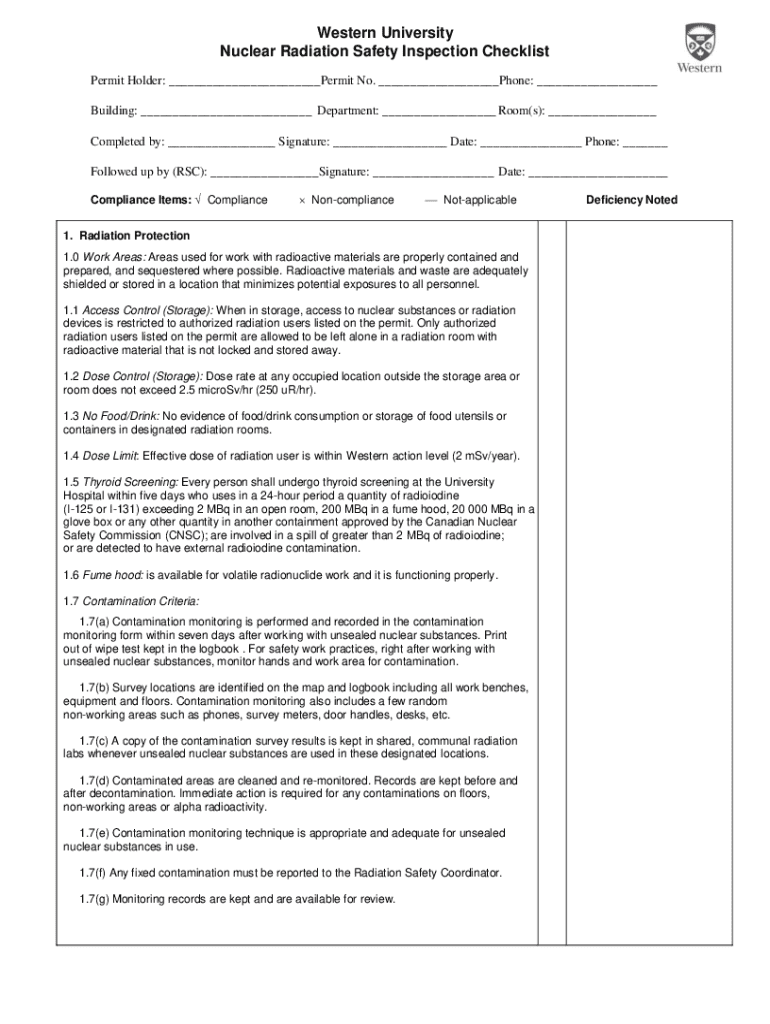







Definition and Meaning
The Nuclear Radiation Safety Inspection Checklist is a critical document used to ensure compliance with safety protocols and regulatory standards for handling radioactive materials. It is designed to minimize exposure to nuclear substances and ensure that all safety measures are adhered to by permit holders and radiation users. This checklist assists in outlining the necessary procedures and protocols to promote a safe working environment when dealing with nuclear radiation. Key sections typically include radiation protection, emergency procedures, environmental safeguarding, training requirements, and operational management. The checklist serves as both a guide and a record for safety inspections.
How to Use the Nuclear Radiation Safety Inspection Checklist
Using the Nuclear Radiation Safety Inspection Checklist involves methodically reviewing and verifying compliance with all outlined safety requirements. Start by understanding the scope and purpose of each checklist item, ensuring that all relevant sections are applicable to your specific setting.
- Gather Required Information: Collect all necessary documentation and data related to nuclear materials and safety protocols.
- Section Review: Go through each section related to radiation protection, emergency procedures, etc.
- Verification: Verify that all equipment and materials meet safety standards and are appropriately documented.
- Compliance Check: Ensure all staff are trained and that the training is documented as required under the checklist.
- Record Findings: Document observations and areas that meet or fail to meet compliance standards.
- Action Plan: For non-compliant areas, create a corrective action plan and assign duties for addressing any deficiencies.
Steps to Complete the Nuclear Radiation Safety Inspection Checklist
Completing the Nuclear Radiation Safety Inspection Checklist requires discipline and thoroughness to ensure safety and compliance. Here is a step-by-step guide to aid in the completion process:
- Preparation: Before starting, familiarize yourself with the entire checklist to understand what is required in each section.
- Initial Assessment: Conduct a preliminary assessment to identify any obvious areas of concern or requiring immediate attention.
- Systematic Review: Work systematically through the checklist, checking each item for compliance.
- Engage Experts: Involve qualified personnel, such as radiation safety officers, who can provide expert insights.
- Document Non-Compliance: Clearly document any areas where standards are not met and note potential risks.
- Compile Report: Arrange findings in a report that outlines compliant and non-compliant areas, with supporting evidence.
- Follow-Up Actions: Propose action steps for any non-compliance, including timelines for implementation and responsible parties.
- Final Review and Submission: Conduct a final review to ensure completeness before officially submitting your findings to relevant authorities.
Key Elements of the Nuclear Radiation Safety Inspection Checklist
The Nuclear Radiation Safety Inspection Checklist consists of several critical components:
- Radiation Protection: Ensures that all protective measures such as shielding and monitoring devices are in place.
- Emergency Procedures: Outlines steps for responding to radiation emergencies, including evacuation routes and emergency contacts.
- Environmental Protection: Measures to prevent contamination and control release of radioactive materials.
- Training: Verification that all personnel have received appropriate training and refreshers on radiation safety.
- Operational Procedures: Confirm that standard operating procedures are documented, accessible, and followed.
- Security Measures: Ensures that only authorized personnel have access to radioactive materials and that security protocols are in place.
- Packaging and Transportation: Proper procedures for the safe packaging and transport of radioactive materials.
Required Documents for the Nuclear Radiation Safety Inspection Checklist
To effectively complete the Nuclear Radiation Safety Inspection Checklist, gather the following documents:
- Safety Data Sheets for all radioactive materials used.
- Training records and certifications for all personnel interacting with radiation.
- Maintenance logs for radiation detectors and monitoring equipment.
- Incident reports from any previous radiation exposure or safety breaches.
- Environmental monitoring reports and contamination level data.
- Emergency response plans and communication logs.
Who Typically Uses the Nuclear Radiation Safety Inspection Checklist
This checklist is primarily used by a range of stakeholders engaged with radioactive materials, including:
- Radiation Safety Officers: Responsible for ensuring compliance and safety within an organization.
- Laboratory Technicians: Handling and working directly with radioactive substances.
- Facility Managers: Overseeing operations involving radioactive materials.
- Health Physicists: Specializing in radiation safety and protection.
- Regulatory Inspectors: Evaluating adherence to safety standards and protocols.


Penalties for Non-Compliance
Non-compliance with the Nuclear Radiation Safety Inspection Checklist can have serious consequences, including:
- Fines and Penalty Payment: Financial penalties levied by governmental and regulatory bodies.
- Operational Shutdown: Immediate suspension of operations involving radioactive materials.
- Legal Repercussions: Potential lawsuits from exposure incidents or environmental contamination.
- Reputation Damage: Long-term damage to institutional credibility and public trust.
- Increased Regulation: Subject to more frequent and rigorous inspections in the future.
Digital vs. Paper Version of the Checklist
The Nuclear Radiation Safety Inspection Checklist can be maintained in both digital and paper formats. Each has its advantages:
- Digital Version: Offers ease of sharing, real-time updates, and enhanced security with version control; suitable for organizations equipped with digital infrastructure.
- Paper Version: Provides a tangible copy with no need for technology; ideal in settings with limited electronic access or for archival purposes.
Both versions must be properly maintained and regularly updated to ensure compliance and safety.




