01. Edit your fedex fillable bol online
Type text, add images, blackout confidential details, add comments, highlights and more.

Type text, add images, blackout confidential details, add comments, highlights and more.

Draw your signature, type it, upload its image, or use your mobile device as a signature pad.

Send fedex pdf freight via email, link, or fax. You can also download it, export it or print it out.
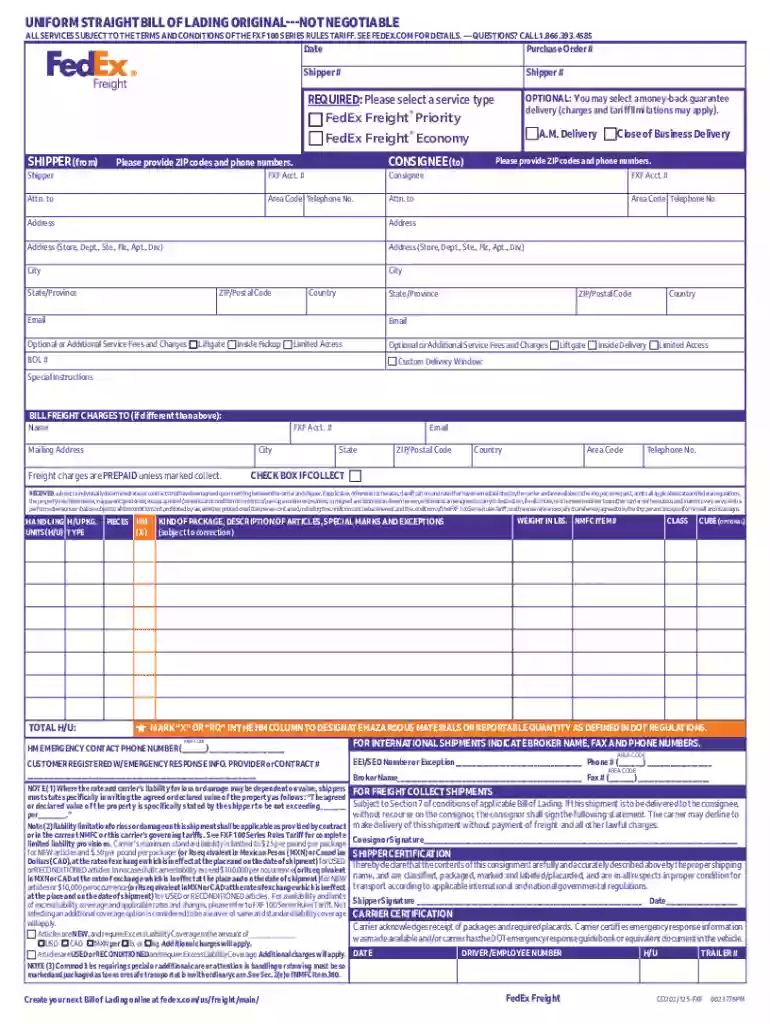
The CO202-FXF - Uniform Straight BOL (125) is a Uniform Straight Bill of Lading, which serves as an official document in the shipping industry. It acts as a contract between the shipper and carrier to outline the terms of transporting goods from one location to another. This form encompasses all necessary information about the shipment, such as the consignee details, shipping instructions, and freight details, ensuring that both parties are well-informed and agree on the responsibilities and liabilities involved in the transportation process.
To effectively utilize the CO202-FXF, the shipper must complete the form with detailed shipment information. The process includes:
Filling Shipper Details: Start by entering the shipper's name, address, and contact information. Accurate shipper details ensure that the carrier knows exactly where the shipment originates.
Consignee Information: Provide the recipient's (consignee's) details, including name, address, and contact. This information is critical for the carrier to know the final destination of the shipment.
Freight Charges: Clearly specify who is responsible for the freight charges – whether it’s prepaid by the shipper, collect, or third-party billing.
Goods Description: Include a detailed description of the goods, including the type of commodity, weight, and any special handling instructions.
Signatures: Obtain the necessary signatures from both shipper and carrier to validate the agreement and initiate the transport process.
Completing the CO202-FXF involves several crucial steps:
Review the Instructions: Make sure to read any guidelines that come with the form to ensure compliance with all requirements.
Accurate Data Entry: Enter all essential shipment data in the correct fields, such as cargo weight, type, and value. Ensure accuracy to prevent shipment delays or complications.
Address any Specific Instructions: If there are any unique requirements for the shipment, they need to be clearly noted to allow carriers to appropriately plan and manage the delivery.
Check for Required Fields: Confirm that all compulsory fields are filled. Missing information can invalidate the form and disrupt the shipping process.
Procure Signatures: Ensure that the required signatures are obtained from both the shipper and carrier to confirm their agreement to the terms depicted in the form.
A CO202-FXF - Uniform Straight BOL (125) is composed of several key elements:
Shipper and Consignee Information: It must clearly list the details for both the shipper initiating the delivery and the consignee receiving the goods.
Freight Details: Accurate description including the type of goods, their weight, and dimensions are crucial.
Special Instructions: Any additional guidance for handling or transport should be clearly specified.
Payment Terms: Outline of who bears the freight costs - whether it is shipped prepaid, collect, or billed to a third party.
Certification and Acknowledgments: Signatures from both involved parties, confirming and authorizing the terms described.
The CO202-FXF functions within the legal framework as a binding contract and receipt for freight services. It provides legal protections and assigns responsibilities regarding the shipment. It's essential to understand its legal implications:
Liability Agreement: Defines the liability cap for the carrier, in case of loss or damage to goods.
Contractual Obligations: Both shipper and carrier are legally bound to the terms, protecting against disputes.
Before issuing a CO202-FXF, shippers should have several documents ready:
Product Invoices: These detail the goods being shipped, offering proof of the items' value.
Export or Import Permits: If shipping internationally, permits are necessary for customs processing.
Insurance Documents: Proof of insurance coverage for the shipment to mitigate liability for potential losses.
The CO202-FXF can be submitted through various methods depending on the carrier and shipper's preference:
Online Platforms: Many modern shipping companies facilitate BOL submissions electronically for convenience.
Mail or Courier: Traditional paper forms can be mailed, though this may delay processing.
In-Person Submission: Direct delivery to the carrier's office may be required for high-security shipments.
Different states may have specific regulations affecting Bill of Lading use:
Variations in Term Definitions: Some states may have unique terminology or specify different liability limits.
Local Carrier Regulations: Certain states impose particular standards on carriers that must be incorporated into the BOL.
Understanding these differences ensures compliance with local laws and helps maintain a seamless shipping experience. Shippers should verify any state-specific requirements with the carrier or legal counsel to ensure conformance with jurisdictional laws.
We've got more versions of the fedex fillable bol form. Select the right fedex fillable bol version from the list and start editing it straight away!
At DocHub, your data security is our priority. We follow HIPAA, SOC2, GDPR, and other standards, so you can work on your documents with confidence.