Occupational therapy task observation scale 2026

Get Form
occupational therapy task observation scale Preview on Page 1

Here's how it works

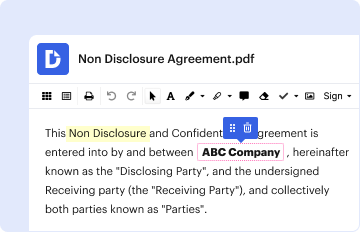
01. Edit your occupational therapy task observation scale online
Type text, add images, blackout confidential details, add comments, highlights and more.
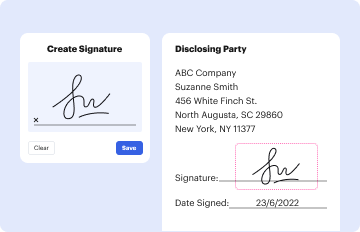
02. Sign it in a few clicks
Draw your signature, type it, upload its image, or use your mobile device as a signature pad.
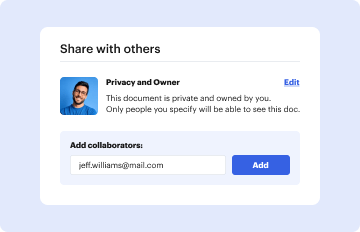
03. Share your form with others
Send ottos assessment via email, link, or fax. You can also download it, export it or print it out.

How to use or fill out occupational therapy task observation scale with our platform

Form edit decoration
9.5
Ease of Setup
DocHub User Ratings on G2
9.0
Ease of Use
DocHub User Ratings on G2
  1. Click ‘Get Form’ to open the Occupational Therapy Task Observation Scale (OTTOS) in the editor.
  2. Begin by entering the date at the top of the form. This helps in tracking patient progress over time.
  3. In Part 1, Task Behavior, evaluate each item from 0 to 10 based on your observations. For example, assess 'Engagement' by circling a number that reflects the patient's interest level during tasks.
  4. Continue through each item in Part 1, including 'Coordination', 'Follow Direction', and others, ensuring you provide an accurate score based on observed behaviors.
  5. Move to Part 2, General Behavior, and similarly rate items such as 'Appearance' and 'Cooperation'. Use the same scoring method for consistency.
  6. Once all sections are completed, review your scores for accuracy. Add any additional comments in the provided section to elaborate on specific observations.

Start using our platform today to streamline your document editing and enhance your occupational therapy evaluations for free!

be ready to get more

Complete this form in 5 minutes or less

Get form

Got questions?

We have answers to the most popular questions from our customers. If you can't find an answer to your question, please contact us.
Contact us
12 Easiest Masters in Occupational Therapy Programs to Get Into MHA - Master of Health Administration George Washington University. Master of Heathcare Administration UMass Global. Master of Healthcare Administration (MHA) - General Walden University.
The Occupational Therapy Task Observation Scale (OTTOS) is an English assessment tool developed at Johns Hopkins University (Baltimore, Maryland) in 19961. It is divided into two sub-scales: Part 1 Task Behavior and Part 2 General Behavior.
Occupational therapy assessments look at specific areas of a clients functioning and needs. This can include fine motor skills, gross motor skills, visual perceptual skills, sensory integration, executive functioning and self care skills.
The scale assesses the patients perception of OT-related symptoms over a 1-week period. Each item is ranked on a scale of 0 (no disability/severity) to 5 (maximal disability/severity), with a maximum score of 50. Higher scores correspond to greater disability.
Role of Task Analysis in Occupational Therapy It involves breaking down a functional task into its components and underlying factors to analyze the clients occupational performance. By doing so, you can identify the challenges and potential areas of improvement in their abilities to perform everyday tasks.

Security and compliance

At DocHub, your data security is our priority. We follow HIPAA, SOC2, GDPR, and other standards, so you can work on your documents with confidence.

Learn more
ccpa2
pci-dss
gdpr-compliance
hipaa
soc-compliance
be ready to get more

Complete this form in 5 minutes or less

Get form

People also ask

Common Assessment Tools in OT: Adolescent/Adult Sensory Profile. Assessment of Motor and Process Skills (AMPS) Back on Track. Bayley Scales of Infant Development (BSID) Berry-Buktenica Developmental Test of Visual-Motor Integration (BEERY VMI) Developmental Test of Visual Perception (DTVP-2)
EASY-OT is a collection of summary forms, informal checklists, and resource materials for guiding evaluations, documenting results, and planning interventions. There are no norms associated with EASY-OT, but it does provide space to record results from the 14 most commonly used standardized tests.
Getting ready for your OT assessment Gather Information: Relevant medical details, recent test results, and current medications. Review Daily Activities: Consider your daily routine and note areas of difficulty. Communicate: Share your goals, concerns, and relevant information during the assessment.

Related links