
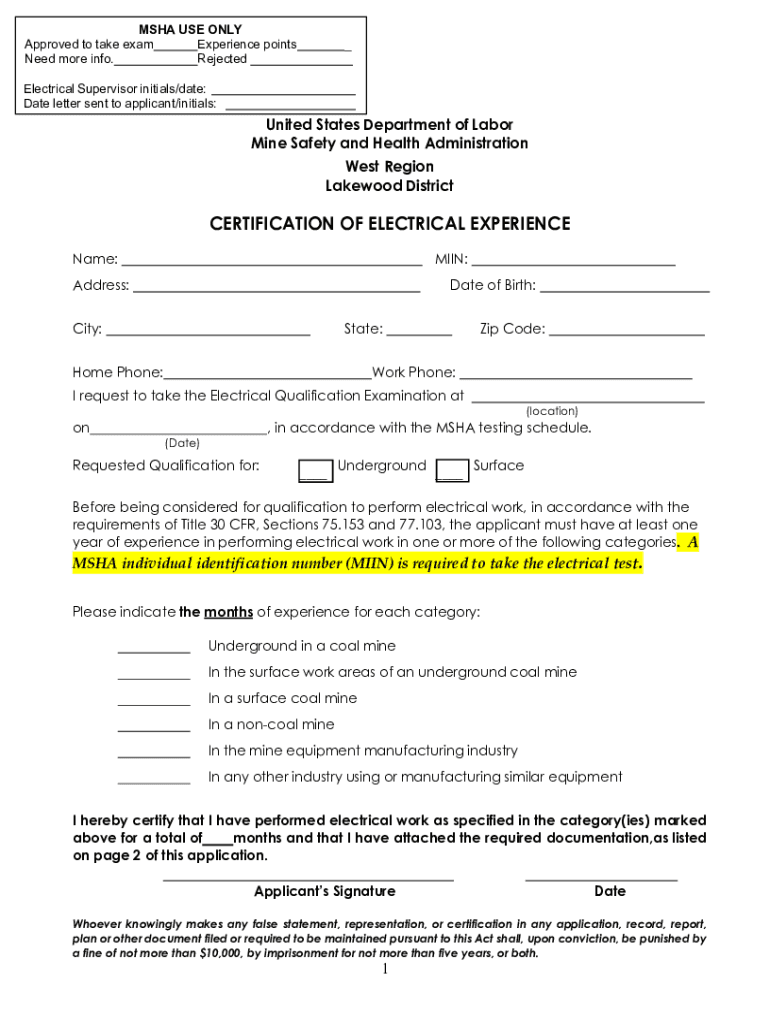







Definition and Meaning
Overview of 30 CFR Part 18
The "30 CFR Part 18" pertains to the regulations governing the use and design of electric motor-driven mine equipment and accessories. Established by the Mine Safety and Health Administration (MSHA), these regulations ensure safety standards are met in underground mining operations in the U.S. By adhering to Part 18, mine operators can maintain compliance with federal safety standards, thereby protecting workers and minimizing the risk of incidents.
Importance in Mining Operations
Electric motor-driven equipment under these regulations includes machines used for drilling, transporting miners, and other critical tasks within mines. These rules are pivotal in ensuring that equipment functions safely by addressing key aspects such as flame protection, electrical systems, and more. Proper understanding and application of 30 CFR Part 18 help to reduce equipment-related hazards and improve overall mine safety.
Steps to Complete the 30 CFR Part 18 Application
Application Process Breakdown
-
Initial Assessment
- Determine if the equipment requires certification under 30 CFR Part 18. Ensure that equipment used is in line with these safety standards and regulations before proceeding.
-
Documentation Preparation
- Gather all necessary documentation verifying the compliance of the equipment. This includes electrical schematics, material specifications, and other technical information pertinent to the equipment's safety features.
-
Submission and Review
- Submit the application and required documents to MSHA for evaluation. The review process will validate the equipment’s conformity to the defined standards.
-
Approval and Compliance Checking
- Once MSHA approves the application, ensure continuous compliance by regularly checking equipment for adherence to safety protocols.
Key Requirements
- Accurate documentation of electrical and mechanical systems.
- Verification of equipment testing against safety standards.
- Detailed records of materials and manufacturing processes.
Key Elements of 30 CFR Part 18
Essential Features
- Flame-Resistance Requirements: Equipment must be designed to prevent electrical fires or explosions in hazardous underground environments.
- Electrical Safety Standards: Thoroughly defined parameters for electrical components to ensure they do not pose risks to operators.
- Testing Protocols: Guidelines for testing equipment to comply with safety standards under Part 18.
Compliance Documentation
Ensure all compliance documents accurately describe the equipment and its function. This documentation should include diagrams, test results, and certifications from recognized testing laboratories.
Legal Use of 30 CFR Part 18
Compliance and Regulation
Adhering to the standards set forth in 30 CFR Part 18 is a legal requirement for mining operations using electric motor-driven equipment. Regulatory compliance involves not only initial certification but also ongoing monitoring and updates to equipment as new technologies emerge or standards evolve.
Penalties for Non-Compliance
Failure to comply with these regulations can result in significant penalties, ranging from fines to operational shutdowns. Ensuring full compliance not only protects workers but also minimizes legal and financial risks to the business.
Who Typically Uses the 30 CFR Part 18


Target Audience
- Mining Operators: Primarily responsible for the safe operation of mine sites, ensuring that all equipment used meets the required safety standards.
- Equipment Manufacturers: Companies that design and manufacture electric motor-driven mine equipment should comply with Part 18 to ensure their products are marketable in U.S. mines.
- Safety Inspectors: Professionals tasked with maintaining high safety standards through regular inspections and assessments of mine equipment.
Practical Usage Scenarios
Operators should incorporate regular compliance checks into their safety protocols, while manufacturers must seek certification as part of their production and quality assurance processes.
Important Terms Related to 30 CFR Part 18
Key Technical Terminology
- Flameproof Enclosure: A type of equipment housing designed to contain any ignition and prevent it from spreading.
- Intrinsically Safe Equipment: Equipment that is safe to use in hazardous environments because it cannot cause ignition.
- Voltage Regulation: Ensures that the voltage within an electrical system remains within safe limits.
Understanding Jargon
Familiarize yourself with these terms to effectively apply the regulations and communicate with regulatory bodies, inspectors, and manufacturers.
Required Documents for 30 CFR Part 18 Compliance
Essential Documentation
- Design Schematics: Detailed blueprints of the electrical and mechanical systems.
- Safety Certificates: Proof of compliance from recognized safety testing bodies.
- Maintenance Logs: Records of regular maintenance to ensure ongoing compliance.
Document Preparation
Ensure each document is accurate and up-to-date, providing a comprehensive overview of the equipment’s design, functionality, and compliance with safety standards.
Examples of Using the 30 CFR Part 18
Case Studies in Mining
- A coal mine in West Virginia successfully implemented 30 CFR Part 18 by substituting outdated machinery with compliant motor-driven equipment, reducing incident rates significantly.
- In a Nevada gold mine, transitioning to certified flameproof enclosures as per Part 18 resulted in enhanced operational safety and regulatory approval during inspections.
Real-World Applications
Using these standards, mines can significantly improve safety conditions, thereby enhancing operational efficiency and reducing downtime due to equipment malfunction or safety violations.




