






Definition and Purpose of the MCS-150 Form PDF
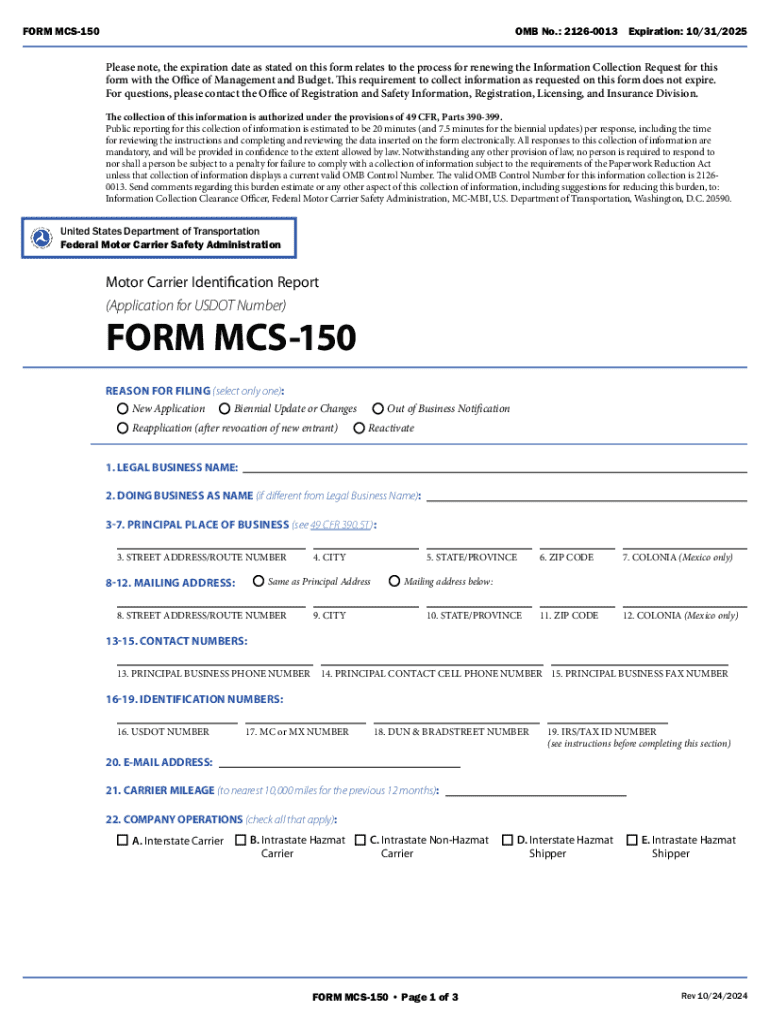
The MCS-150 form, officially known as the "Motor Carrier Identification Report," is a pivotal document in the transportation sector. It serves a dual purpose: registering vehicles with the Federal Motor Carrier Safety Administration (FMCSA) to obtain a unique USDOT Number and updating the agency on changes in business operations. This form is instrumental for regulatory compliance, ensuring that motor carriers adhere to federal safety standards. Carriers, including freight companies and passenger transport services, must periodically submit this form to maintain their operational status, reflecting any alterations in company details, fleet size, or driver information.
How to Obtain the MCS-150 Form PDF
Acquiring the MCS-150 form can be completed both online and offline. The FMCSA website offers a downloadable PDF version of the form, readily accessible for businesses. Alternatively, carriers can request a physical copy by contacting the FMCSA directly, allowing those with limited internet access to fulfill their obligations. Once obtained, the form provides detailed filing instructions, ensuring that even those unfamiliar with regulatory paperwork can navigate the process effectively. The online option also presents a simplified submission process, leveraging digital tools to streamline compliance.
Steps to Complete the MCS-150 Form PDF
Completing the MCS-150 form involves several steps aimed at accurately capturing your business profile. Here is a step-by-step guide:
- Business Information: Begin with basic details, including your business name, address, and contact information.
- USDOT Number: If you are renewing or updating information, note your existing USDOT Number.
- Operation Classification: Specify whether your operations are interstate or intrastate and indicate the type of cargo transported.
- Driver and Vehicle Data: Identify the number of drivers and vehicles in your fleet, providing specifics on the vehicle types.
- Certifications: A company official must attest to the accuracy of the information with a signature.
- Submission: The completed form can be submitted online via the FMCSA portal or mailed to the address provided in the form instructions.
Why the MCS-150 Form is Essential
Adhering to the requirement of the MCS-150 form is crucial for several reasons. Firstly, it legitimizes your business operations and assures partners and clients of compliance with federal regulations. The form also plays a significant role in ensuring public safety, as it helps maintain an up-to-date record of qualified operators and roadworthy vehicles. Furthermore, consistent updates prevent administrative penalties and disruptions in operations due to outdated or missing information, safeguarding your business's reputation and fiscal health.
Key Elements to Include in the MCS-150 Form PDF
The MCS-150 form requires specific details that are vital for regulatory compliance:
- Carrier Identification: Essential for tracking and identification within the federal registry, requiring the legal business name and, if applicable, DBA names.
- Cargo Classification: Indicates the types of goods transported, such as hazardous materials, which impacts your safety compliance requirements.
- Operational Status and Fleet Size: Reflects the current scale of your operations, aiding in policy determinations by the FMCSA.
Penalties for Non-Compliance
Failure to comply with MCS-150 filing requirements can result in severe repercussions for motor carriers. Non-compliance may lead to severe fines, and continual disregard could result in the revocation of a USDOT Number, effectively suspending business operations. The FMCSA closely monitors adherence to these regulations, emphasizing the importance of timely and precise submissions to avoid such penalties.
Who Typically Uses the MCS-150 Form PDF
The MCS-150 form is primarily utilized by motor carriers engaged in either freight or passenger transportation. This includes diverse business entities such as trucking companies, bus operators, and logistics providers. Entities with fleets operating across state lines are especially dependent on this form to validate their interstate commerce status through the FMCSA's oversight, ensuring they meet both federal and varying state-specific regulations.


Filing Deadlines and Important Dates
The FMCSA mandates biennial updates for the MCS-150 form, with submissions required every 24 months from the initial registration date. Businesses must adhere to a prescribed schedule based on their USDOT Number, facilitating systematic updates across the industry. Failure to meet these deadlines can result in penalties or suspension, underscoring the need for careful attention to the filing calendar to maintain compliance and uninterrupted operations.