






Overview of the MCS-150 Form 2004
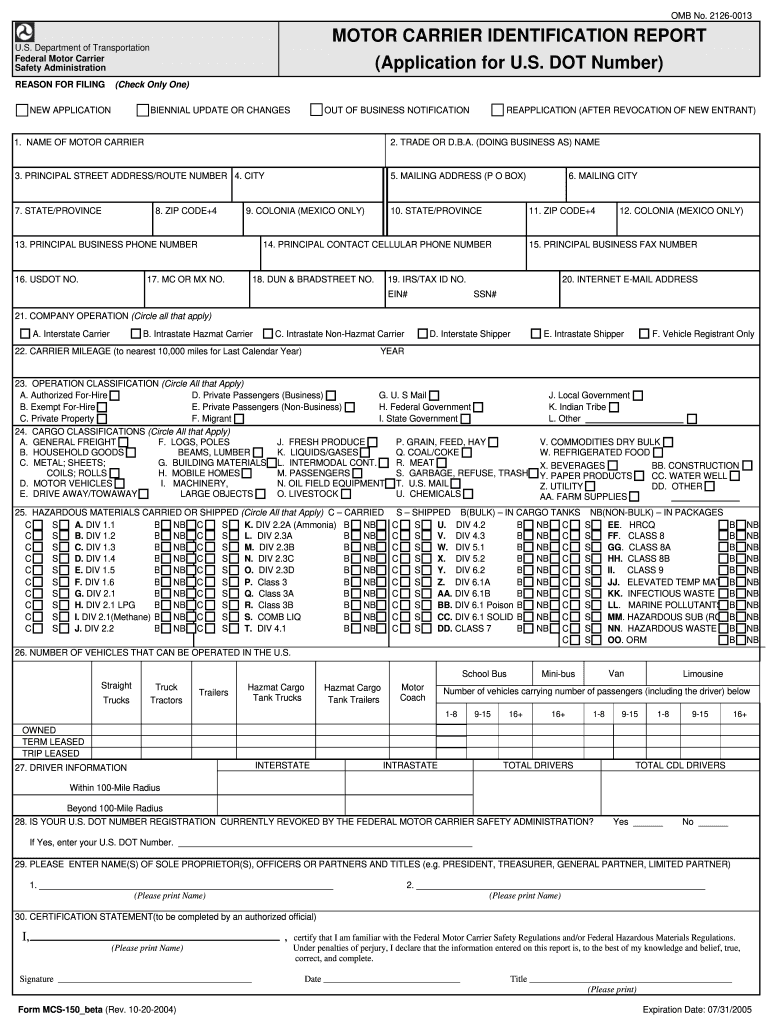
The MCS-150 form, also known as the Motor Carrier Identification Report, serves a crucial function for motor carriers operating within the United States. This form is mandated by the U.S. Department of Transportation (DOT) and is essential for compliance with federal regulations governing the trucking industry. The MCS-150 has evolved over the years, with the 2004 version containing specific sections to facilitate updates, new applications, and notifications about changes in business status.
Key Components of the MCS-150 Form 2004
Essential Information Required
The MCS-150 form requires the submission of vital details about the motor carrier, including:
- Business Name and Address: The legal name of the business and its physical location.
- Operation Classification: Designation of the type of services offered by the motor carrier (e.g., for-hire, private carriage).
- Cargo Types: Identification of the types of goods transported and whether they include hazardous materials.
- Vehicle Information: Total counts of trucks and trailers operated by the carrier, providing a clear picture of the carrier’s capacity.
- Driver Information: Average number of drivers employed and their qualifications or licensing.
Sections of the MCS-150 Form
The MCS-150 form is systematically divided into sections that allow for organized input of information, making it easier for the applicant to provide full and accurate data. Each section requires specific details, allowing for quick reference and verification by the DOT. Necessary sections include:
- Purpose of the Application: New application, update of existing information, or notification of a status change.
- Company Profile: Detailed company information, including ownership structure and staffing.
- Service Type: This section allows the applicant to specify the types of services rendered by the business (i.e., interstate, intrastate).
Compliance and Regulatory Framework
Completing the MCS-150 form is crucial for compliance with federal and state regulations governing road transportation. Failure to file or inaccuracies in the form can lead to compliance issues. The DOT utilizes the information from these forms to ensure that motor carriers are operating within legal frameworks and that they hold the appropriate insurance and licensing.
How to Complete the MCS-150 Form
Filling out the MCS-150 form accurately is essential. Here are the steps involved:
- Download the Form: Obtain the MCS-150 form from the official website or designated portal where forms are made available.
- Provide Company Information: Enter your business name, type, and address in the appropriate sections.
- Specify Operational Details: Clearly indicate your operation classification and types of cargo handled.
- List Vehicles and Drivers: Accurately input the number of vehicles and drivers.
- Review Before Submission: It is critical to double-check all entries for accuracy to reduce the likelihood of rejection.
Submission Options for the MCS-150
There are various methods for submitting the MCS-150 form to the DOT:
- Online Submission: Many motor carriers opt for the online submission process through the DOT’s website for speed and convenience.
- Mail: The form can be printed and mailed to the appropriate DOT office if preferred.
- In-Person: Some carriers may choose to present the form in person at a federal or state transportation office.
Importance of Keeping the MCS-150 Updated
Motor carriers must ensure their MCS-150 form is kept current with any significant business changes. Examples of changes that require updates include:
- Changes to the company’s address or phone number.
- Modifications in the types of services offered or the nature of cargo transported.
- Adjustments in the number of vehicles operated or shifts in operational capacity.
Regularly updating the MCS-150 form not only helps maintain compliance but also ensures that the motor carrier does not face potential fines or administrative penalties from the DOT.
Common Penalties for Non-Compliance
Failure to maintain an accurate, up-to-date MCS-150 form can result in several consequences, including:
- Fines and Penalties: The DOT may issue fines for late submissions or inaccuracies in reported data.
- Increase in Inspections: Non-compliant carriers may face increased scrutiny and random inspections.
- Operational Delays: Unresolved compliance issues can delay the ability to operate legally, impacting business operations and revenues.
By ensuring the information contained within the MCS-150 form is accurate and timely, motor carriers can mitigate risks associated with compliance failures and focus on their core business activities. Proper management of this information is pivotal for operational success in the competitive transport industry.