







Definition and Meaning of Wisconsin Income Tax Form 1 Instructions
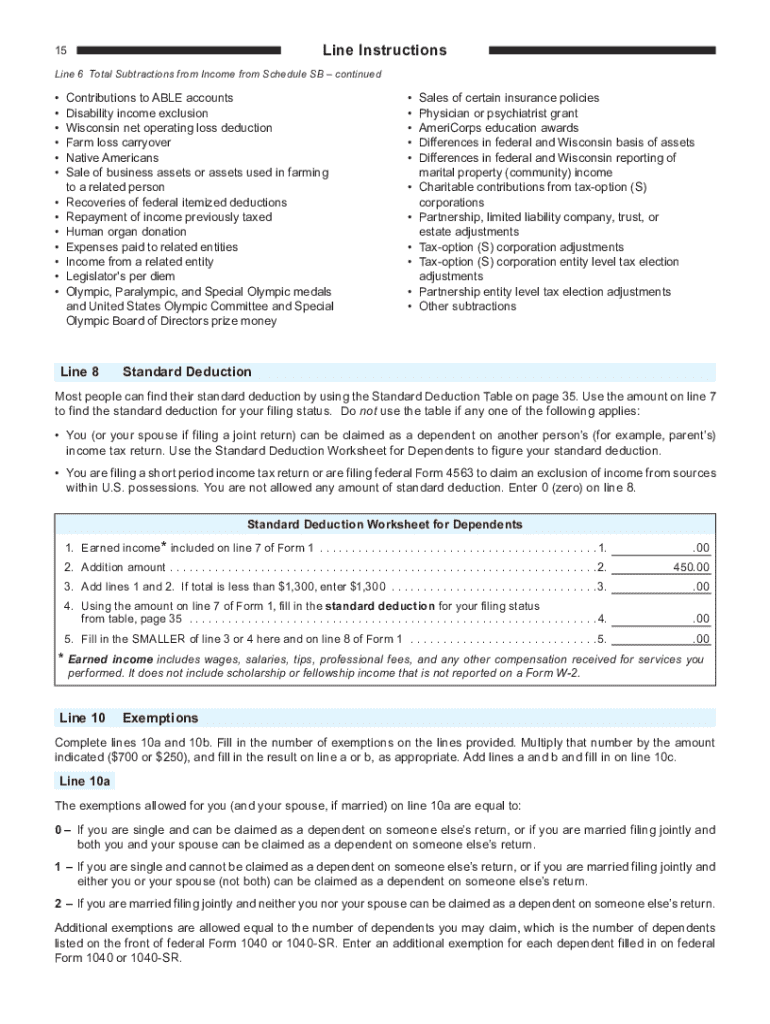
The Wisconsin Income Tax Form 1 Instructions serve as a comprehensive guide for individuals who are required to file their state income tax returns. They provide detailed explanations of the processes involved in completing and submitting the Form 1, Wisconsin's primary individual income tax return form. The instructions help taxpayers understand how to accurately report income, claim eligible deductions and credits, and adhere to tax laws specific to Wisconsin. This form mainly applies to residents who are obligated to report their annual income, calculate their tax liability, and ensure compliance with state regulations.
How to Use the Wisconsin Income Tax Form 1 Instructions
Taxpayers should follow the Wisconsin Income Tax Form 1 Instructions as a step-by-step manual for completing their income tax return. Begin by gathering personal and financial information such as Social Security numbers, W-2 forms, and 1099 statements. Use the instructions to identify the correct filing status, understand how to list all sources of income, and determine the deductions you qualify for. Each section of the instructions corresponds to specific parts of Form 1, guiding you through detailed line items, from total income to taxable income calculations. Be sure to consult the instructions for information on newly introduced credits and changes to tax laws.
How to Obtain the Wisconsin Income Tax Form 1 Instructions
The Wisconsin Income Tax Form 1 Instructions can be accessed through several avenues to ensure ease of availability for taxpayers. The primary method is by downloading a PDF version from the Wisconsin Department of Revenue’s official website, which provides the most current and updated guidelines. Alternatively, taxpayers may acquire a printed copy by visiting a local Department of Revenue office. Some public libraries also offer copies during tax season. In addition, tax preparation software often includes direct links or integrated copies of the instructions to use alongside electronic filing services.
Steps to Complete the Form 1 Instruction Guidelines
-
Begin with Personal Information: Accurately fill in your personal details such as name, address, and Social Security number as instructed.
-
Determine Filing Status: Use the instructions to select the appropriate filing status such as single, married filing jointly, or head of household, based on your individual circumstances.
-
Calculate Total Income: List all income sources, ensuring none is overlooked. This includes wages, dividends, business income, and more, as explained in the instructions.
-
Apply Deductions and Credits: Utilize the instructions to identify statutory deductions and itemized deductions, and calculate personal credits to reduce taxable income.
-
Finalize Tax Liability: Follow the step-by-step guidance to compute total tax liability using the worksheets provided in the instruction document.
-
Verify and Submit: Ensure all information is cross-checked for accuracy before e-filing or mailing your completed Form 1 to the appropriate address indicated.
Key Elements of the Form 1 Instructions
The Wisconsin Income Tax Form 1 Instructions encompass several critical components that facilitate accurate tax reporting:
-
Eligibility Criteria: Outlines who is required to file a Form 1, including residents and part-year residents based on income thresholds.
-
Income Types and Sources: Details various income categories including wages, rentals, business income, and interest, with clarity on how each should be documented.
-
Credits and Deductions: Provides guidance on claiming applicable state-specific credits and deductions such as those for child care, tuition, and blind workers' transportation.
-
Filing Methods: Instructions cover both electronic and paper filing methods, along with respective deadlines to ensure timely submission.
-
Special Instructions for Non-residents and Part-Year Residents: Clarifies specific adjustments and apportionments necessary for taxpayers who did not reside full-year in Wisconsin.
Filing Deadlines and Important Dates
Understanding key deadlines is critical to avoid penalties and interest:
-
Regular Filing Deadline: The standard deadline to file Form 1 is April 15th, aligning with the federal tax filing date. If this date falls on a weekend or holiday, the deadline extends to the next business day.
-
Extensions: The instructions provide details on applying for a filing extension, generally extending the deadline by six months, though filings must be accompanied by estimated payments of owed taxes to avoid penalties.
-
Estimated Payments: Taxpayers owing more than $500 in unpaid taxes may be required to make quarterly estimated payments.
State-Specific Rules for Wisconsin Form 1
The Wisconsin Income Tax Form 1 Instructions reflect unique state rules distinct from federal regulations:
-
Marital Property Income Splitting: Married residents in Wisconsin must report income in accordance with the state's marital property law which affects income and deductions allocation.
-
Depreciation Adjustments: Wisconsin may require different depreciation amounts than federal returns, as described within the Form 1 guidelines.
-
Tax Credits: State-specific credits, which might not align with federal tax credits, such as the tuition subtraction or the veterans and surviving spouses property tax credit.
Important Terms Related to the Instructions
Understanding specific terms is crucial for proper form completion:
-
Adjusted Gross Income (AGI): The starting point for tax calculations, representing total income minus adjustments as specified in the instructions.
-
Withholding: Reference to taxes already withheld from wages and salaries, essential for determining final tax liability.
-
Non-refundable Credits: Credits that can lower tax liability but not below zero, affecting the calculations illustrated within the instructions.
-
Estimated Tax Payments: Prepayments required by those with income not subject to withholding, helping manage and pre-empt tax obligations.




