






Definition & Meaning
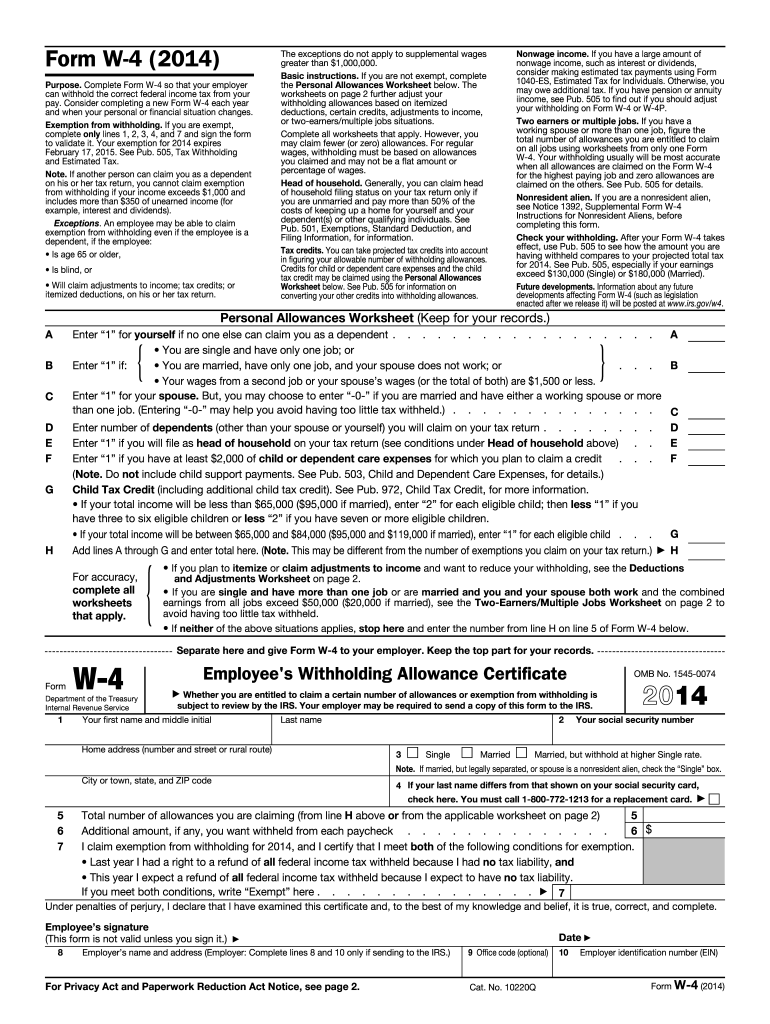
Form W-4 for 2014, also known as the Employee's Withholding Allowance Certificate, is a tax document used by employees in the United States to inform their employer of the correct amount of federal income tax to withhold from their paycheck. Ensuring an accurate withholding amount is critical for avoiding overpayment or underpayment of taxes during the tax year. The W-4 form helps in personalizing the withholding based on the individual's financial situation, including factors such as marital status, the number of dependents, and any additional income or deductions that might affect the total tax liability.
How to Use the W-4 2014 Form
Employees are required to fill out various sections of the W-4 2014 form to ensure the correct tax withholding. Start by entering personal information, such as name, address, and Social Security Number. Next, complete the sections relating to multiple jobs or working spouses, if applicable. If you qualify for itemized deductions, certain credits, or have other income, fill out the appropriate worksheet. The form also includes a section where you can indicate any additional amount you would like withheld from each paycheck. It is crucial to review the worksheet and instructions to determine the number of withholding allowances to claim.
Steps to Complete the W-4 2014 Form
-
Personal Information: Fill in your name, address, Social Security Number, and filing status on the form.
-
Multiple Jobs or Working Spouse: Use the Multiple Jobs Worksheet if you have more than one job or if your spouse is also employed. This step helps in combining income to accurately calculate withholding.
-
Claiming Allowances: Determine your withholding allowances using the Personal Allowances Worksheet. Factors such as dependents or head of household status will affect this number.
-
Additional Withholdings: If you expect to owe more tax at the end of the year, specify an additional amount to be withheld from each paycheck.
-
Sign and Date: Ensure the form is signed and dated before giving it to your employer for processing.
Key Elements of the W-4 2014 Form
-
Personal Allowances Worksheet: Guides the calculation for determining the number of allowances you can claim.
-
Deductions and Adjustments Worksheet: For those who plan to itemize deductions rather than taking the standard deduction. This worksheet allows you to adjust your withholding based on expected deductions, such as mortgage interest.
-
Two-Earners/Multiple Jobs Worksheet: Assists in handling situations where there are multiple sources of income, thereby preventing under-withholding.
-
Withholding Allowance Certificate: The final piece of the form that the employer must receive. This section outlines your total allowances and additional withholding amounts.
Important Terms Related to the W-4 2014 Form
-
Withholding Allowance: A provision that reduces the amount of income tax withheld from your paycheck. Generally, the more allowances claimed, the less tax withheld.
-
Exemption: Refers to deductions allowed by the IRS to reduce your taxable income.
-
Adjusted Gross Income (AGI): Total income minus certain adjustments. It's used to determine eligibility for many deductions and credits.
-
Filing Status: Categories such as single, married filing jointly, married filing separately, head of household, or qualifying widow(er), which influence tax rates and standard deductions.
IRS Guidelines
The IRS provides comprehensive instructions and worksheets accompanying the W-4 2014 form to ensure accurate completion by employees. The guidelines underscore the necessity of updating the form whenever there is a change in personal or financial status that might affect withholding. The form should align with the employee’s tax planning strategy to avoid large refunds or liabilities during the tax filing season. Access to the IRS calculator may help employees better estimate the proper withholding amount.
Penalties for Non-Compliance
Employees are expected to ensure their W-4 form accurately reflects their tax situation. Failing to fill out the form correctly can lead to penalties. This includes underpayment of taxes throughout the year, resulting in a significant tax bill at year-end. Employers may face penalties for not following withholding requirements correctly, including failing to implement submitted W-4 changes promptly or withholding an incorrect amount based on inaccurate information.
Digital vs. Paper Version
The W-4 2014 form is available both in digital and paper formats. While many employers prefer digital submissions for easier record-keeping and processing, the paper form remains an option. Digital forms allow for easier adjustments, reduce errors, and align seamlessly with online tax preparation tools. Many payroll systems integrate with electronic W-4 submissions, ensuring quick updates in withholding amounts as employees change their forms over time.