






Definition and Purpose of IRS Form W-4
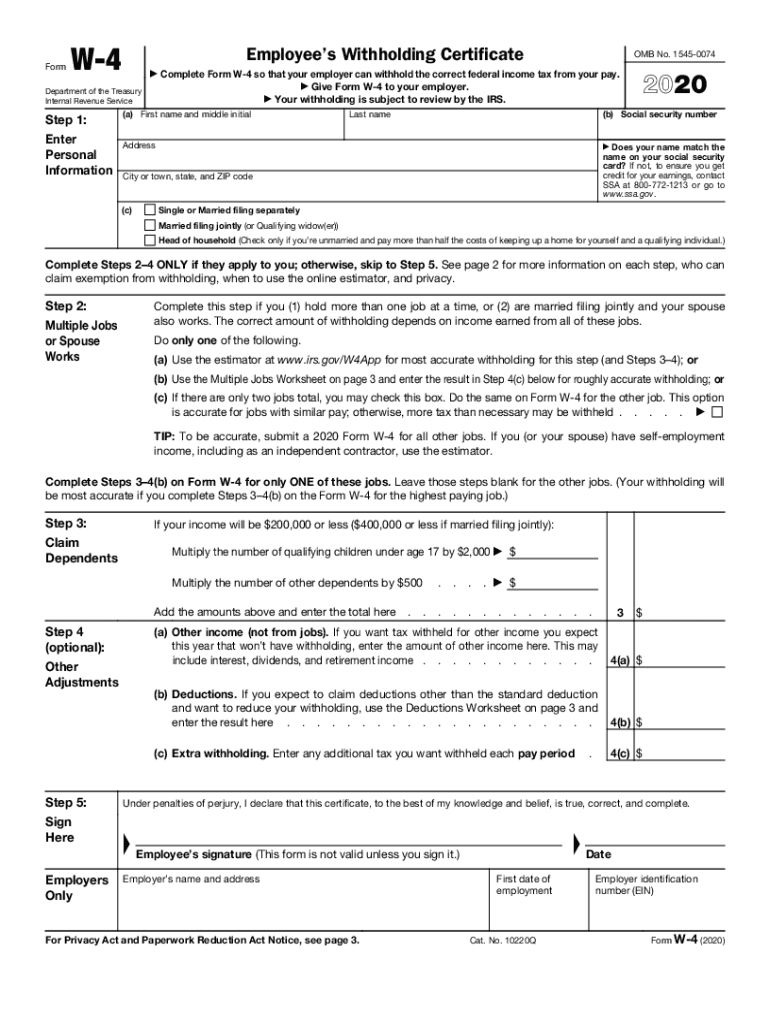
Form W-4, officially known as the Employee’s Withholding Certificate, is an essential document used by employees in the United States to inform their employers of the amount of federal income tax to withhold from their paychecks. By accurately completing this form, employees can ensure that the proper amount of tax is being withheld based on their personal financial situation, including marital status, number of dependents, and any additional income or deductions.
Key Elements of Form W-4
The form comprises several sections, each requiring specific information to tailor withholding accurately:
- Personal Information: Includes your name, address, Social Security number, and filing status (single, married, married but withholding at a higher single rate, etc.).
- Multiple Jobs and Spouse Works: Allows adjustments if you hold multiple jobs or if your spouse also works, affecting total tax calculations.
- Claim Dependents: Enables you to factor in dependents, which can decrease your withholding amount due to eligible tax credits.
- Other Adjustments: For income from non-job sources or additional withholding requests.
- Sign and Date: You must certify the accuracy of the information by signing and dating the form.
Steps to Complete Form W-4
Completing Form W-4 involves a step-by-step process designed to collect all the necessary information for precise withholding calculations:
- Provide Personal Information: Start with your name, address, and filing status to guide subsequent decisions.
- Consider Multiple Jobs: Fill out additional worksheets or make adjustments in this section if you or your spouse work multiple jobs.
- Claim Dependents: Calculate the credit for dependents and enter the amount on the form.
- Adjust for Other Income: Add other income like interest or dividends in this section to adjust withholding.
- Request Additional Withholdings: Enter any extra withholding amount you prefer on each paycheck.
- Sign and Submit: After completion, sign and date to certify information accuracy.
Why You Should Use Form W-4
Using Form W-4 allows workers to manage their taxes proactively, minimizing either excessive withholding or underpayment that could lead to penalties. Accurately completed, it can prevent large tax bills at the year’s end or overly generous refunds, which might mean a loss in interest earnings on withheld overages throughout the year.
Benefits of Accurate Withholding
- Avoid Underpayment Penalties: Prevents IRS penalties by ensuring you've paid enough tax throughout the year.
- Financial Planning: Aligns withholding with personal financial goals, optimizing cash flow and savings potential.
- Personalized Tax Adjustments: Adjust withholding in response to life changes like marriage, new job, or having children.
Who Typically Uses Form W-4
Form W-4 is commonly used by:
- New Employees: Upon starting a job to establish initial withholding.
- Individuals with Changing Tax Circumstances: Those experiencing life changes such as marriage, divorce, or having children.
- Workers with Multiple Jobs or Side Income: To adjust for cumulative income and avoid under-withholding.
- Taxpayers Facing Financial Changes: Those with significant non-wage-based income sources that impact tax rates.
Legal Use and Compliance
Form W-4 is governed by IRS rules to ensure accurate compliance with federal tax laws. Employers must update withholding to reflect any changes promptly:
- Annual Review: Employees should review and update W-4 annually or as personal or financial situations change.
- Integrity: Employees must provide truthful, accurate information to prevent potential legal and tax disputes.
- Employer Responsibilities: Employers must respect the withholding instructions unless they appear suspect and notify the IRS if fraudulent activity is suspected.
Penalties for Non-Compliance
- Employee Penalties: Filing falsely can result in fines or further legal action by the IRS.
- Employer Liabilities: Failure to implement withholding changes can result in penalties for the employer.
IRS Guidelines and Recommendations
The IRS provides comprehensive guidelines to help employees complete Form W-4 accurately:
- IRS Tax Withholding Estimator: Online tool to assist in calculating the correct amount of tax to withhold.
- Instructions and Worksheets: Detailed instructions provided with the form to guide users through completion.
- Regular Updates: Employers and employees are encouraged to review IRS updates for changes affecting withholding.
Filing Deadlines and Important Dates
There are no specific IRS deadlines for Form W-4 submissions; however, it should be submitted as soon as changes occur:
- Upon Starting a New Job: Immediately upon employment to determine tax withholding.
- Life Changes: As life events like marriage occur, an updated form should be filed.
- Year-end Review: It's advantageous to review current forms for potential adjustments leading into a new tax year.
Examples and Practical Scenarios
Consider these examples to see how Form W-4 functions in different scenarios:
Example 1: Single with Multiple Jobs
Jane, who holds three part-time positions, needs to ensure her combined income receives proper withholding. She uses the worksheet to consolidate her total earnings and adjusts her W-4 accordingly for each employer.
Example 2: Married with Dependents
Tom and Lisa recently had twins. Together, they revise both of their W-4 forms to consider their increased household size and claim tax credits for their children.
Example 3: Changing Financial Situation
Martin has begun earning substantial interest income from investments. He updates his W-4 to include this in his taxable income estimate, ensuring proper withholding.
Case Study: High-Income Individuals
For those with significant non-wage income, such as rental income, adjusting withholding prevents underpayment resulting in year-end tax liabilities.
Form Submission Methods
Form W-4 can be submitted in various methods suitable for different preferences:
- Online Submission: Many employers offer an online submission portal for W-4 forms, streamlining the process.
- Paper Form: For those who prefer physical documentation, forms can be printed, completed, and submitted manually.
- Hybrid Approach: Some employers utilize a digital form submission integrated with payroll systems, offering a paperless yet documented submission process.
This comprehensive guide explores the significance and multifaceted nature of Form W-4, detailing its purpose, users, guidelines, and submission processes to provide a thorough understanding of managing personal withholding effectively.