Definition & Meaning
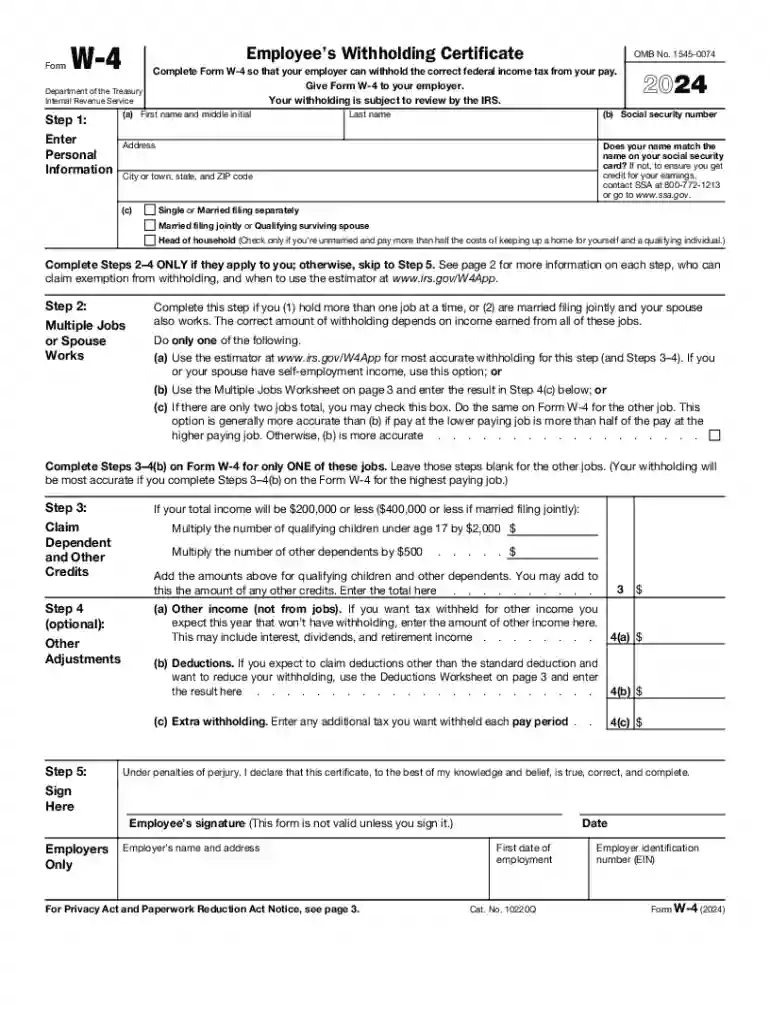
The 2024 Form W-4 Employee's Withholding Certificate is a critical document used by employees in the United States to communicate their tax withholding preferences to their employers. The form determines the amount of federal income tax that is withheld from an employee's paycheck. Providing accurate information ensures that the employee neither owes a significant amount of taxes nor receives a large refund when filing their tax return.
Key Components
- Personal Information: The form requires basic personal details such as name, address, and social security number. This helps in identifying the taxpayer correctly.
- Marital Status: Indicating whether you are single, married, or the head of a household affects the withholding rate.
- Dependents: Claiming dependents can alter the withholding amount since it includes credits for qualifying children or other dependents.
Practical Importance
Accurate use of the W-4 ensures proper tax compliance and financial planning by preventing unexpected tax bills or excessive withholding. This balance assists in tailored budgeting and helps avoid penalties from incorrect tax filings.
How to Use the 2024 Form W-4 Employee's Withholding Certificate
Using the W-4 form involves understanding its structure and purpose, as well as completing it with accuracy to reflect your current financial situation.
Completion Guidelines
- Provide Personal Details: Fill in your personal information, ensuring all details such as social security numbers are correct.
- Indicate Filing Status: Select the appropriate filing status to align with your current situation. This impacts how much is withheld.
- Calculate and Report Deductions: Determine the number of allowances by considering factors like multiple jobs or spouse working.
- Extra Withholding: Decide if additional tax should be withheld, useful for taxpayers with other income sources.
Examples of Application
- Multiple Jobs Employee: If you or your spouse work more than one job, complete the Multiple Jobs Worksheet for accurate withholding.
- Tax Credit Eligibility: Indicate if eligible for child or dependent credits to adjust withholding accordingly.
Steps to Complete the 2024 Form W-4 Employee's Withholding Certificate
Completing the Form W-4 requires careful attention to each section to ensure all relevant information is provided and accurate.
- Basic Information Section: Fill out your name, address, and social security number.
- Filing Status: Select one of the three categories—Single or Married filing separately, Married filing jointly, or Head of Household.
- Claim Dependents: Calculate based on the IRS guidelines for credits if your total income is below specific thresholds.
- Adjustments for Other Income: Include income such as retirement pay or dividends that are not subject to withholding.
- Fine-Tune Your Withholding: Use the Deductions Worksheet if you expect to itemize deductions rather than take the standard deduction.
Step-by-Step Examples
- Single Income Households: This is simpler and might involve fewer calculations, as it typically does not include the complications of multiple incomes.
- Divorcees: Adjust withholding based on alimony or child support changes post-divorce to ensure accurate tax reporting.
Who Typically Uses the 2024 Form W-4 Employee's Withholding Certificate
The Form W-4 is essential for anyone employed and receiving a paycheck that is subject to federal income tax withholding.

Typical Users
- New Employees: Filling out a W-4 is usually a requirement when starting a new job.
- Employees with Financial Changes: Individuals experiencing changes such as marriage, divorce, or having children may need to update their withholding.
- Multiple Job Holders: Those with two or more jobs must complete the form correctly for each employer to balance withholding.
Unique Scenarios
- Seasonal Workers: They must adjust their withholding if employment is unstable throughout the year.
- Students and Interns: Often exempt from withholding, they may still need a form on file.
Key Elements of the 2024 Form W-4 Employee's Withholding Certificate
Understanding the significant elements of the W-4 can optimize tax withholding and minimize errors in tax filings.
Core Elements
- Income Estimation: Forecast income source variations and how they impact withholding.
- Adjustments: Consider credits and deductions meticulously, aligning them with current tax laws to prevent over or under withholding.
- Worksheets: Use additional worksheets provided within the form for complex tax situations, especially when calculating extra withholding or claiming deductions.
Detailed Analysis
- Impact of Allowances: Allowances previously used significantly influence how much tax is withheld from each paycheck.
- Old vs. New Systems: Understanding of prior W-4 versions helps transition to the current, more streamlined versions.
Legal Use of the 2024 Form W-4 Employee's Withholding Certificate
Compliance with Form W-4 requirements is essential to avoid legal repercussions, ensuring both employees and employers meet federal law obligations.
Compliance Guidelines
- Accuracy Obligation: Employees must provide honest and accurate information. Incorrect details may result in penalties.
- Employer Responsibilities: Employers should apply the W-4 data to compute tax withholding accurately, maintaining records for IRS audits.
Legal Concerns
- Fraudulent Information: Supplying inaccurate or false details with intent to underpay taxes is illegal and could result in legal action or penalties.
- Privacy and Security: Employers must secure personal data as they handle sensitive employee information through the W-4.
IRS Guidelines
The IRS provides detailed protocols to guide the proper use of Form W-4, helping taxpayers align their filings with overarching tax regulations.
IRS Instructions
- Withholding Calculator: The IRS website offers tools to assist in determining the correct withholding amount according to financial circumstances.
- Amendment Instructions: Updates to personal circumstances should lead to corresponding revisions in the W-4 to keep withholding aligned with current conditions.
Common IRS Revisions
- Mid-Year Changes: Significant mid-year adjustments, such as marriage or birth, should prompt immediate form updates to avoid year-end tax surprises.
Penalties for Non-Compliance
Awareness of potential fines related to improper use of Form W-4 emphasizes the importance of accurate submission and adherence to IRS standards.
Non-compliance Risks
- Underreporting Penalties: Incorrect withholding leading to an annual tax underpayment could result in additional charges or interest.
- Employer Fines: Companies failing to submit or correctly use employee W-4s might face audit complications and monetary fines imposed by the IRS.
Preventative Measures
- Regular Reviews: Periodic form reviews can catch and correct errors, reducing the risk of penalties and ensuring accurate tax liabilities.
- Consultation: Proactive employment of tax professionals can aid in understanding complex situations or changes that warrant W-4 updates.