01. Edit your form online
Type text, add images, blackout confidential details, add comments, highlights and more.

Type text, add images, blackout confidential details, add comments, highlights and more.

Draw your signature, type it, upload its image, or use your mobile device as a signature pad.

Send it via email, link, or fax. You can also download it, export it or print it out.
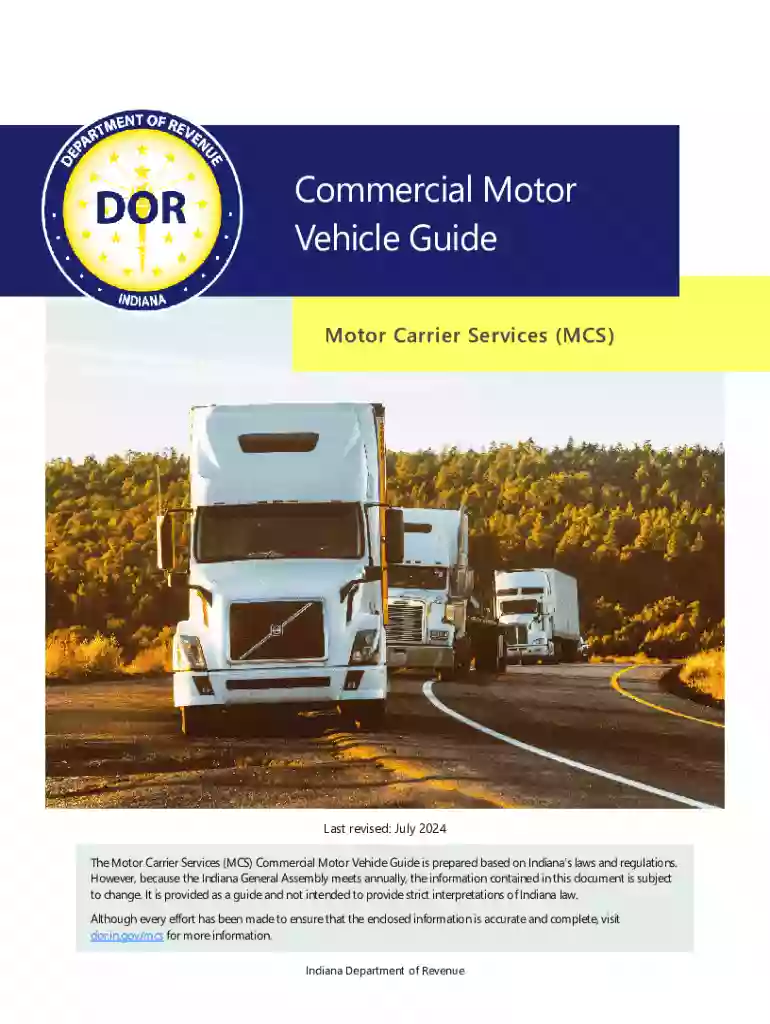
The "Commercial Motor Vehicle Guidebook - May 2021" serves as a pivotal document for ensuring that motor carriers and drivers in Indiana stay compliant with state and federal regulations. This comprehensive guide provides detailed information on laws governing the operation of commercial motor vehicles in Indiana, covering essential topics such as safety regulations, insurance requirements, and permits for oversize or overweight vehicles. By utilizing this guidebook, companies can not only maintain legal compliance but also enhance the safety and efficiency of their operations.
To access the guidebook, interested parties can obtain a copy directly through the Indiana Department of Revenue's website. This digital version ensures that users have the most up-to-date information, reflecting any recent changes in regulations. Print versions might also be available through specific state offices or requests for those preferring physical copies. It is advisable to regularly check for updated versions to remain informed about the latest compliance requirements.
This guidebook is primarily used by motor carrier companies, drivers of commercial vehicles, and regulatory bodies tasked with enforcing vehicular laws. It supports these stakeholders by providing clear guidelines on licensing, operational safety, and compliance standards. Additionally, insurance providers and legal professionals may reference this guidebook to advise clients accurately and ensure that practices align with state and federal expectations.
Review Licensing Requirements: Users begin by examining sections on driver qualification standards and vehicle registration processes.
Understand Safety Protocols: Delve into the safety guidelines, which include inspection procedures and maintenance schedules to mitigate risks.
Comprehend Insurance Guidelines: Follow the guidebook's insurance section to ensure coverage meets or exceeds statutory requirements.
Learn Permitting Procedures: Study the steps required to obtain necessary permits, especially for vehicles exceeding standard size or weight limits.
By following these systematic steps, users can effectively utilize the guidebook to enhance their operational compliance and safety.
These components are essential for ensuring the guidebook serves its purpose in providing comprehensive regulatory instructions to its users.
Following the guidebook's instructions is crucial for legal compliance with the Indiana Department of Revenue's standards. Adherence to the outlined regulations protects companies from potential legal actions and penalties. The guidebook also aids in preventing misunderstandings about regulatory changes or new requirements.
The guidebook outlines Indiana-specific laws related to commercial motor vehicles, highlighting nuances that differ from federal regulations or guidelines in other states. This includes state-specific safety inspection protocols, road use taxes specific to Indiana, and any additional local requirements for permits.
A trucking company, based in Indianapolis, used the guidebook to align its operations with new state tax obligations and avoid costly fines. Similarly, a commercial vehicle driver followed the guidebook’s instructions to renew her license and obtained necessary safety certifications, ensuring compliance and enhancing career opportunities.
These real-world scenarios demonstrate the guidebook’s practical utility and importance in maintaining compliant operations in the commercial motor vehicle sector.
We've got more versions of the Commercial Motor Vehicle Guidebook - May 2021 form. Select the right Commercial Motor Vehicle Guidebook - May 2021 version from the list and start editing it straight away!
At DocHub, your data security is our priority. We follow HIPAA, SOC2, GDPR, and other standards, so you can work on your documents with confidence.