




01. Edit your va form 21 10210 online
Type text, add images, blackout confidential details, add comments, highlights and more.

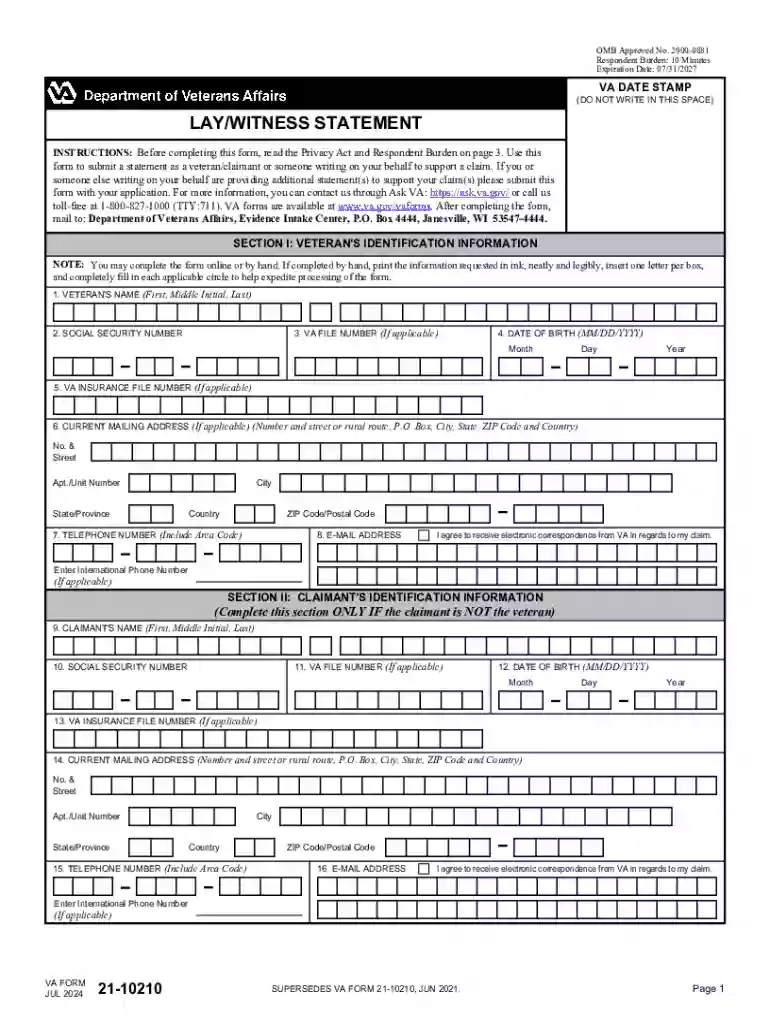
Type text, add images, blackout confidential details, add comments, highlights and more.

Draw your signature, type it, upload its image, or use your mobile device as a signature pad.

Send lay witness statement va form 21 10210 via email, link, or fax. You can also download it, export it or print it out.
The VA Form 21-10210 Lay Witness Statement is a document used by veterans or other claimants to provide personal testimonies supporting their claims for benefits. This form plays a crucial role in the evidence-gathering process, allowing individuals to substantiate claims through detailed narratives and witness observations. The statements included can offer insight into how a veteran’s condition affects their daily life, which might not be fully captured through medical records alone. Therefore, understanding and accurately completing this form can greatly influence the outcome of a benefits claim.
Using VA Form 21-10210 involves several steps to ensure that the statement provided is thorough and effective. It is important to write detailed yet clear descriptions when narrating events or behaviors witnessed. The lay witness should provide factual observations, such as changes in the veteran's mood or physical abilities. Each section must be filled out accurately, including personal and contact information. Attach supporting documentation when required to complement the statements made, thereby reinforcing the credibility and comprehensiveness of the claim submitted.
The form is vital because it provides a personal perspective on the veteran’s life and conditions, offering narratives that cannot be derived from clinical data alone. Submissions can include observations about how a veteran interacts socially or responds to daily challenges, making it an irreplaceable component of the documentation required to substantiate a disability claim. By providing firsthand accounts, it aids in building a complete and nuanced understanding of the veteran’s situation, thus reinforcing their application for benefits.
This form is primarily used by veterans making disability claims or other related compensation applications through the Department of Veterans Affairs. It is also commonly utilized by family members, close friends, or caregivers who can speak to the veteran's experiences and changes in their health or behavior. Typically, these lay witnesses have regular, meaningful interactions with the veteran, allowing them to offer genuine and detailed statements that reflect the veteran's conditions and challenges accurately.


While the primary authors of the statements are often civilians closely associated with the veteran, it is essential that the witnesses have a sustained and observational insight into the veteran’s life. This means they should have a direct perspective on events and conditions affecting the veteran’s daily life. Such credibility is critical for the VA to give weight to the testimony provided.

The VA Form 21-10210 can be submitted via multiple channels to accommodate different preferences or needs:
Each method comes with its instructions and considerations, such as ensuring digital submissions are correctly formatted or that mailed forms are properly addressed.
We've got more versions of the va form 21 10210 form. Select the right va form 21 10210 version from the list and start editing it straight away!
At DocHub, your data security is our priority. We follow HIPAA, SOC2, GDPR, and other standards, so you can work on your documents with confidence.
Jul 29, 2026 Submit a lay or witness statement to support a VA claim (VA Form 21-10210). When to use this form. Use this form to submit a formal statement toRead more
VA Form 21 10210 Lay Witness Statement Veterans Affairs Use this form to submit a statement as a veteran claimant or someone writing on your behalf to


