






Definition & Meaning
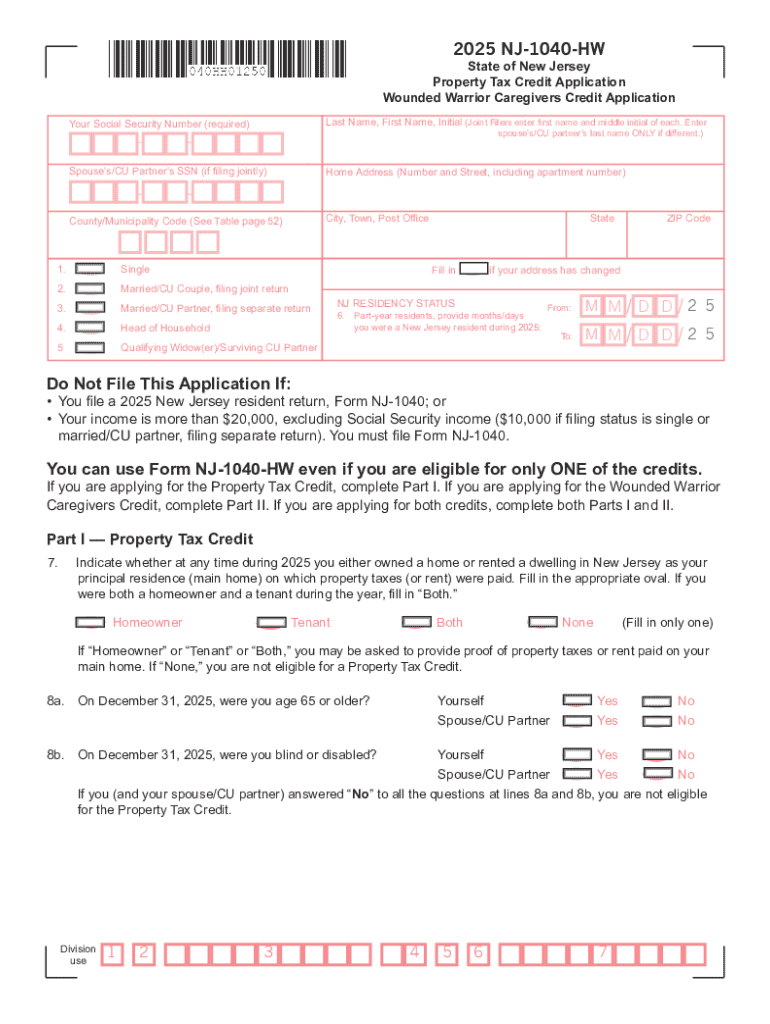
The "Property Tax Credit Application and Wounded Warrior" is a form primarily aimed at providing tax credits to eligible individuals, specifically addressing property taxes and offering support to injured military personnel and their caregivers. The form is used to reduce the tax burden on property owners and provide financial assistance to those who have served in the military and are now disabled or need caregiving assistance.
- Purpose: To offer financial relief through tax credits to eligible property owners and wounded warriors.
- Eligibility: Focuses on retired or disabled military personnel and their primary caregivers, who may qualify for tax reductions.
- Scope: Applicable primarily for individuals residing in the United States with specific eligibility criteria related to military service and property ownership.
Steps to Complete the Property Tax Credit Application and Wounded Warrior
-
Gather Required Documents:
- Ensure all necessary documents, such as proof of military service, disability certification, property ownership papers, and previous tax returns, are collected.
- Use a checklist to verify that no document is overlooked.
-
Obtain the Form:
- Access the form online through state tax department websites or request a paper copy via mail.
- Ensure you have the latest version of the form.
-
Fill Out Personal Information:
- Provide the required personal details, including name, address, and Social Security number.
- Joint filers should include information for both individuals.
-
Complete the Eligibility Section:
- Answer questions regarding military service and disability status.
- Carefully read instructions to ensure you meet all criteria.
-
Calculate and Report Income:
- Document your taxable income to determine eligibility for credits.
- Attach supporting income documentation as required.
-
Submit the Form:
- Review the form for completeness and accuracy.
- Submit using preferred methods: online, by mail, or in-person at designated locations.
Eligibility Criteria
Eligibility for the Property Tax Credit Application and Wounded Warrior form involves specific requirements and conditions:
- Military Service: Must provide proof of service and, if applicable, documentation of injuries or disabilities sustained during service.
- Property Ownership: Should own and reside in the property for which the credit is claimed.
- Caregiver Involvement: If applying as a caregiver, sufficient documentation proving the caregiving relationship must be submitted.
- Income Limits: Total household income must fall within specified limits to qualify for the full credit amount.


Important Terms Related to Property Tax Credit Application and Wounded Warrior
- Tax Credit: A direct reduction in tax liability, which can be used to lower the amount owed.
- Wounded Warrior: Term used to describe military service members who have sustained injuries in line of duty.
- Caregiver Credit: Refers to any tax benefits available to individuals providing essential care to disabled veterans.
- Disability Certification: Official documentation from medical professionals outlining the extent of disabilities incurred during military service.
State-Specific Rules for the Property Tax Credit Application and Wounded Warrior
Different states may implement unique regulations concerning the application:
- Residency Requirements: Some states may require a certain residency period.
- Varying Credit Amounts: States may offer different credit amounts based on local legislation.
- Additional Documentation: Additional forms or documents may be needed, depending on the state.
Form Submission Methods (Online / Mail / In-Person)
- Online Submission: Convenient for those comfortable with digital processes; requires electronic copies of documents.
- Mail Submission: Traditional method suited for those who prefer physical documentation; ensure proper postage is applied.
- In-Person Submission: Allows direct interaction with officials, reducing the chance of errors in submission.
Required Documents
- Proof of Service: DD Form 214 or equivalent for military service verification.
- Disability Documentation: VA disability letter or civilian equivalent.
- Income Evidence: W-2 forms, recent tax returns, or other proof of income.
- Property Records: Deeds or mortgage statements to establish property ownership.
Filing Deadlines / Important Dates
- Annual Filing Deadline: Typically aligns with federal income tax deadlines; however, state-specific deadlines may vary.
- Renewal Dates: For ongoing eligibility, ensure timely submission of renewal applications.
- Extension Requests: Available under certain circumstances; must be filed before original deadlines.