







Definition & Meaning
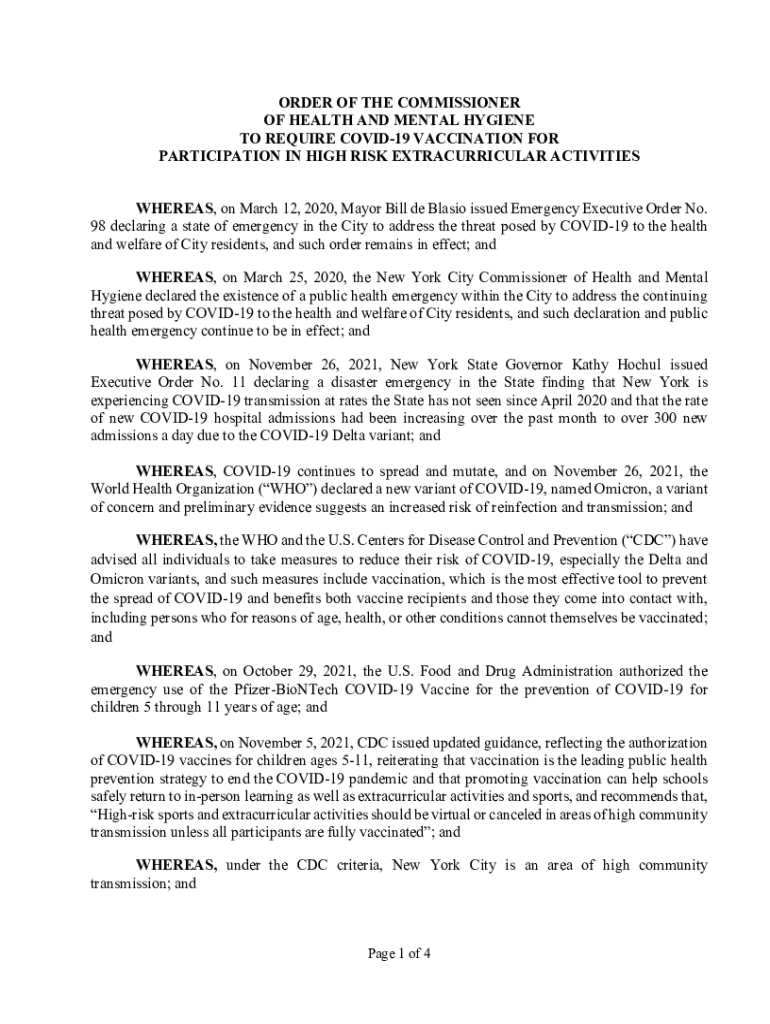
The ORDER OF THE COMMISSIONER OF HEALTH AND MENTAL HYGIENE is an official mandate issued by the Commissioner of Health, often in response to specific public health needs. Typically, these orders are aimed at addressing immediate health risks and ensuring compliance with local health standards. They can involve requirements like vaccinations, closures of premises, or changes to operational protocols within the jurisdiction they govern.
Key Elements of the ORDER
An ORDER OF THE COMMISSIONER OF HEALTH AND MENTAL HYGIENE usually contains several critical components:
- Purpose of the Order: Outlines the public health reason necessitating the order, such as a health emergency or disease outbreak.
- Scope of Requirements: Details the actions required to comply, which may include personal health measures or organizational adjustments.
- Definitions: Provides clarity on terms used, such as ‘eligible participants’ and ‘high-risk activities’.
- Implementation Timeline: Specifies when requirements come into effect and any deadlines for compliance.
- Penalty Information: Explains potential consequences for non-compliance, typically ranging from fines to legal action.
How to Use the ORDER
To effectively use an ORDER OF THE COMMISSIONER OF HEALTH AND MENTAL HYGIENE:
- Read Thoroughly: Understand all requirements and definitions.
- Assess Impact: Determine how the order affects you or your organization.
- Implement Changes: Make necessary adjustments to ensure compliance.
- Monitor Compliance: Continuously assess operations to remain within order stipulations.
Steps to Complete the ORDER
When required to fulfill conditions of an ORDER OF THE COMMISSIONER OF HEALTH AND MENTAL HYGIENE, follow these steps:
- Identify Requirements: Highlight specific actions needed based on the order.
- Gather Necessary Documents: Collect documentation required for proof of compliance, such as vaccination records.
- Formulate an Action Plan: Develop a strategy to address each requirement by the stipulated deadline.
- Submit Compliance Evidence: Provide documentation or proof to relevant authorities if required.
Importance of Compliance
Understanding why you should comply with an ORDER OF THE COMMISSIONER OF HEALTH AND MENTAL HYGIENE is crucial for:
- Public Health Safety: Protecting the well-being of the community by mitigating health risks.
- Legal Adherence: Staying within legal parameters to avoid penalties.
- Community Trust: Demonstrating responsibility and commitment to public health can enhance community trust.
Who Typically Uses the ORDER
The primary users of an ORDER OF THE COMMISSIONER OF HEALTH AND MENTAL HYGIENE include:
- Healthcare Professionals: For guiding treatment protocols and safety measures.
- Educational Institutions: To uphold safety in schools and universities.
- Businesses and Organizations: Especially those with public interaction or large gatherings.
- Individuals: Usually parents or guardians complying with vaccination or health screening requirements for minors.


Examples of Using the ORDER
Real-world examples demonstrate the practical use of an ORDER OF THE COMMISSIONER OF HEALTH AND MENTAL HYGIENE:
- COVID-19 Vaccination Orders: Required vaccinations for students engaged in high-risk activities.
- Quarantine Directives: Orders issued during infectious disease outbreaks to control spread.
Eligibility Criteria
Eligibility for mandates in the ORDER OF THE COMMISSIONER OF HEALTH AND MENTAL HYGIENE can vary:
- Age Specifications: Certain age groups may be targeted for specific measures, such as vaccinations for school-aged children.
- Risk Assessments: Activities classified as high-risk may necessitate stricter adherence to health guidelines.
- Existing Medical Conditions: Individuals with specific medical conditions may require specialized compliance measures or exemptions.

Legal Use of the ORDER
Legal frameworks support the enforcement of an ORDER OF THE COMMISSIONER OF HEALTH AND MENTAL HYGIENE:
- Basis in Public Health Law: Typically issued under authority granted by state or municipal health statutes.
- Enforceable Regulations: Compliance is not optional, with legal backing ensuring directives are adhered to, often involving collaboration with law enforcement.
State-Specific Rules
While an ORDER OF THE COMMISSIONER OF HEALTH AND MENTAL HYGIENE is tailored to overarching public health needs, state-specific interpretations and implementations can vary:
- Local Adjustments: States may adapt orders to address particular localities' needs or modify enforcement priorities.
- Resource Availability: Variations occur based on available resources for implementation and compliance monitoring at state and municipal levels.




