






Definition & Meaning
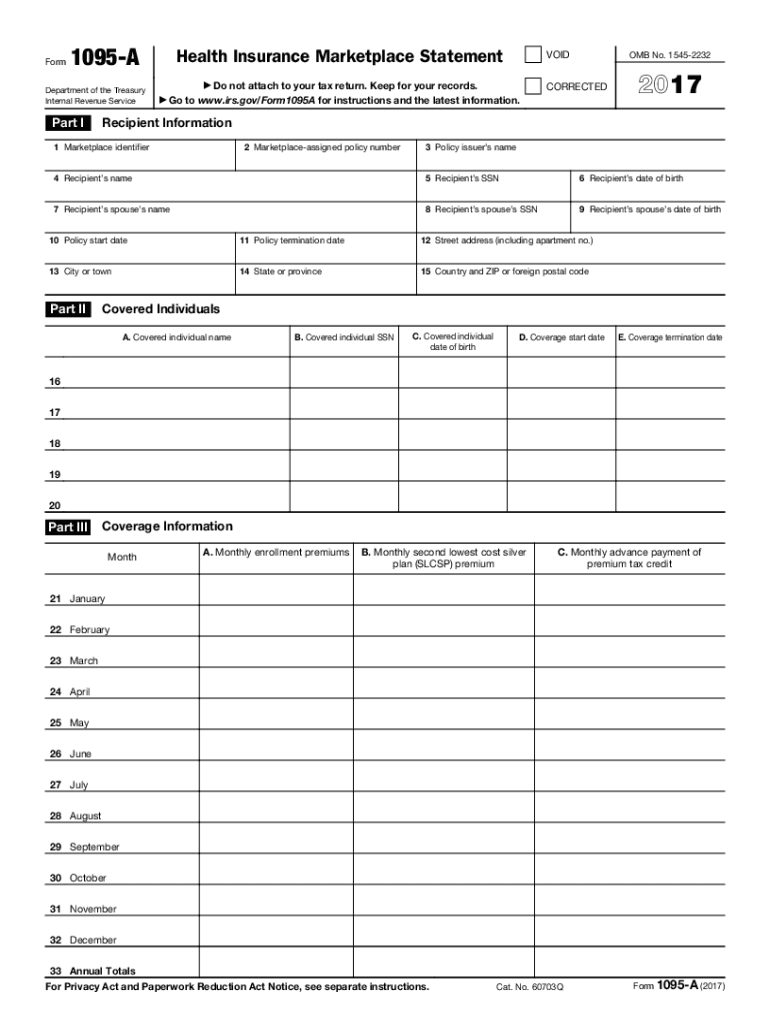
Form 1095-A, also referred to as the Health Insurance Marketplace Statement, serves as an informational document provided to individuals who enrolled in health insurance through the federal marketplace or a state-based exchange. This form is crucial for taxpayers who receive premium tax credits, as it reports essential coverage details necessary for accurate tax filings. Specifically, Form 1095-A includes information about the marketplace, the issuer, the coverage you selected, and any advance payments received for the premium tax credit.
How to Use the 1095-A 2017 Form
To use the 1095-A form correctly, individuals must cross-reference the information provided with their tax returns, specifically when completing IRS Form 8962, which helps reconcile any advance premium tax credits received. Detailed steps include:
- Review Recipient Information: Ensure your personal information and policy number are correct.
- Check Covered Individuals: Confirm that all eligible members of your household are listed alongside their coverage months.
- Examine Coverage Details: Verify the start and end dates, and the amount of any premium tax credits received.
- Complete Form 8962: Use the details on Form 1095-A to finalize your premium tax credit claims on your tax return.
Steps to Complete the 1095-A 2017 Form
Although individuals do not fill out Form 1095-A themselves, understanding its structure ensures its correct use. Here's how you approach it:
- Ensure Receipt: Await form arrival from the marketplace by the end of January following the tax year.
- Verify Accuracy: Check all fields for errors, including personal and policy details.
- Correct Errors: If discrepancies are found, contact the marketplace promptly for corrections.
- Reconcile Credits: Use the data to ascertain if additional taxes are owed or a refund is due via Form 8962 on your tax return.
- Keep for Records: Store the form with other critical tax documents for verification and future reference.
Why the 1095-A 2017 Form Is Important
The importance of Form 1095-A cannot be overstated as it plays a vital role in ensuring accurate tax filings when claims involve premium tax credits. Correctly using this form:
- Helps prevent overpayment or underpayment of taxes.
- Protects against IRS penalties for inaccuracies.
- Ensures eligibility and accurate application of premium tax credits, reducing overall healthcare costs.
Key Elements of the 1095-A 2017 Form
Key elements of Form 1095-A include:
- Marketplace information: Identifies the health insurance exchange.
- Policy Number: Unique identifier for plan verification.
- Premium Amounts: Lists monthly premiums and any advanced credit applications.
- Covered Individuals: Details those included under the policy.
These elements are crucial for verifying the tax credits against actual coverage.
IRS Guidelines for the 1095-A 2017 Form
IRS guidelines dictate the management and use of Form 1095-A. Key mandates are:
- Forms must be furnished no later than January 31 following the tax year.
- Utilization in filing Form 8962 for credit reconciliation.
- Accurate reporting is legally required to avoid tax implications.
Taxpayers should consult these guidelines to ensure compliance and prevent errors.
Filing Deadlines / Important Dates
Being timely with Form 1095-A is essential:
- January 31: Deadline for marketplaces to send out Form 1095-A.
- April 15: General deadline for individual tax return filing, requiring Form 1095-A accuracy to avoid penalties.
Filing within these deadlines prevents complications and fines.
Penalties for Non-Compliance
Failure to correctly reconcile the details on the 1095-A form can result in:
- Underpayment of Taxes: Liability increases if credits exceed eligibility.
- Interest and Penalty Fees: Both may apply when not resolved promptly.
- Corrective Action: Necessitates amendments if errors surface post-filing.
These penalties underscore the importance of closely following form instructions and checking details for accuracy.