






Definition and Purpose of Form 1095-A
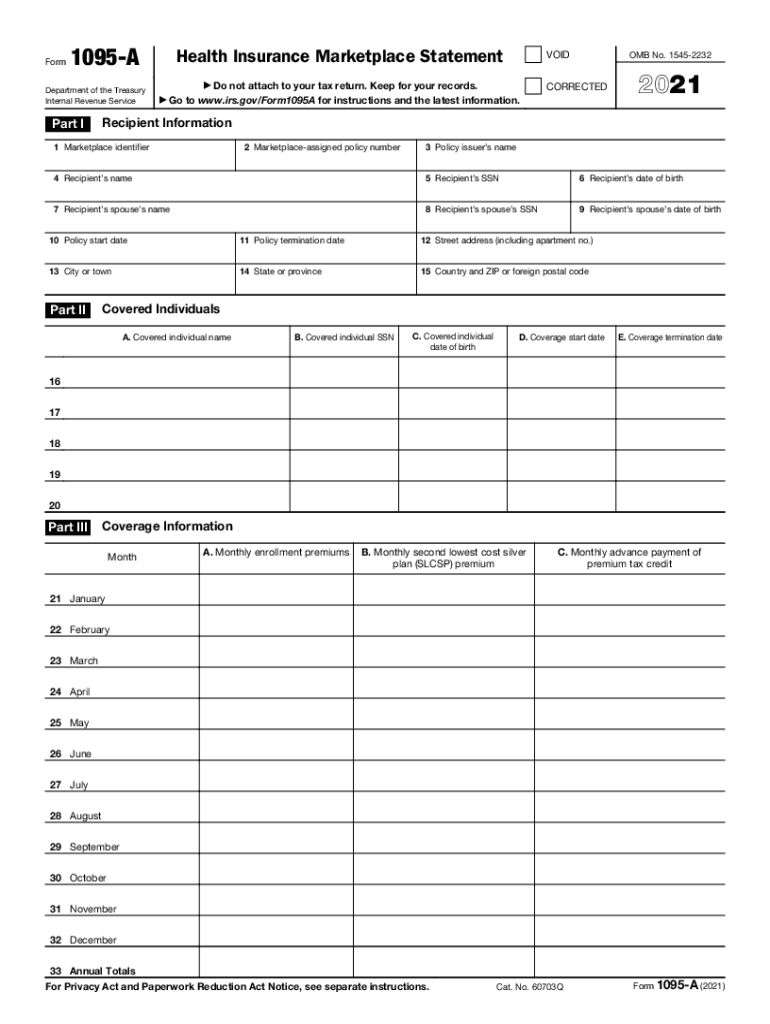
Form 1095-A, officially recognized as the "Health Insurance Marketplace Statement," is a critical informational document primarily issued by Health Insurance Marketplaces. Its fundamental role is to report details about health insurance coverage purchased through these marketplaces, particularly for individuals who benefited from premium tax credits. The document includes essential information that individuals require to accurately reconcile premium tax credits on their federal tax returns. Form 1095-A outlines details such as the policy holder's information, the individuals covered under the policy, the monthly premiums paid, and the premium tax credit received.
Key Elements of Form 1095-A
Form 1095-A contains several important sections that are vital for taxpayers. These sections include:
- Recipient Information: This includes personal details of the person who secured the health insurance policy through the marketplace.
- Covered Individuals: Names and details of every person covered under the policy.
- Policy Date and Enrollment Periods: These fields specify the duration and start dates of the health plan coverage.
- Monthly Premiums and Credit: Details on the premiums paid each month and any premium tax credits applied to reduce costs.
- SLCSP Information: Second lowest cost silver plan (SLCSP) details are necessary for accurately calculating tax credits.
These components collectively ensure individuals can correctly report and reconcile premium payments when filing taxes.
How to Use the 1095-A Form
To correctly use Form 1095-A, one must first ensure every section of the form is fully understood. The details are used to complete IRS Form 8962 to calculate the premium tax credit amount and determine if additional tax payments are needed, or if a refund is owed.
Step-by-Step Guide
- Review the Form: Begin by thoroughly examining all entries on Form 1095-A for accuracy.
- Cross-Verify Information: Match the data with personal records or documents from the insurance provider.
- Complete Form 8962: Use Form 1095-A to fill out IRS Form 8962. This step is crucial for taxpayers claiming premium tax credits.
- Reconcile Credits: Reconciliation involves comparing what was received in advance premium tax credits against actual eligibility.
- File with Tax Return: Attach Form 8962 to your federal tax return to finalize the process.
Successfully completing these steps ensures proper reconciliation of premium tax credits.
How to Obtain the 1095-A Form
Form 1095-A is automatically generated and issued by Health Insurance Marketplaces for individuals enrolled in a qualified health plan. It is typically sent out by early February following the end of the coverage year.
Methods to Acquire the Form
- Via Mail: This form is mailed to the address on file with the Health Insurance Marketplace. Ensure your address is up-to-date.
- Online Access: Many marketplaces offer online portals from which you can download and print the 1095-A form directly.
- Customer Service: If there are delays or the form is lost, contacting the marketplace customer service for a replacement is highly recommended.
Given its importance in filing taxes, ensuring receipt of the 1095-A form is crucial.
Important Terms Related to Form 1095-A
Understanding terminologies associated with Form 1095-A aids in correctly interpreting the information. Key terms include:
- Premium Tax Credit (PTC): A refundable credit helping individuals cover health insurance costs bought through the marketplace.
- Second Lowest Cost Silver Plan (SLCSP): A benchmark plan used to determine the amount of premium tax credit.
- Reconciliation: The process of ensuring amounts received in advance for tax credits are accurate based on year-end earnings.
- Marketplace: Official government-established platforms where health insurance plans can be purchased.
These terms help in comprehending the nuances of Form 1095-A.
Legal Use of Form 1095-A
Legal compliance demands that Form 1095-A is utilized accurately to reconcile premium tax credits. Misuse, whether intentional or inadvertently due to misunderstanding, may lead to penalties or audits by the IRS.
Legal Implications
- Reconciliation Requirement: Taxpayers must use Form 1095-A to complete IRS Form 8962 for reconciliation.
- Accurate Submission: Errors or omissions must be promptly corrected through the marketplace or directly with the IRS.
- Penalty for Non-compliance: Failing to reconcile correctly can result in financial penalties or future eligibility issues for premium tax credits.
Fulfilling legal obligations with Form 1095-A ensures compliance and avoids potential complications with tax filings.
Common Scenarios: Who Typically Uses Form 1095-A
Form 1095-A is pivotal for specific groups, especially those who participated in health insurance plans from the marketplace and received premium tax credits.
Typical Users
- Individuals and Families: Who purchased insurance through the marketplace and received a tax credit.
- Self-Employed Professionals: Utilizing marketplace plans as a significant health coverage option.
- Retirees Under 65: Not yet eligible for Medicare and using marketplace insurance.
- Students: Who aged out of parental plans and opted for marketplace coverage.
These groups rely heavily on Form 1095-A for their taxation requirements.
Taxpayer Scenarios and Examples
Taxpayer situations can vary widely, impacting how Form 1095-A is used. Understanding the form through real-world scenarios helps in demystifying its application.


Example Cases
- Case of Overestimated Income: A taxpayer overestimated their annual income leading to a higher advance premium tax credit. During reconciliation, they find they owe additional taxes.
- Underestimated Income Scenario: Another taxpayer underestimates income, receives less advance credit, and discovers on reconciling that they are eligible for a larger refund.
- Change in Household: Mid-year changes like marriage or a new dependent can affect credit calculations, necessitating detailed review of Form 1095-A and updates to the IRS.
These diverse scenarios highlight how Form 1095-A supports accurate tax filings.
Filing Deadlines and Important Dates
Adhering to deadlines associated with Form 1095-A is essential to avoid tax complications.
Key Dates
- February 1: Typically, marketplaces begin issuing Form 1095-A.
- April 15: Standard IRS filing deadline when 1095-A details are needed for tax reporting.
- Mid-April: Late 1095-A corrections should be reported before filing taxes to avoid discrepancies.
Awareness of these dates ensures timely tax compliance and reduces last-minute complications.