






Overview of the PPTC 203 Form
The PPTC 203 form is a crucial document for Canadians who have lost, stolen, or damaged their passport. This statutory declaration is required to initiate the process of obtaining a replacement passport and is integral for safeguarding individuals' travel rights. Understanding the complexities of the PPTC 203 form can help streamline the process of recovering a lost travel document.
What is the PPTC 203 Form?
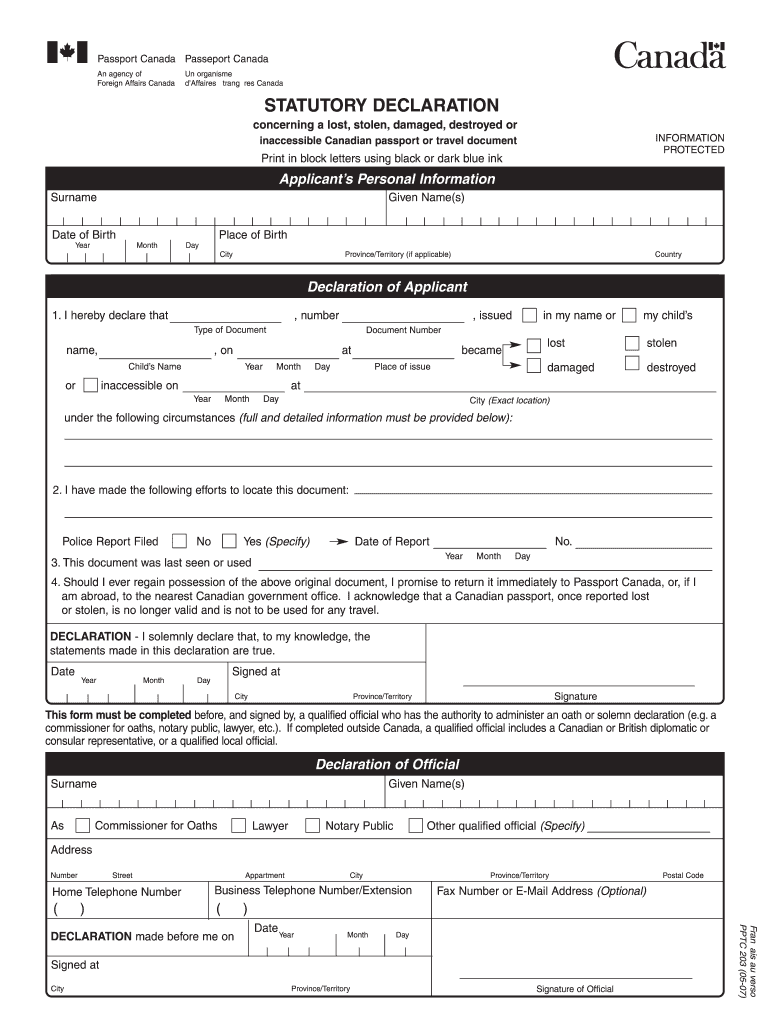
The PPTC 203 form serves as a declaration concerning a lost, stolen, inaccessible, damaged, or found Canadian travel document. This form must be filled out with specific personal details and circumstances surrounding the loss. It's designed not only for straightforward passport loss but also for situations where passports may have been stolen or damaged and are no longer usable.
- It protects the applicant against identity theft.
- The form must be signed before a qualified official who can administer oaths.
Key Sections of the PPTC 203 Form
Understanding the sections of the PPTC 203 form is vital for proper completion. The form includes multiple fields where applicants must provide specific information.
-
Personal Information:
- Name, date of birth, and contact details.
- Previous passport details, if applicable.
-
Declaration Details:
- Circumstances of the loss or damage.
- A statement affirming the truthfulness of provided information.
-
Witness Information:
- Information about the official who witnesses the declaration.
- This may include the name, signature, and date of witnessing.
Each section must be accurately filled to avoid delays in processing the application.
Process for Completing the PPTC 203
Completing the PPTC 203 involves a series of steps that must be followed carefully to ensure compliance with Canadian regulations.
-
Gather Required Information:
- Collect all necessary personal information and any previous passport details.
-
Fill out the Form:
- Complete each section, providing accurate details as per your circumstances.
-
Find a Qualified Witness:
- Locate a notary public, lawyer, or another qualified official to witness your declaration.
-
Submit the Form:
- Once completed and witnessed, you must submit the form along with any other required documentation, such as identification and photos.
-
Tracking and Follow-Up:
- After submission, keep a record of your application status through the Service Canada website or support services.
Legal Implications of the PPTC 203
Using the PPTC 203 form has legal implications, especially as it forms the basis for re-establishing a lost passport.
- Validity: The declaration is a legally binding document.
- Fraud Prevention: Misrepresentation or failure to provide true information can result in penalties or legal action.
- Identity Protection: The form includes measures to prevent identity theft by requiring detailed declarations.
It's essential for applicants to be aware of these legal aspects to avoid complications.
Common Scenarios for Using the PPTC 203
Several real-world scenarios illustrate the common use cases for the PPTC 203 form:
- Lost Passport During Travel: A traveler discovers their passport missing while abroad and needs to file a PPTC 203 to start the replacement process.
- Theft Cases: Individuals who have had their passport stolen must complete this form to declare the loss officially and obtain a new passport.
- Damaged Documents: Those whose passports have become unusable due to damage, such as water exposure, will need to utilize the PPTC 203 form to report the condition.
These scenarios underscore the importance of this document in protecting individuals' travel rights.
Essential Tips for Completing the PPTC 203
When filling out the PPTC 203 form, certain best practices can enhance the effectiveness of your submission.
- Double-Check for Accuracy: Ensure all details are correct to avoid processing delays.
- Use Clear Signature: The witness should sign clearly to ensure the legality of the document.
- Keep Copy of Submission: Always retain a copy of the submitted form for your records.
Enhancing your submission process with these tips can save time and trouble in the long run.