







Definition and Meaning
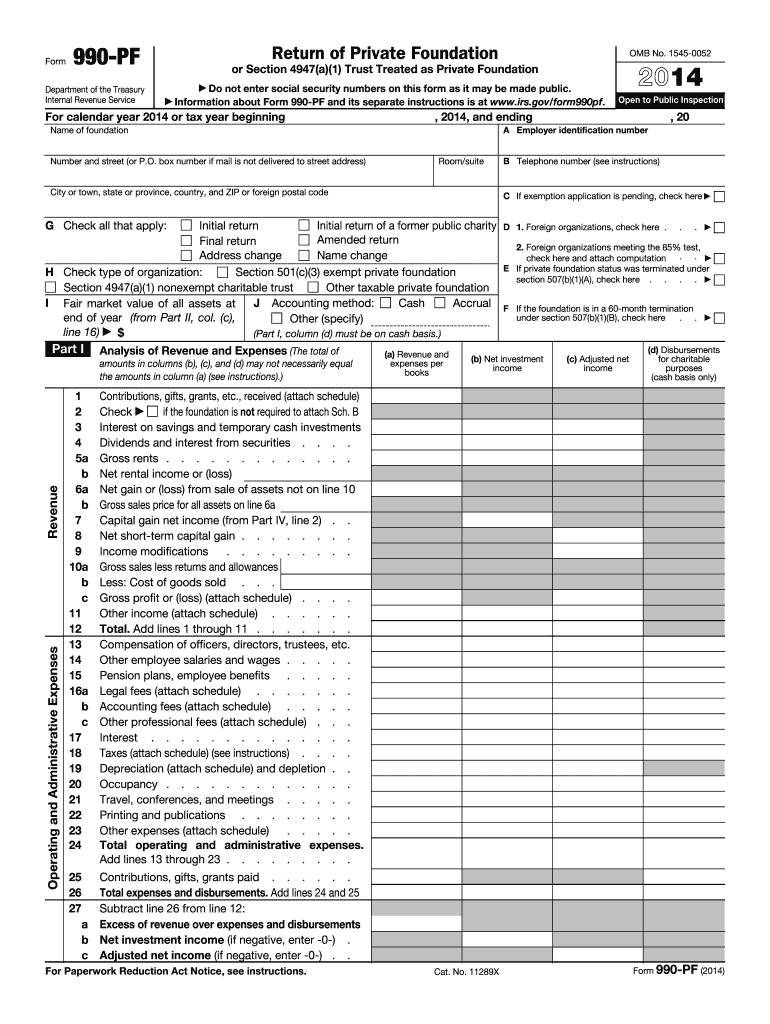
The 2014 Form 990-PF is a specialized tax return used by private foundations to report financial information to the Internal Revenue Service (IRS). This annual form ensures transparency and accountability in a foundation's operations, detailing aspects such as revenue, expenses, assets, and liabilities. It provides a thorough record of charitable distributions and adherence to tax regulations, making it an essential document for both the IRS and the general public interested in the foundation’s activities.
How to Use the 2014 Form 990-PF
Private foundations utilize the 2014 990-PF form to report their yearly financial activities to the IRS. This includes detailing grants paid out, administrative expenses, and any investments or transactions exceeding specific IRS thresholds. Foundations must ensure that all sections of the form are completed accurately to avoid compliance issues. Beyond compliance, completing this form provides foundations an opportunity to reflect on their financial health and evaluate their commitment to charitable goals.
How to Obtain the 2014 Form 990-PF
Accessing the 2014 Form 990-PF is straightforward. It is available for download on the IRS official website. Foundations can also find the form through various tax software applications, which may offer the added benefit of digital completion and submission. Additionally, DocHub and similar platforms support the form, allowing for editing and management in an online, user-friendly environment.
Steps to Complete the 2014 Form 990-PF
-
Gather Financial Records: Begin by assembling all relevant financial documents, including income statements, balance sheets, and schedules of grants provided.
-
Complete Identification Information: Fill out basic information, including the foundation’s name, address, and identification number.
-
Detail Financial Data: Report all income sources, including donations, investment income, and any other revenues. Expenses, such as administrative costs and incurred losses, should also be documented.
-
Provide Charitable Distribution Information: Outline all grants and contributions made during the year, specifying recipients and purpose.
-
Review and Finalize: Double-check each section for accuracy and consistency. It’s essential to verify that all required schedules are included.
-
Submit: The completed form can be submitted electronically via the IRS e-file system or printed and mailed to the IRS.
Who Typically Uses the 2014 Form 990-PF
The primary users of the Form 990-PF are private foundations, which may include family foundations, corporate foundations, and independent grant-making organizations. These entities are required by law to file this form annually, ensuring that they publicly disclose their financial activities and adherence to tax regulations. Legal professionals and accountants specializing in nonprofit work also frequently use this form to assist their clients.


Important Terms Related to the 2014 Form 990-PF
- Private Foundation: A nonprofit organization with its own source of funding, typically from a single individual, family, or corporation.
- Grants and Contributions Paid: Financial support provided to other organizations or individuals for charitable activities.
- Net Investment Income: Income earned from interest, dividends, rents, and gains on the sale of assets.
- Distributable Amount: The minimum amount of income that a foundation must disburse for charitable purposes to comply with IRS rules.
Key Elements of the 2014 Form 990-PF
- Part I - Revenue and Expenses: Detailed summary of the foundation's income and expenses.
- Part II - Balance Sheets: The foundation’s assets and liabilities over the reporting period.
- Supplementary Schedules: Additional required information that substantiates claims made in the main body of the form.
Filing Deadlines and Important Dates
The 2014 Form 990-PF must be filed by the fifteenth day of the fifth month following the end of the foundation's fiscal year. For foundations operating on a calendar year basis, this deadline typically falls on May 15th. It’s crucial for foundations not to miss this deadline, as late filing can result in penalties or, for prolonged non-compliance, loss of tax-exempt status.
Penalties for Non-Compliance
Failing to file the Form 990-PF on time can result in significant penalties. The IRS imposes daily fines for late submissions, which can accumulate quickly. Moreover, consistent failure to file can jeopardize the foundation’s tax-exempt status. Ensuring timely and accurate filing is essential to maintaining compliance and avoiding these repercussions.




