




01. Edit your form online
Type text, add images, blackout confidential details, add comments, highlights and more.

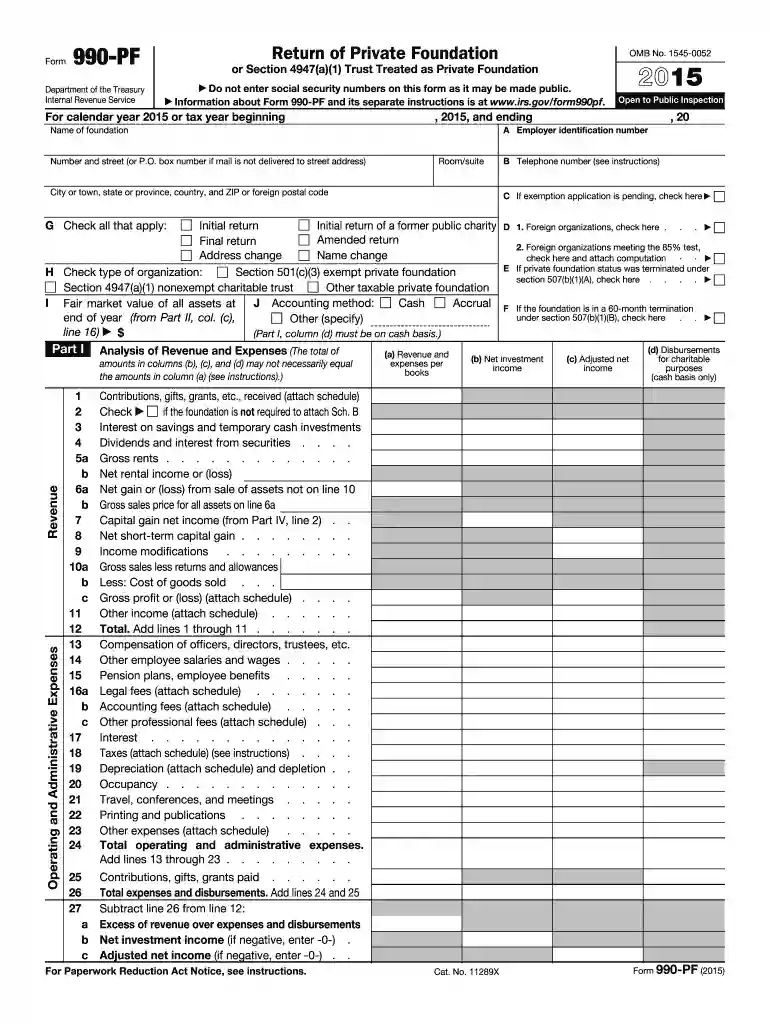
Type text, add images, blackout confidential details, add comments, highlights and more.

Draw your signature, type it, upload its image, or use your mobile device as a signature pad.

Send it via email, link, or fax. You can also download it, export it or print it out.
The 2015 form 990-PF is an essential tax return document used by private foundations in the United States. This form is mandated by the Internal Revenue Service (IRS) to report the financial activities of private foundations, ensuring transparency and regulatory compliance. It captures a foundation’s revenue, expenses, distributions for charitable purposes, and details about assets and liabilities. The data submitted helps the IRS verify compliance with tax regulations and encourages accountability in foundation operations.
To effectively utilize the 2015 form 990-PF, private foundations must prepare a comprehensive record of their annual financial dealings. Detailed preparation involves gathering relevant supporting documents and correctly filling out each section of the form.
Completing the 2015 form 990-PF accurately requires a systematic approach and attention to detail.
The 2015 form 990-PF is primarily used by private foundations operating within the United States. These philanthropic entities range from large national organizations to smaller, private family foundations.


The 2015 form 990-PF is issued by the Internal Revenue Service (IRS), the federal agency responsible for tax collection and tax law enforcement in the United States. The IRS provides the form to ensure foundations adhere to financial reporting standards necessary for maintaining their tax-exempt status.
Meeting filing deadlines for the form 990-PF is critical to avoiding penalties.
Failure to comply with IRS requirements related to the form 990-PF can result in significant penalties and repercussions.
Filing the 2015 form 990-PF accurately demands comprehensive and organized financial documentation.
Through careful preparation and accurate filing of the 2015 form 990-PF, private foundations can demonstrate transparency, maintain regulatory compliance, and continue to achieve their philanthropic objectives effectively.
We've got more versions of the 2015 990pf form form. Select the right 2015 990pf form version from the list and start editing it straight away!
| Versions | Form popularity | Fillable & printable |
|---|---|---|
| 2025 | 4.7 Satisfied (39 Votes) | |
| 2024 | 4.6 Satisfied (30 Votes) | |
| 2023 | 4.2 Satisfied (21 Votes) | |
| 2022 | 4.9 Satisfied (57 Votes) | |
| 2021 | 4.8 Satisfied (110 Votes) | |
| 2020 | 4.3 Satisfied (151 Votes) | |
| 2019 | 4.3 Satisfied (59 Votes) | |
| 2018 | 4.3 Satisfied (90 Votes) | |
| 2017 | 4.1 Satisfied (75 Votes) | |
| 2016 | 4.4 Satisfied (629 Votes) | |
| 2015 | 4.3 Satisfied (64 Votes) | |
| 2014 | 4.1 Satisfied (66 Votes) | |
| 2013 | 4.1 Satisfied (49 Votes) | |
| 2012 | 4.2 Satisfied (29 Votes) | |
| 2011 | 4.1 Satisfied (53 Votes) |
At DocHub, your data security is our priority. We follow HIPAA, SOC2, GDPR, and other standards, so you can work on your documents with confidence.
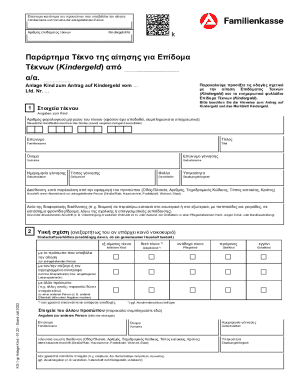


Is the organization filing Form 990 in lieu of Form 1041?. b If Yes, enter the amount of tax-exempt interest received or accrued during the year.. 12 a.
Nov 20, 2015 To report charitable distributions and activities. Also, Form 990-PF serves as a substitute for the section 4947(a)(1) nonexempt charitableRead more
Apr 1, 2019 Is the organization filing Form 990 in lieu of Form 1041? If Yes, enter the amount of tax-exempt interest received or accrued during theRead more


