



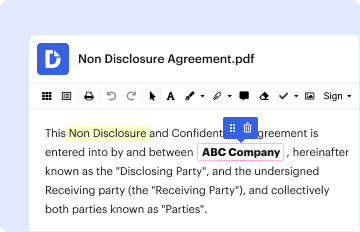
01. Edit your 990 pf form online
Type text, add images, blackout confidential details, add comments, highlights and more.

Type text, add images, blackout confidential details, add comments, highlights and more.
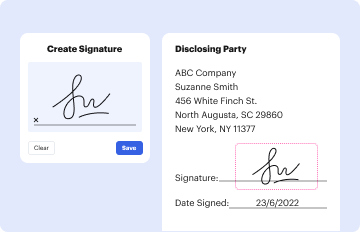
Draw your signature, type it, upload its image, or use your mobile device as a signature pad.

Send it via email, link, or fax. You can also download it, export it or print it out.
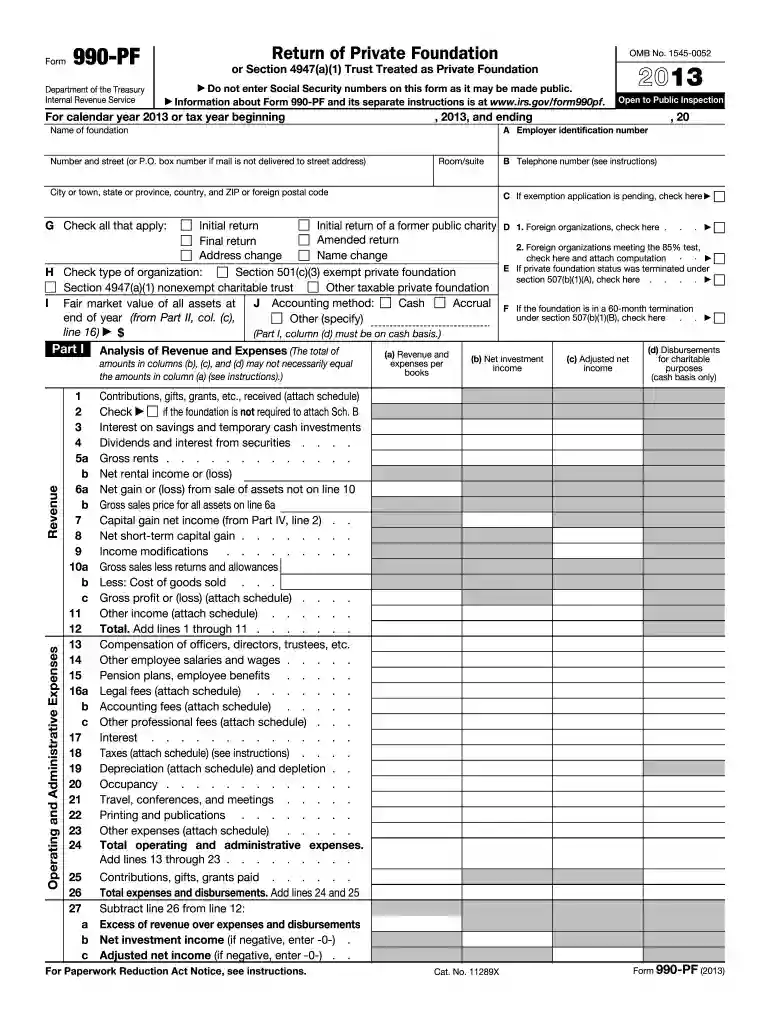
Form 990-PF, often referred to as the Private Foundation Tax Form, is a critical document mandated by the IRS for private foundations operating within the United States. This form is employed to report a foundation's financial standing, including revenue, expenses, assets, liabilities, and information about charitable distributions. Its principal aim is to promote transparency and accountability, ensuring these entities comply with federal tax regulations. Private foundations are required to annually file Form 990-PF to maintain their tax-exempt status and provide public access to vital information about their operations.
Private foundations use Form 990-PF to detail their charitable activities, including grants and contributions made throughout the fiscal year. This section of the form ensures that organizations adhere to their stated philanthropic missions. Accurate documentation of each grant, recipient, and amount distributed is necessary. Foundations must demonstrate that their funds are used to support charitable purposes rather than for personal gain, aligning with IRS compliance regulations.
Foundations must pay close attention when preparing the 2013 990-PF form, as accuracy is crucial to compliance. Tax professionals typically advise using this form to meticulously document all financial transactions and charitable involvements for the designated year. It involves listing financial data that reflects the foundation’s fiscal health and integrity transparently.
The form contains several sections that must be completed:
Every section is essential for covering specific aspects of the foundation's tax obligations and operational transparency.
Private foundations can acquire the 2013 edition of Form 990-PF through several methods:
Completing the 2013 Form 990-PF involves a methodical approach:
Apart from precise data entry, it’s paramount that foundations verify compliance with IRS regulations concerning the calculation of taxes and allowable deductions. Errors may lead to audits or penalties.
The form is predominantly used by private foundations, which are categorized into two main types:
Both entities must use this form to report their annual financial activities and demonstrate their adherence to organizational missions.


The 2013 Form 990-PF contains several critical elements necessary for IRS compliance:
Each element directly impacts the foundation's tax eligibility and public transparency.
Form 990-PF serves several legal purposes, including:
Non-compliance could result in penalties and jeopardize the foundation’s tax-exempt status.
Understanding the timeline is vital for compliance:
It's crucial for foundations to adhere to these deadlines to avoid late fees and potential scrutiny from the IRS.
We've got more versions of the 990 pf form form. Select the right 990 pf form version from the list and start editing it straight away!
| Versions | Form popularity | Fillable & printable |
|---|---|---|
| 2025 | 4.7 Satisfied (39 Votes) | |
| 2024 | 4.6 Satisfied (30 Votes) | |
| 2023 | 4.2 Satisfied (21 Votes) | |
| 2022 | 4.9 Satisfied (57 Votes) | |
| 2021 | 4.8 Satisfied (110 Votes) | |
| 2020 | 4.3 Satisfied (151 Votes) | |
| 2019 | 4.3 Satisfied (59 Votes) | |
| 2018 | 4.3 Satisfied (90 Votes) | |
| 2017 | 4.1 Satisfied (75 Votes) | |
| 2016 | 4.4 Satisfied (629 Votes) | |
| 2015 | 4.3 Satisfied (64 Votes) | |
| 2014 | 4.1 Satisfied (66 Votes) | |
| 2013 | 4.1 Satisfied (49 Votes) | |
| 2012 | 4.2 Satisfied (29 Votes) | |
| 2011 | 4.1 Satisfied (53 Votes) |
At DocHub, your data security is our priority. We follow HIPAA, SOC2, GDPR, and other standards, so you can work on your documents with confidence.
May 15, 2014 For an organization filing Form 990, 990-EZ, or 990-PF that received, during the year, $5,000 or more (in money or property) from any one.Read more
Schedule B (Form 990, 990-EZ, or 990-PF) (2013). Page. (see instructions). Use duplicate copies of Part I if additional space is needed. $. (Complete Part IIRead more
For an organization filing Form 990, 990-EZ, or 990-PF that received, during the year, $5,000 or more (in money or property) from any one contributor. CompleteRead more


