
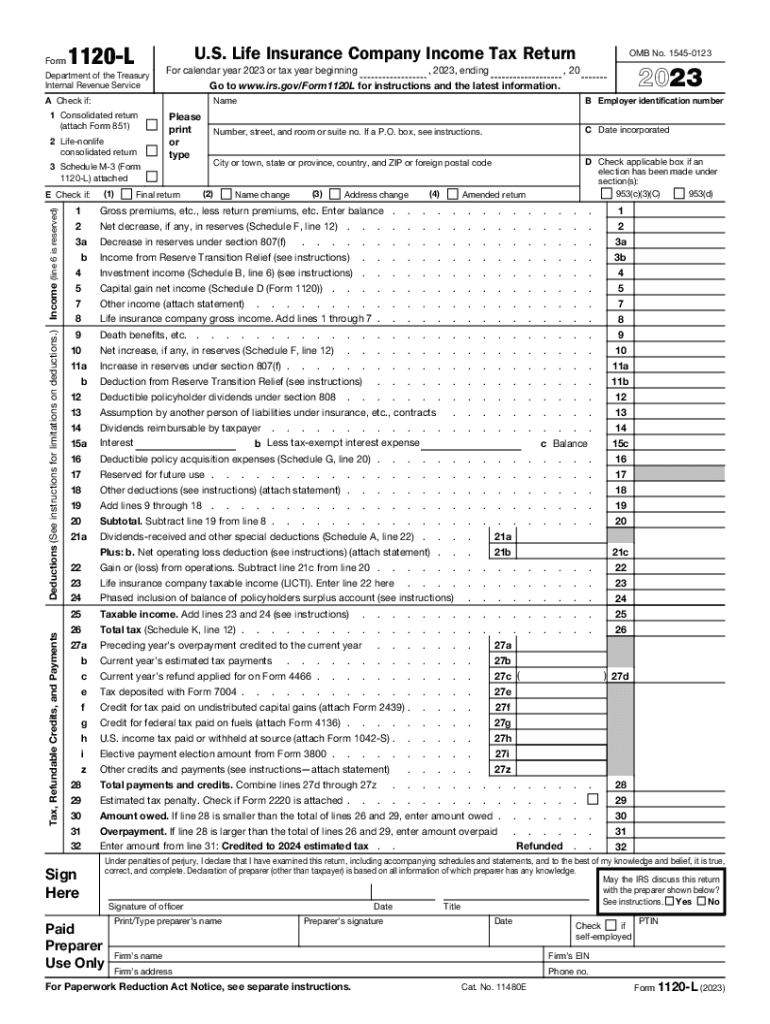







Definition & Purpose of the New Tax Form
The "Treasury and IRS Propose New Tax Form For Corporate" is a specialized tax documentation tool developed to standardize and streamline corporate tax filing for specific business entities in the United States. This form is essential for corporations to accurately report their financial activities, ensuring compliance with current tax regulations set forth by the Treasury and IRS. It aims to provide clarity on taxable income, deductions, and tax liabilities, offering a structured format for capturing relevant financial data pertinent to corporate entities.
Eligibility Criteria for the Form
Corporations need to verify their eligibility before proceeding with the form. Typically, this form is designed for:
- Domestic Corporations: Entities operating within the U.S. must determine their eligibility based on revenue thresholds or types of business activities.
- Foreign Corporations: Certain foreign entities with U.S. source income may be required to file this form to comply with local tax obligations.
- Excludable Entities: Some business types, like LLCs or non-profit organizations, might have distinct reporting requirements or exemptions.
Understanding eligibility criteria helps ensure that the corporation files the correct form, avoiding unnecessary complications or the need for re-filing.


How to Use the New Tax Form
Corporations can utilize the proposed new tax form by following a detailed procedure:
- Gather Necessary Financial Data: Compile documents such as income statements, balance sheets, and records of deductible expenses.
- Complete Each Section: Carefully address sections related to gross income, deductions, taxable income, and tax credits, ensuring all financial information is accurate and complete.
- Include Supplementary Schedules: Attach any required schedules or supplemental forms that support the information provided in the main form.
- Review and Validate: Double-check entries for consistency and accuracy before submission.
Completing this process with precision ensures that the corporation fulfills its tax obligations efficiently.
Important Terms Related to the Form
Understanding key terminology is crucial for accurately completing the new tax form:
- Gross Income: Total financial revenues before deductions.
- Tax Deductions: Eligible expenses that reduce taxable income.
- Tax Credits: Reductions in tax liability based on specific qualifying expenditures.
- Taxable Income: Earnings subject to tax after deductions.
- Compliance Date: Deadline by which the form must be filed to avoid penalties.
Familiarity with these terms facilitates a smoother filing experience and helps prevent errors in interpretation.
Filing Deadlines & Important Dates
Complying with official deadlines is essential:
- Regular Tax Year End: For most corporations, forms must be filed by the 15th day of the 4th month after the close of the tax year.
- Extension Filing: Corporations may apply for filing extensions if more time is needed to compile information.
- Specific Events: Certain events, like mergers, may affect filing deadlines, requiring early submissions or adjustments.
Responsibility in meeting these deadlines avoids late fees and compliance issues.
Key Elements of the Form
Corporations must pay special attention to the critical sections of the tax form:
- Income Reporting: Properly account all revenue streams.
- Deductions and Credits: Accurate claim of deductions and applicable credits.
- Financial Statements: Include supporting financial documents that substantiate entries in the tax form.
- Signatory Confirmation: Ensure that an authorized official signs the form for validation.
These elements ensure a comprehensive and accurate submission, reflecting the corporation's financial situation.
Digital vs. Paper Version
The form is available in both digital and paper formats, each with its advantages:
- Digital Version: Offers convenience and efficiency with e-filing capabilities, reducing the need for physical documentation storage.
- Paper Version: While slower, it may be preferable for those who require hard copies for record-keeping or due to digital access limitations.
Corporations should choose the format that aligns with their operational preferences and capabilities.
Software Compatibility
To ease the filing process, corporations can use tax preparation software:
- TurboTax: Known for its user-friendly interface, it facilitates accurate completion of IRS forms.
- QuickBooks: Integrates financial management with tax form preparation, allowing seamless data import.
- TaxSlayer: Offers specific features for corporate entities, ensuring compliance and thorough review before filing.
Selecting the right software aids in streamlining the preparation and submission of the tax form while minimizing errors.


