
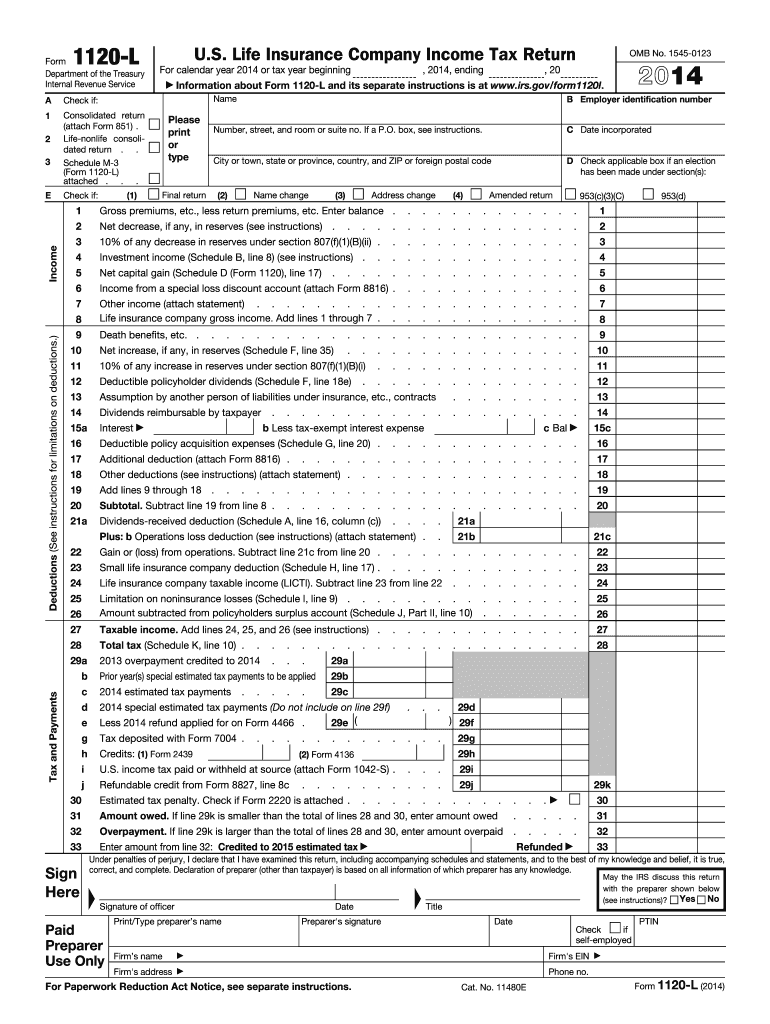







Definition and Purpose of the 2014 Form Company Tax
The 2014 Form 1120-L, also known as the U.S. Life Insurance Company Income Tax Return, is a specialized tax document for life insurance companies operating within the United States. This form is used to calculate and report the income tax liabilities of these companies for a given calendar year. It includes comprehensive sections for detailing gross income, deductions, taxable income, and other financial particulars. The 2014 version of this form specifically addresses the taxation nuances and obligations relevant to that tax year, reflective of the legislative and regulatory framework in place at the time.
Obtaining and Accessing the 2014 Form
To obtain the 2014 form for company tax, businesses can access it via the Internal Revenue Service (IRS) website. The form is available for download as a PDF, allowing businesses to either print it or fill it out digitally. For convenience, tax preparation software such as TurboTax and QuickBooks also support this form, providing a more integrated application process and ensuring compliance with the necessary tax protocols. Businesses may also request a physical copy via mail from the IRS by submitting a request through official correspondence.
Steps to Complete the 2014 Form Company Tax
-
Gather Financial Documents: Before beginning, collect all financial records related to income, expenses, and deductions for the 2014 tax year.
-
Complete Income Sections: Enter gross income figures, including investment income and premiums.
-
Deductible Expenses: Accurately list all deductions, such as operating expenses and policyholder dividends, ensuring adherence to IRS guidelines.
-
Calculate Taxable Income: Subtract the total deductions from gross income to determine the taxable amount.
-
Review Schedules: Fill in relevant schedules, including details on reserves and acquisition expenses specific to life insurance operations.
-
Finalize and Review: Double-check all entries for accuracy before final submission.
Who Typically Uses the 2014 Form
Life insurance companies, both domestic and those operating in the U.S. as a foreign entity, primarily utilize the 2014 form company tax. This form is specifically tailored for entities whose primary business activity involves underwriting and managing life insurance policies. Corporations structured as life insurance companies, including mutual companies and joint-stock companies, are the typical filers of this form.


Important Terms Related to the 2014 Form
- Gross Income: All income received from life insurance premiums, annuities, and investment returns.
- Policyholder Dividends: Returns paid back to policyholders, which can be deducted from overall income.
- Reserves: Financial safety nets set aside to meet future claims and policyholder obligations.
- Taxable Income: The amount of income subject to taxation after all allowable deductions have been applied.
Legal Use and Compliance of the Form
Compliance with the legal requirements of the 2014 Form 1120-L is mandatory for life insurance companies. The form must be filled out accurately, reflecting true financial conditions and operations for the tax year. Failure to comply can result in penalties, including fines and audits by the IRS, making it crucial for companies to follow all instructions and guidelines precisely.
Filing Deadlines and Important Dates
For the calendar year 2014, the filing deadline for this form was typically March 15, 2015. However, companies could request an extension by filing Form 7004, extending the deadline by six months. It is essential for businesses to adhere to these deadlines to avoid late filing penalties and interest charges.
Submission Methods for the 2014 Form
Businesses can submit the 2014 form through different channels:
- Online Submission: Utilizing e-file systems provided by the IRS, which ensure faster processing and confirmation.
- Mail Submission: Sending a completed physical form to the appropriate IRS address for paper returns.
- In-Person Delivery: Hand-delivering to an IRS office, though this is less common and subject to office capabilities and rules.
Key Elements and Sections of the 2014 Form
- Financial Statements: Detail income statements, balance sheets, and cash flow for the reporting period.
- Schedules: Include Schedule A for dividends and Schedule B for reserves, which require diligent financial analysis.
- Signature and Declaration: Reinforces the person completing the form has the authority and believes in its accuracy.
These elements form the backbone of the compliance requirements for the 2014 form, ensuring that every aspect of the company's financial activities is reported correctly and transparently.




