




01. Edit your form online
Type text, add images, blackout confidential details, add comments, highlights and more.

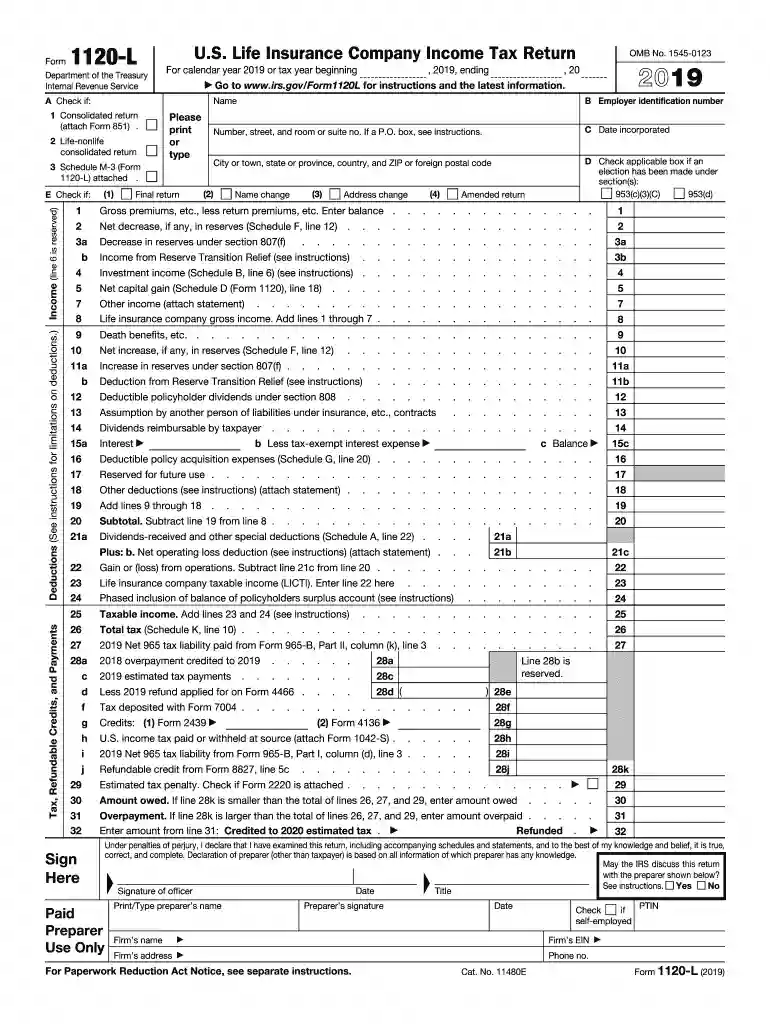
Type text, add images, blackout confidential details, add comments, highlights and more.

Draw your signature, type it, upload its image, or use your mobile device as a signature pad.

Send it via email, link, or fax. You can also download it, export it or print it out.
Form 1120 Schedule L is a specific schedule that is part of the U.S. corporate income tax return, Form 1120. This schedule is utilized to report the corporation's balance sheet, showing the beginning and end-of-year figures for assets, liabilities, and shareholders' equity. It provides detailed insights into the financial position of a corporation at these two crucial times within the tax year. The information disclosed in Schedule L is pivotal for tax compliance and financial transparency, offering a snapshot of a corporation’s financial health.
Gather Financial Statements: Begin by gathering the corporation’s financial statements, as these documents provide the raw data necessary for accurately completing Schedule L. This includes balance sheets and records of assets, liabilities, and shareholders’ equity.
Enter Beginning of Year Figures: Using the previous year’s ending balance sheet figures, enter the beginning of the year totals for assets, liabilities, and shareholders’ equity.
Document End of Year Figures: Compile the current year-end figures. Make sure these reflect changes from the fiscal activities over the year. They should include any significant transactions affecting assets like cash, property, debts, and shareholder investments.
Verify Accuracy: Double-check all entries for accuracy against your financial records. Errors can lead to complications with the IRS.
Submit with Form 1120: Attach Schedule L to Form 1120 and file it with the IRS by the required deadline.
Assets: These are resources owned by the corporation that have economic value, such as cash, accounts receivable, and inventories.
Liabilities: These refer to the corporation's obligations, including debts and accounts payable, that are expected to be settled in the future.
Shareholders’ Equity: This represents the remaining interest in the assets of the corporation after all liabilities have been deducted.
Cash Balance: The schedule records cash at both the beginning and end of the year, providing insight into cash flow changes.
Inventories: Significant for companies dealing in physical goods, inventories reflect product stock that impacts both financial and operational planning.
Accounts Payable and Receivable: These are critical for understanding the corporation’s short-term financial operations, affecting liquidity and capital management.
Retained Earnings: This is the accumulated net income that has not been distributed to shareholders, indicating what portion of profit is reinvested in the business.
Corporations typically must file Form 1120, along with Schedule L, by the 15th day of the fourth month after the end of the corporation’s taxable year, usually April 15 for calendar year filers. Extensions can be requested, but appropriate forms must be submitted before the initial deadline.
Startups: New businesses often use Schedule L to show initial investment and early financial activities, essential for stakeholders assessing business performance.
Established Corporations: Longstanding companies rely on Schedule L to track financial stability and ensure compliance with tax obligations, maintaining accurate records for audits.
Growth Analysis: Corporations utilize Schedule L to assess growth by comparing year-over-year asset and liability changes.
The IRS provides specific instructions for completing Schedule L accurately. These include definitions for each line item on the schedule, allowable methods for asset valuation, and detailed descriptions to ensure consistent reporting. Adhering to these guidelines is essential to avoid penalties.
Failure to accurately file Schedule L can result in significant penalties, including fines for incomplete or incorrect submissions. Corporations may also face audits, increased scrutiny, and potential legal actions if they do not meet IRS standards for financial reporting. Compliance is critical for maintaining good standing with tax authorities.
Understanding and executing Form 1120 Schedule L correctly is vital for corporations in the U.S. It ensures compliance with tax regulations, aids in strategic financial planning, and provides transparency in financial reporting.
We've got more versions of the form 1120 schedule l form. Select the right form 1120 schedule l version from the list and start editing it straight away!
| Versions | Form popularity | Fillable & printable |
|---|---|---|
| 2025 | 4.1 Satisfied (46 Votes) | |
| 2024 | 4.2 Satisfied (51 Votes) | |
| 2023 | 4.5 Satisfied (38 Votes) | |
| 2022 | 4.1 Satisfied (50 Votes) | |
| 2021 | 4.9 Satisfied (49 Votes) | |
| 2020 | 4 Satisfied (25 Votes) | |
| 2019 | 4.1 Satisfied (26 Votes) | |
| 2018 | 4.4 Satisfied (223 Votes) | |
| 2017 | 4.3 Satisfied (143 Votes) | |
| 2016 | 4.4 Satisfied (180 Votes) | |
| 2015 | 4.2 Satisfied (70 Votes) | |
| 2014 | 4 Satisfied (37 Votes) | |
| 2013 | 4.3 Satisfied (65 Votes) | |
| 2012 | 4 Satisfied (54 Votes) | |
| 2011 | 4.2 Satisfied (39 Votes) |
At DocHub, your data security is our priority. We follow HIPAA, SOC2, GDPR, and other standards, so you can work on your documents with confidence.


