
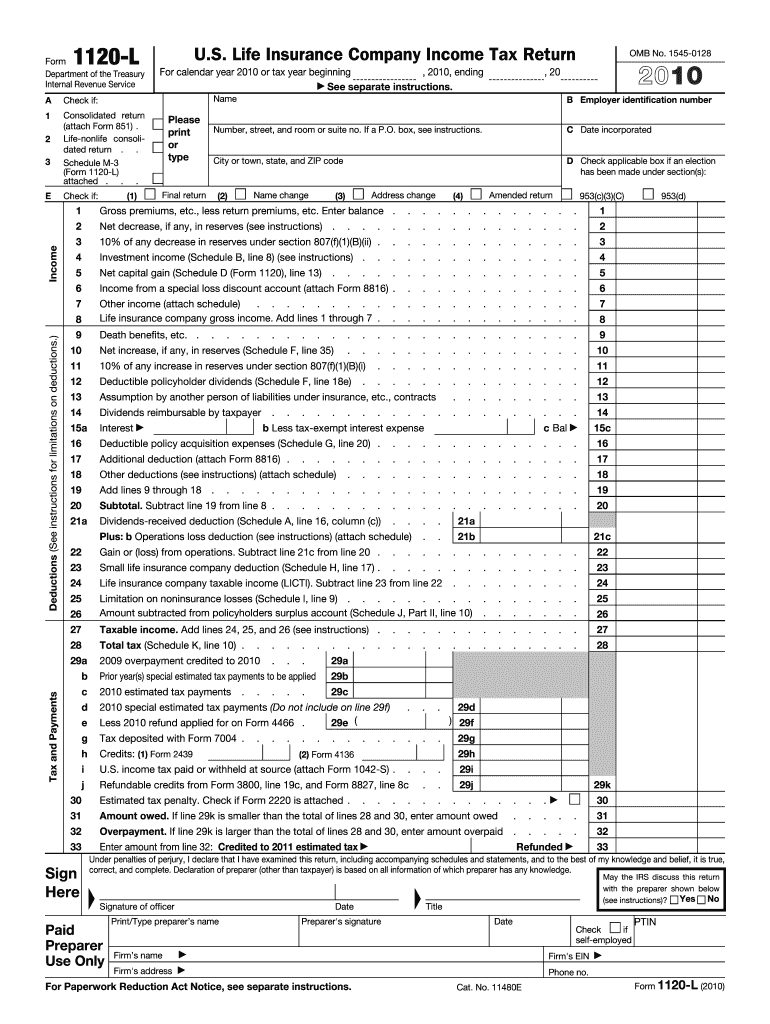







Definition and Meaning of 2010 Form 1120-L
The 2010 Form 1120-L is utilized by U.S. life insurance companies to file their income tax return for the 2010 tax year. This form is exclusive to the insurance sector and includes specific sections for reporting income, deductions, and tax liabilities pertinent to life insurance entities. It encompasses detailed categories such as gross income from premiums, reserves, policyholder dividends, and various financial metrics intrinsic to the insurance industry.
Key Elements of the 2010 Form 1120-L
The 2010 Form 1120-L comprises multiple sections focused on the unique aspects of life insurance companies:
- Gross Income: Reports all income derived from insurance premiums, investment income, and any other sources.
- Deductions: Lists allowable deductions specific to life insurance companies, such as operating expenses and reserve allocations.
- Tax Liability: Calculates the total tax owed after accounting for applicable credits and deductions.
These elements are critical for ensuring that all pertinent financial activities are accurately reflected and taxed according to IRS guidelines.
Steps to Complete the 2010 Form 1120-L
- Gather Required Documents: Collect all necessary financial records, including income statements, policyholder information, and prior year returns.
- Calculate Gross Income: Tally all sources of income specific to the insurance company’s operations.
- Determine Deductions: Identify and list all applicable deductions to reduce taxable income.
- Compute Tax Liability: Use the form's calculations to establish the total tax owed.
- Review and Submit: Double-check all entries for accuracy, sign the form, and submit it to the IRS by the specified deadline.
Who Typically Uses the 2010 Form 1120-L
This form is primarily used by life insurance companies operating within the United States. It is mandatory for these companies to accurately report their financial data to comply with federal tax laws. Smaller mutual and stock life insurance companies are among the main users due to their need to navigate specific reporting requirements set by the IRS.


Important Terms Related to 2010 Form 1120-L
Understanding specific jargon related to Form 1120-L is crucial for accurate completion:
- Insurance Reserves: The legal obligation for future policy benefits, crucial for calculating life insurance company deductions.
- Policyholder Dividends: Refunds or discounts provided to policyholders, which can impact gross income calculations.
- Net Investment Income: The portion of income derived from investments, separate from the core insurance operations.
IRS Guidelines for 2010 Form 1120-L
The IRS provides comprehensive guidelines for completing the 2010 Form 1120-L. These involve instructions for calculating taxable income, deductible expenses, and the methodologies to accurately portray reserves and dividends. Adhering to these guidelines ensures compliance and reduces the risk of penalties.
Penalties for Non-Compliance
Failure to properly file the 2010 Form 1120-L or provide accurate financial data may lead to IRS-imposed penalties. Penalties can include fines for late filing, inaccuracies, or omissions in the reported information. It is vital for companies to adhere to all filing requirements to avoid these financial repercussions.
Filing Deadlines and Important Dates
For the 2010 tax year, life insurance companies needed to submit the Form 1120-L by the 15th day of the third month following the end of their tax year. Thus, for most companies with a calendar year-end, the deadline was March 15, 2011. Abiding by this deadline is critical to avoid late filing penalties.
Form Submission Methods
The 2010 Form 1120-L can be submitted to the IRS via:
- Electronic Submission: Preferred by the IRS for its efficiency and faster processing.
- Mail: Traditional submission through postal services, which may require additional time for receipt and processing.
Choosing the appropriate submission method depends on company preferences, but electronic filing is encouraged for efficiency.
Required Documents for Completion
Completing the 2010 Form 1120-L requires specific documents:
- Financial Statements: Include income and expense records.
- Policyholder Information: Provides necessary details for dividend calculations.
- Previous Tax Returns: Offers a baseline for comparison and historical reference.
Having these documents readily available streamlines the form completion process.
Legal Use of the 2010 Form 1120-L
Using this form legally requires companies to adhere strictly to IRS regulations concerning the reporting of income and deductions specific to life insurance companies. The form ensures that these entities meet their tax obligations while remaining compliant with federal laws governing insurance operations.
Software Compatibility
Life insurance companies may employ various software tools to assist in filings, such as:
- TurboTax: Streamlines tax preparation and form submission.
- QuickBooks: Helps manage accounting tasks coupled with tax preparation functionalities.
- Specialized Insurance Industry Software: Tailored solutions to handle the unique financial reporting aspects for life insurance companies.
This software compatibility facilitates efficient and accurate completion of the Form 1120-L.


