







Understanding the Purpose of Form 720
Definition & Meaning
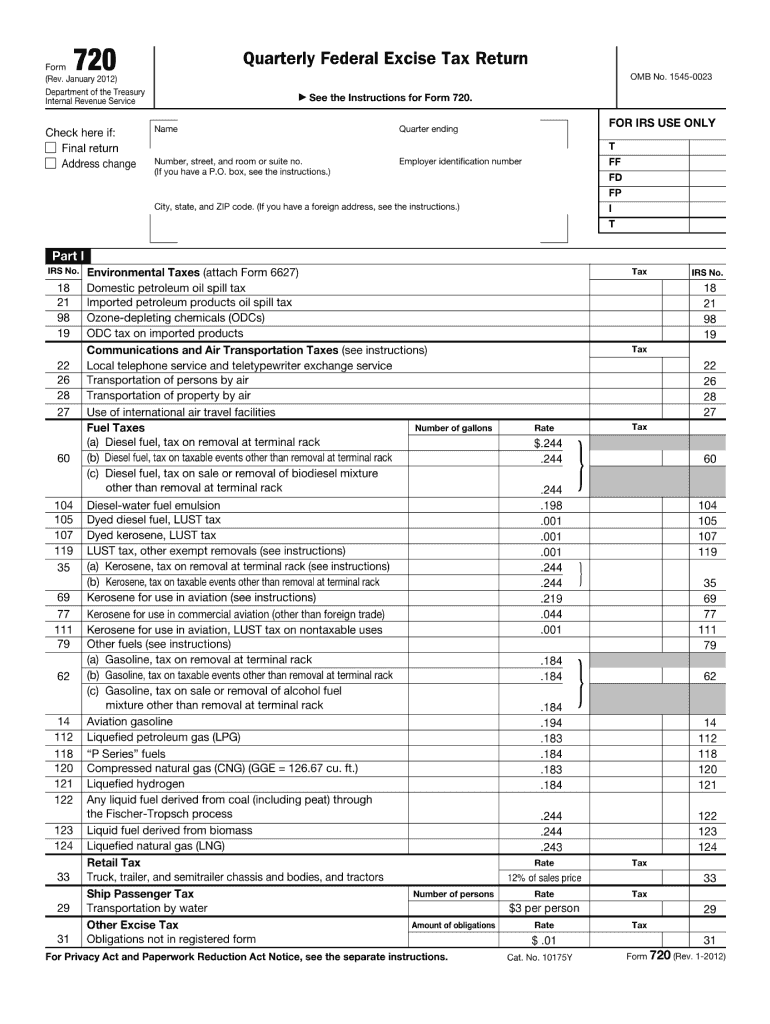
Form 720, officially titled as the "Quarterly Federal Excise Tax Return," is used by businesses to report and pay federal excise taxes on specific types of goods and services. The 2012 version specifically pertains to the regulations and guidelines in effect during that tax year. Excise taxes are generally applied to goods such as fuel, tobacco, alcohol, and other products deemed non-essential or luxury.
How to Use the 2012 Form 720
The process for utilizing Form 720 involves gathering all applicable excise tax information for the quarter, accurately completing the form, and submitting it to the IRS by the required deadline. Businesses need to identify which goods and services they provide are subject to excise taxes and calculate the total tax due accordingly.
- Filling Out the Form:
- Enter business identification information, including name and EIN (Employer Identification Number).
- Identify and list each taxable item or service.
- Calculate the excise tax for each category and provide totals.
Steps to Complete the 2012 Form 720
- Gather Necessary Documentation: Collect all records related to transactions subject to excise taxes, such as invoices or sales receipts.
- Identify Tax Categories: Clearly determine which products or services fall under the excise tax rules.
- Calculate Taxes: Use the appropriate tax rate for each category to find the total excise tax.
- Complete the Form Fields: Enter the required data into the correct sections of Form 720.
- Check for Accuracy: Review all entered information for precision.
- Submit the Form: File the form by mail or electronically with the IRS.
Obtaining the 2012 Form 720
To secure a copy of the 2012 Form 720, you can visit the IRS website and download it directly. Alternatively, you can contact the IRS to request a mailed copy if you prefer the physical version.
Important Terms Related to Form 720
- Excise Tax: A tax imposed on specific goods, activities, or services.
- EIN (Employer Identification Number): A unique number assigned to a business entity for tax purposes.
- Quarterly Filing: Refers to the requirement for businesses to file the form every three months.
Filing Deadlines / Important Dates
Form 720 must be filed quarterly, with specific deadlines based on the federal tax calendar. The deadlines for the 2012 tax year were:
- First Quarter: April 30
- Second Quarter: July 31
- Third Quarter: October 31
- Fourth Quarter: January 31 of the following year
Who Typically Uses the 2012 Form 720
Form 720 is primarily used by businesses and entities engaged in producing, selling, or importing products subject to federal excise taxes. This includes but is not limited to manufacturers, wholesalers, and retailers dealing in goods like gasoline, diesel fuel, airline services, and tobacco products.


Legal Use of the 2012 Form 720
Businesses are legally bound to report and pay federal excise taxes as mandated by law. Filing Form 720 accurately and on time is essential to remain compliant and avoid any legal repercussions or penalties from the IRS.
Penalties for Non-Compliance
Failing to file Form 720 or filing it late can result in penalties from the IRS, which may include fines or interest on unpaid taxes. The IRS can impose a failure-to-file penalty, which increases the overall tax burden for the business if deadlines or requirements are not met.
Digital vs. Paper Version
Businesses have the option to file Form 720 electronically through the IRS’s e-filing system, which simplifies the submission process, reduces errors, and often ensures quicker processing. Alternatively, they can mail a paper version of the form to the IRS processing center. Electronic filing is generally recommended for its efficiency and convenience.
Taxpayer Scenarios

Business Entity Types
- Corporations and LLCs: Typically file Form 720 if they engage in activities subject to excise tax.
- Partnerships: Usually required to file if any partners are involved in taxable activities.
- Sole Proprietors: May need to file depending on the goods or services offered.
Each business type should assess their operations against federal excise tax guidelines to determine filing requirements accurately.




