
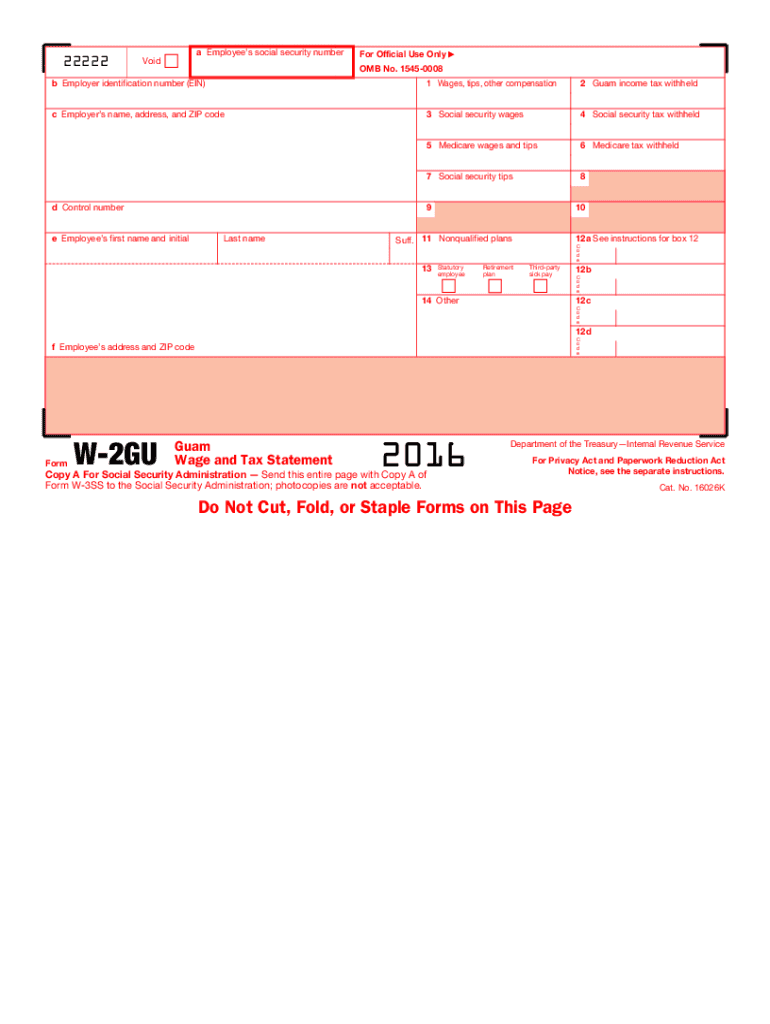







Definition and Meaning of Form W-2GU
The Form W-2GU, known as the Guam Wage and Tax Statement, serves a crucial role in reporting wages and the amount of taxes withheld for employees within Guam. Similar to its counterpart used in the United States, the W-2 form, the W-2GU is specifically tailored to align with Guam's unique tax regulations. Employers in Guam utilize this form to provide their employees—and the Guam Department of Revenue and Taxation—with a detailed account of taxable income and withholdings. This form is essential for both employees, who use it to file their tax returns, and employers, who must comply with reporting standards.
How to Use Form W-2GU
Form W-2GU is utilized primarily during tax season when employees need to file their personal income tax returns. Employers must complete this form accurately by indicating the employee's total earnings and any federal or Guam-specific taxes withheld during the tax year. For employees, the form provides a basis for understanding their taxable income and any withholdings, which directly affects their tax refund or liability. Here's how to use the form effectively:
-
Employers:
- Complete each section accurately, ensuring all withholdings and earnings are reported.
- Distribute copies of the form to employees by the designated deadlines.
-
Employees:
- Review the form to confirm the accuracy of personal and financial information.
- Use the form to prepare and file Guam and federal tax returns.
How to Obtain Form W-2GU
Employers can obtain Form W-2GU from the Guam Department of Revenue and Taxation. It is essential to access the correct year version—for instance, the 2016 form—ensuring compliance with that year's tax regulations. Forms can typically be downloaded from the department's official website or ordered directly if physical copies are preferred. It is important to note that online versions are not scannable and should not be submitted directly to the SSA.
Steps to Complete Form W-2GU
Completing the W-2GU form involves several precise steps to ensure compliance and accuracy:
- Employee Details: Fill in the employee's personal information, including their name, address, and Social Security Number.
- Earnings and Withholdings: Accurately report all income paid to the employee and withholdings for federal and Guam taxes.
- State Information: Provide explicit details concerning Guam-specific tax withholdings and any other local obligations.
- Verification and Distribution: Verify all entries for accuracy, finalize the document, and distribute to employees and the appropriate tax authorities.
Key Elements of Form W-2GU
Form W-2GU includes several critical components:
- Employee's Personal Information: Name, address, and SSN are necessary for identification.
- Income and Wages: Total wages, tips, and other compensations must be recorded.
- Federal and Territory Tax Information: Ensure to include all relevant tax withholdings specific to federal and Guam obligations.
- Other Taxable Benefits: Document any additional compensation received by the employee not strictly in the form of wages.
IRS Guidelines for Form W-2GU
IRS guidelines provide that Form W-2GU must be prepared in compliance with federal standards while incorporating local Guam tax regulations. Employers must ensure the form is fully completed with accurate data and submitted within federal and Guam deadlines to avoid penalties. The guidelines underscore the necessity of precise withholding and reporting to prevent discrepancies during tax filings.
Filing Deadlines and Important Dates
Employers must adhere to strict deadlines when filing Form W-2GU:
- Distribution to Employees: Employers must provide employees with their copies by January 31st following the tax year being reported.
- Submission to Tax Authorities: Guam’s Department of Revenue and the IRS require filed forms by the end of February, ensuring all documentation is in order and penalties are avoided.
Penalties for Non-Compliance
Non-compliance with the form requirements, such as late filing, incorrect data, or failure to distribute copies, can lead to penalties. These penalties may include fines or additional sanctions imposed by both the federal IRS and Guam Department of Revenue and Taxation. Employers must prioritize accurate and timely submission to mitigate these risks, ensuring thorough internal checks and timely reporting processes are in place.




