




Definition & Meaning
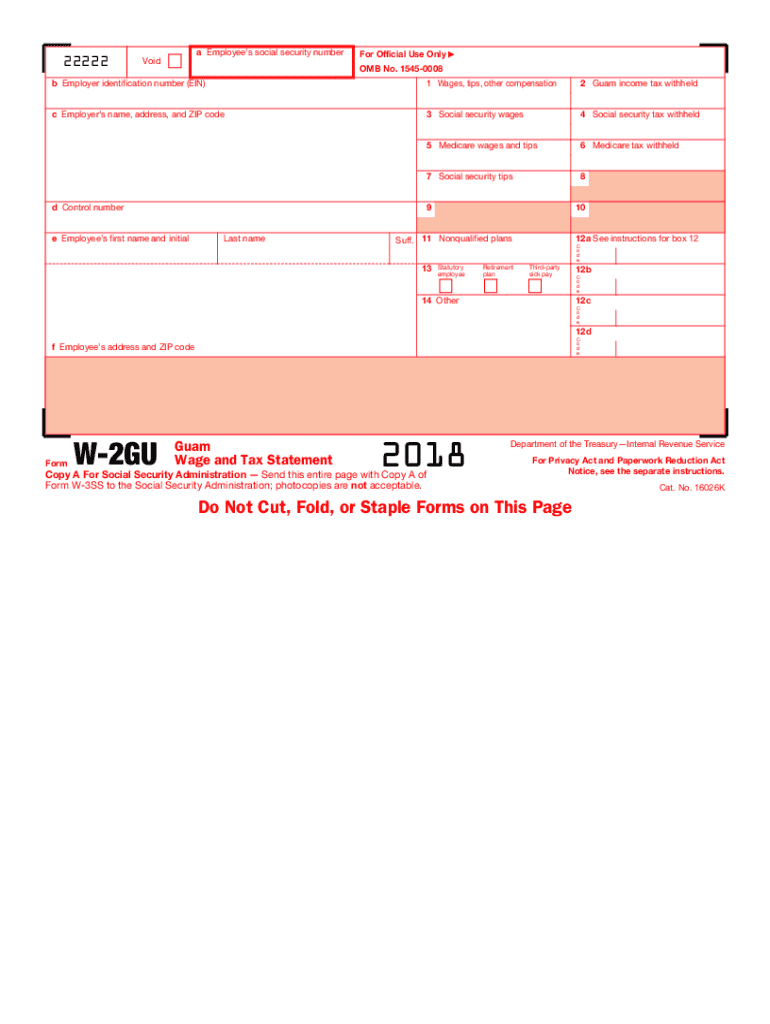
The "2018 W-2 template" refers to the standardized form used by employers in the United States to report annual wages and the amount of taxes withheld from employee paychecks for the year 2018. This form is essential for both employees and employers as it provides the necessary details needed for tax filing. Typically distributed in January following the tax year, the W-2 form is a critical element in preparing individual tax returns, as it outlines both federal and state tax withholdings, Social Security contributions, and other critical wage data.
How to Use the 2018 W-2 Template
Using the 2018 W-2 template involves several key steps. Employers must enter their information, including the Employer Identification Number (EIN) and employee details such as Social Security Number and address. The template requires accurate figures for wages earned, federal and state income tax withheld, and other relevant withholdings like Social Security and Medicare taxes. Employers should distribute a copy to every employee by January 31st of the year following the tax year in question. Employees use this information to file their personal tax returns with the Internal Revenue Service (IRS) and respective state tax agencies.
Steps to Complete the 2018 W-2 Template
- Employer Information: Fill in the employer’s name, address, and EIN.
- Employee Details: Include the employee's name, address, and Social Security Number.
- Wages and Tax Withheld: Accurately report total wages paid, and federal income tax withheld, along with Social Security and Medicare taxes.
- State and Local Taxes: If applicable, detail state income tax withholdings and local taxes paid.
- Double-check for Accuracy: Review every section for accuracy to avoid penalties.
- Distribute Copies: Provide the employee with their copy by January 31st and submit the required copies to the IRS and state tax authorities.
Key Elements of the 2018 W-2 Template
- Box 1: Wages, tips, and other compensation
- Box 2: Federal income tax withheld
- Box 3: Social Security wages
- Box 4: Social Security tax withheld
- Box 5: Medicare wages and tips
- Box 6: Medicare tax withheld
- Box 16 and Box 18: State wages, tips, and local wages
- Box 17 and Box 19: State and local income tax withheld
Each box is designed to collect specific information that contributes to the employee’s tax calculations and legal compliance.
Legal Use of the 2018 W-2 Template
Employers are legally obligated to provide this form to employees each year, ensuring compliance with the Internal Revenue Service guidelines. The W-2 is used to fulfill federal and state tax filing requirements, and discrepancies can result in audits or penalties. Accurate reporting of wages and taxes ensures the rightful calculation of employee taxes and benefits, including Social Security and unemployment insurance contributions.
IRS Guidelines
The IRS mandates that employers must use official W-2 forms without altering their layout. Electronic submissions of W-2 forms to the Social Security Administration (SSA) are required for companies issuing 250 or more forms. The SSA provides electronic filing options to streamline submissions, and detailed instructions are available to guide employers through the process. Ensuring compliance with IRS guidelines is crucial in avoiding fines.
Required Documents
Employers require the following documents when completing the 2018 W-2 template:
- Payroll records including total annual compensation, federal and state tax withholdings.
- Employee Social Security Numbers and legal names.
- Employer EIN for reporting purposes. Ensuring the availability and accuracy of these documents is vital for proper completion and submission of the W-2 form.
Penalties for Non-Compliance
Non-compliance with W-2 submission deadlines or inaccuracies can lead to significant penalties. The IRS imposes fines for:
- Late submissions.
- Incorrect information.
- Failure to provide employees with their W-2 forms on time. Penalties increase with the length of the delay, emphasizing the importance of strict adherence to deadlines and accuracy requirements.
State-by-State Differences
While the federal requirements for the W-2 form are standardized, states may have additional reporting requirements or specific submission deadlines. Some states mandate additional information on wages or employ separate filing deadlines. Employers must consult respective state tax agencies to ensure compliance with local regulations.