



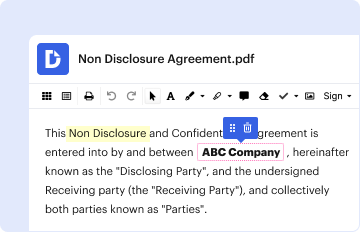
01. Edit your form online
Type text, add images, blackout confidential details, add comments, highlights and more.

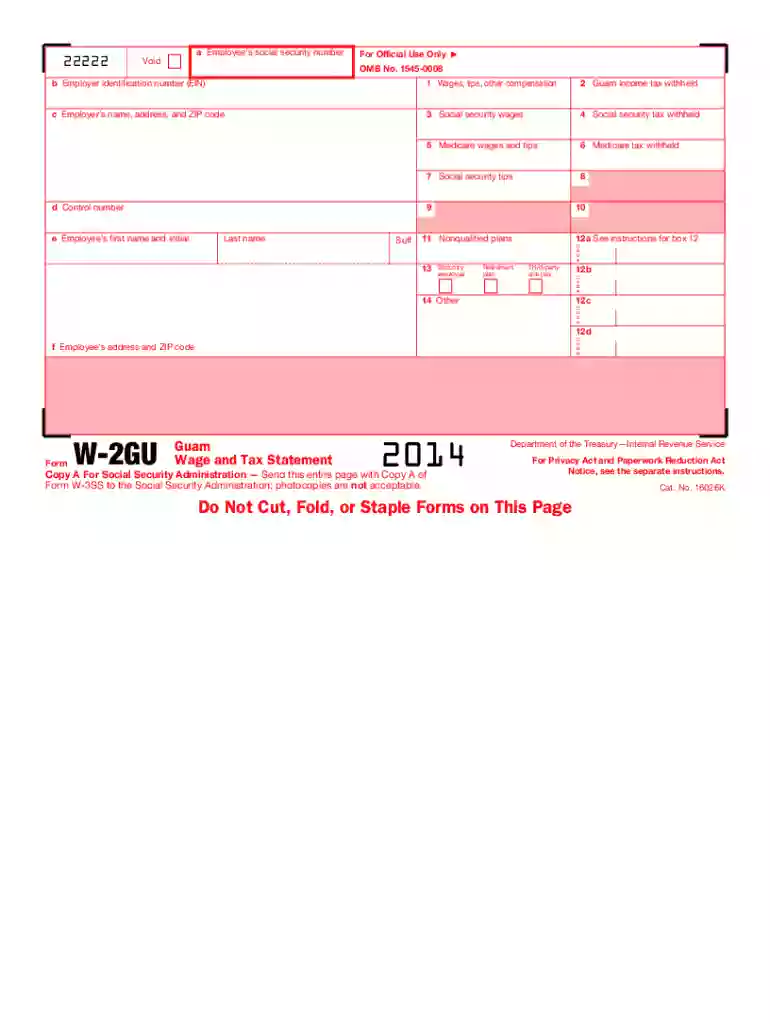
Type text, add images, blackout confidential details, add comments, highlights and more.
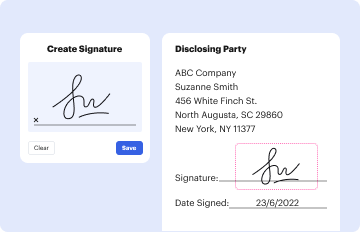
Draw your signature, type it, upload its image, or use your mobile device as a signature pad.

Send it via email, link, or fax. You can also download it, export it or print it out.
The 2014 Form W-2GU, Guam Wage and Tax Statement, is a tax form used by employers in Guam to document wages paid to employees and the taxes withheld during the tax year. Similar to the U.S. federal Form W-2, it serves a critical role in tax reporting, ensuring compliance with local tax regulations in Guam. This form provides detailed records of total earnings, Social Security, Medicare withholdings, and other deductions that are necessary for employees when filing their annual tax returns.
Understanding the essential components of Form W-2GU is pivotal for both employers and employees. Key elements include:
These elements ensure accurate reporting and compliance with local and federal tax laws and aid employees in accurately filing their personal tax returns.
Employers can procure the Form W-2GU through multiple avenues:
Accurately completing the form involves multiple steps for employers:
Meeting the deadlines associated with Form W-2GU is essential to avoid penalties:
Timely adherence to these dates helps maintain compliance and prevent late penalties.
The responsibility of issuing the Form W-2GU falls squarely on employers operating within Guam:
This delineation ensures clarity about the source and responsibility of the form's issuance within the corporate or organizational setting.
Failing to comply with the regulations surrounding the Form W-2GU can result in significant repercussions:
Ensuring timely and complete compliance minimizes legal and financial risks for employers in Guam.
Employers have options concerning how they manage the Form W-2GU:
Deciding between these formats depends on company size, resources, and the infrastructure available, providing flexibility in handling tax documentation.
Adherence to guidelines provided by the Internal Revenue Service (IRS) is critical:
These guidelines provide a framework to maintain adherence to both local and federal tax laws.
The form is commonly utilized by:
The usage highlights the form's intended demographic and the legal entities involved in tax reporting and compliance.


Employers may need to consider software compatibility for managing Form W-2GU:
Choosing the right software ensures efficient record handling and compliance with technology standards in managing tax documents.
We've got more versions of the 2014 Form W-2GU. Guam Wage and Tax Statement form. Select the right 2014 Form W-2GU. Guam Wage and Tax Statement version from the list and start editing it straight away!
| Versions | Form popularity | Fillable & printable |
|---|---|---|
| 2024 | 4.4 Satisfied (30 Votes) | |
| 2023 | 4.8 Satisfied (38 Votes) | |
| 2022 | 4.9 Satisfied (29 Votes) | |
| 2021 | 4.8 Satisfied (176 Votes) | |
| 2020 | 4 Satisfied (54 Votes) | |
| 2019 | 4.2 Satisfied (53 Votes) | |
| 2018 | 4.3 Satisfied (109 Votes) | |
| 2017 | 4.1 Satisfied (51 Votes) | |
| 2016 | 4.4 Satisfied (336 Votes) | |
| 2015 | 4 Satisfied (20 Votes) | |
| 2014 | 4 Satisfied (44 Votes) | |
| 2013 | 4 Satisfied (37 Votes) | |
| 2012 | 4 Satisfied (48 Votes) | |
| 2011 | 4 Satisfied (30 Votes) |
At DocHub, your data security is our priority. We follow HIPAA, SOC2, GDPR, and other standards, so you can work on your documents with confidence.
Returns filed electronically must be made in accordance with applicable revenue procedures, publications, forms, or instructions. (2) If the use of Form W-2 (Read more
May 2, 2017 You can use BSO to create, save, print, and submit Forms W-2c, Corrected. Wage and Tax Statement, online for the current year as well as forRead more
Be sure to ask your employer to file. Form W-2c, Corrected Wage and Tax Statement, with the Social Security with Guam, add the Guam income tax withheld to theRead more


