




01. Edit your pseg load letter online
Type text, add images, blackout confidential details, add comments, highlights and more.

Type text, add images, blackout confidential details, add comments, highlights and more.

Draw your signature, type it, upload its image, or use your mobile device as a signature pad.

Send it via email, link, or fax. You can also download it, export it or print it out.
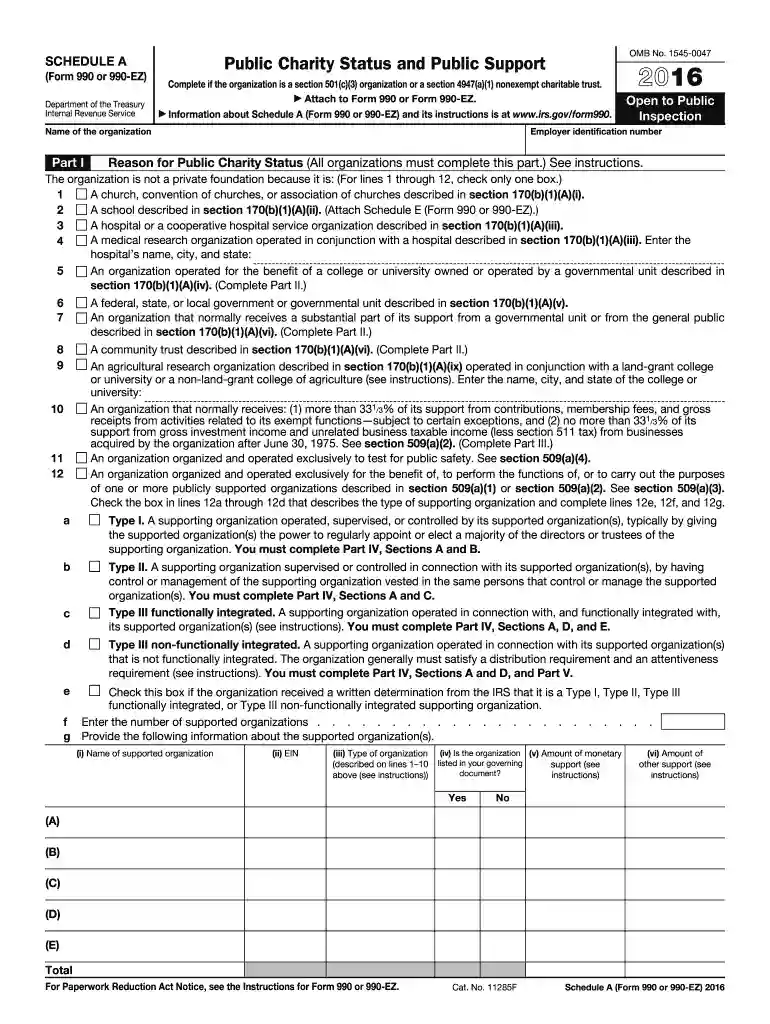
The 2016 IRS Form Schedule A, also known as the itemized deductions form, is used by taxpayers to report specific deductions that can reduce overall taxable income. It allows individuals to detail various expenses such as medical and dental costs, state and local taxes, mortgage interest, and charitable contributions. Using Schedule A can be beneficial for those whose deductible expenses exceed the standard deduction amount.
Form Schedule A must be attached to Form 1040, allowing tax filers to itemize their deductible expenses rather than taking the standard deduction. This form is beneficial when deductible expenses add up to more than the standard deduction amount applicable for that year.
Consider a taxpayer with significant mortgage interest and property tax payments. By itemizing, they can exceed the standard deduction, leading to potential tax savings.
To accurately complete the form, follow these steps:
This form is divided into several sections that cover different types of expenses eligible for deduction:
Typically, only the interest paid on a mortgage for a primary or secondary home is deductible. Other forms of personal interest, such as credit card debt, are not usually eligible.
Understanding key terms is crucial for correctly completing the form:
The IRS offers comprehensive regulations regarding Schedule A to ensure compliance:
Ensure only allowable expenses are claimed, as incorrectly claimed deductions can result in audits or fines.
In preparation for using Schedule A, gather the necessary documentation:
Utilize DocHub to organise and store these documents securely. Features such as secure sharing and document annotations can simplify managing tax-related paperwork.
Taxpayers can submit their completed Schedule A along with their 1040 form through various methods:
Electronic submission provides immediate confirmation, reducing the chance of processing delays compared to mail, where tracking and receipt verification are crucial.
We've got more versions of the pseg load letter form. Select the right pseg load letter version from the list and start editing it straight away!
| Versions | Form popularity | Fillable & printable |
|---|---|---|
| 2025 | 4.5 Satisfied (34 Votes) | |
| 2024 | 4.1 Satisfied (50 Votes) | |
| 2023 | 4.3 Satisfied (26 Votes) | |
| 2022 | 4.3 Satisfied (28 Votes) | |
| 2021 | 4.9 Satisfied (57 Votes) | |
| 2020 | 4.2 Satisfied (32 Votes) | |
| 2019 | 3.9 Satisfied (28 Votes) | |
| 2018 | 4.3 Satisfied (116 Votes) | |
| 2017 | 4.3 Satisfied (60 Votes) | |
| 2016 | 4.4 Satisfied (536 Votes) | |
| 2015 | 4.3 Satisfied (36 Votes) | |
| 2014 | 4 Satisfied (21 Votes) | |
| 2013 | 4.2 Satisfied (57 Votes) | |
| 2012 | 4 Satisfied (20 Votes) | |
| 2011 | 4.1 Satisfied (54 Votes) |
At DocHub, your data security is our priority. We follow HIPAA, SOC2, GDPR, and other standards, so you can work on your documents with confidence.


This list identifies the codes used on Schedule K-1 for beneficiaries and provides summarized reporting information for beneficiaries who file. Form 1040. ForRead more
by A SCHEDULE Cited by 4 ▶ Attach to Form 1040. Note: Your mortgage interest deduction may be limited (see instructions). If you made a gift and got a benefit for it, see instructions.
Jan 19, 2017 Attach a computation of your NOL using. Form 1045, Schedule A, and, if it applies, your. NOL carryover using Form 1045, Schedule B, discussedRead more


