






Definition and Meaning of Form 433-A (OIC)
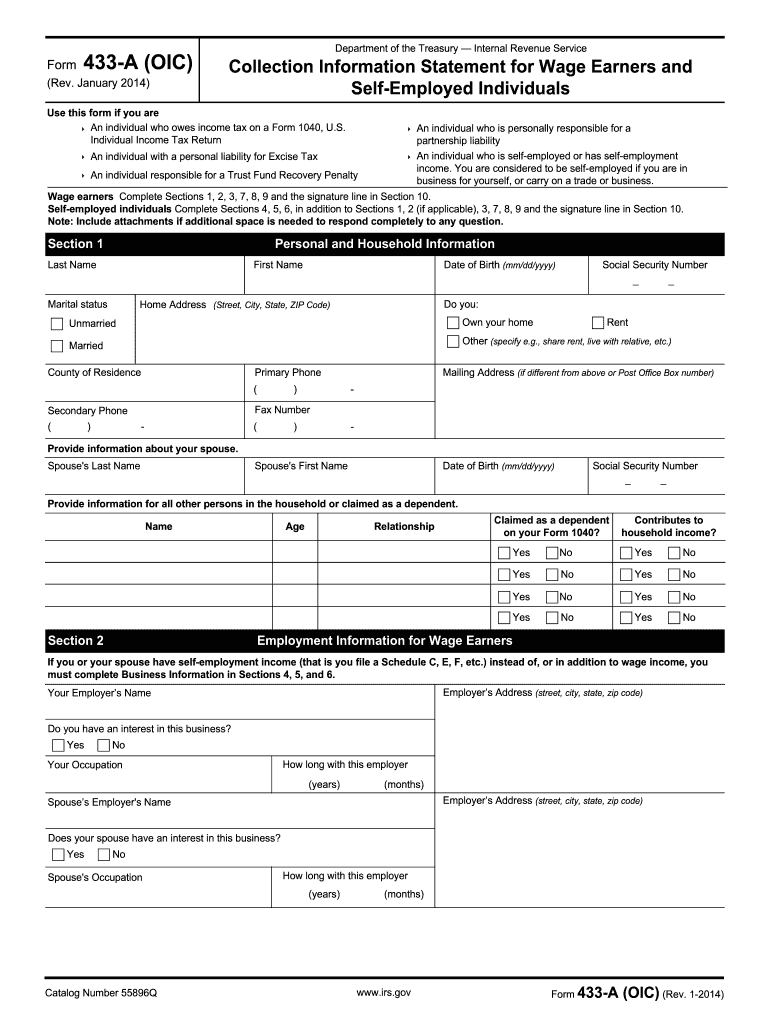
Form 433-A (OIC), also known as the form, is a Collection Information Statement used by the Internal Revenue Service (IRS) for evaluating an individual's financial situation. Primarily, this form is sought by wage earners and self-employed individuals who are looking to settle their tax debts through an Offer in Compromise (OIC). The form captures detailed personal, household, and financial information essential for the IRS to assess the taxpayer's capability to pay the tax owed. The aim is to present a comprehensive overview of one's financial status, including various assets, income sources, and liabilities.
How to Use the Form
When preparing to submit Form 433-A (OIC), individuals must thoroughly gather and organize financial data. The form requires detailed entries on personal information, including full name, address, and Social Security number, followed by sections detailing income, monthly expenses, and assets. Carefully document all sources of monthly income, including wages, salaries, and self-employed earnings. Pay attention to the sections requiring the disclosure of assets, real estate properties, and other valuable possessions. Use clear and accurate data to avoid discrepancies and potential rejection of the form.
Steps to Complete the Form
-
Gather Personal Details: Start by providing basic personal information such as your name, address, and taxpayer identification number.
-
Detail Financial Information:
- Assets: List all tangible assets, including real estate and vehicles.
- Income: Accurately report all forms of income, including employment and self-employment earnings.
- Expenses: Provide a detailed account of monthly living expenses, including rent, utilities, and insurance.
-
Review Sections for Business Owners: If self-employed, ensure to fill out additional sections detailing business assets and liabilities.
-
Verify and Sign: Double-check all information for accuracy and completeness before signing the form. Missing or incorrect data can delay the processing.
Required Documents
Completing Form 433-A (OIC) necessitates supporting documentation to verify the information provided within the form. Such documents typically include:
- Recent pay stubs or earnings statements
- Bank statements for at least three months
- Detailed records of monthly expenses (e.g., utility bills, rent receipts)
- Evidence of any assets, such as deeds or loan balances
- Recent tax returns to corroborate income reporting
These supporting documents are crucial in establishing an accurate picture of the taxpayer's financial standing.
Eligibility Criteria
Those eligible to use Form 433-A (OIC) generally fall into specific categories defined by the IRS. Both individuals and businesses burdened with substantial tax debt that eclipses their capacity to pay may consider applying to settle via an Offer in Compromise. Eligibility also extends to individuals facing profound financial hardship, hindering their ability to satisfy tax liabilities. It's vital for applicants to be current with all tax filings and estimations before submission.


Legal Use of the Form
Submission of Form 433-A (OIC) commits taxpayers to provide truthful representations of their financial situation under penalty of perjury. This implies understanding the legal requirement to offer an honest declaration regarding their income, assets, and liabilities. Any fraudulent information can lead to significant penalties or even legal action, emphasizing the importance of accuracy in the form's completion.
IRS Guidelines and Processing
The IRS provides explicit instructions for completing Form 433-A (OIC), designed to facilitate a fair and streamlined process. Applicants must follow these guidelines closely to ensure the best possible chance for their Offer in Compromise to be considered. The IRS prioritizes offers that appear reasonable based on an applicant's financial disclosures. It's important to note that any previous tax liabilities must be up to date to be considered for an OIC.
Examples of Using the Form
Consider John, a self-employed graphic designer who owes back taxes due to fluctuating freelance income. By providing the IRS with a detailed financial snapshot through Form 433-A (OIC), John can propose an Offer in Compromise more aligned with his current earning potential and obligations. Another example is Sharon, a retired teacher whose pension and social security benefits cannot cover her tax debt. The form allows Sharon to present her limited income and request a feasible settlement plan.
Penalties for Non-Compliance
Failing to accurately complete Form 433-A (OIC) or omitting crucial financial information can result in hefty penalties from the IRS, including the potential rejection of the Offer in Compromise. Non-compliance also extends to the timely submission of the form and related payments if accepted. Taxpayers need to understand these provisions to avoid additional financial burdens.