






Definition and Purpose of IRS Form 433-A
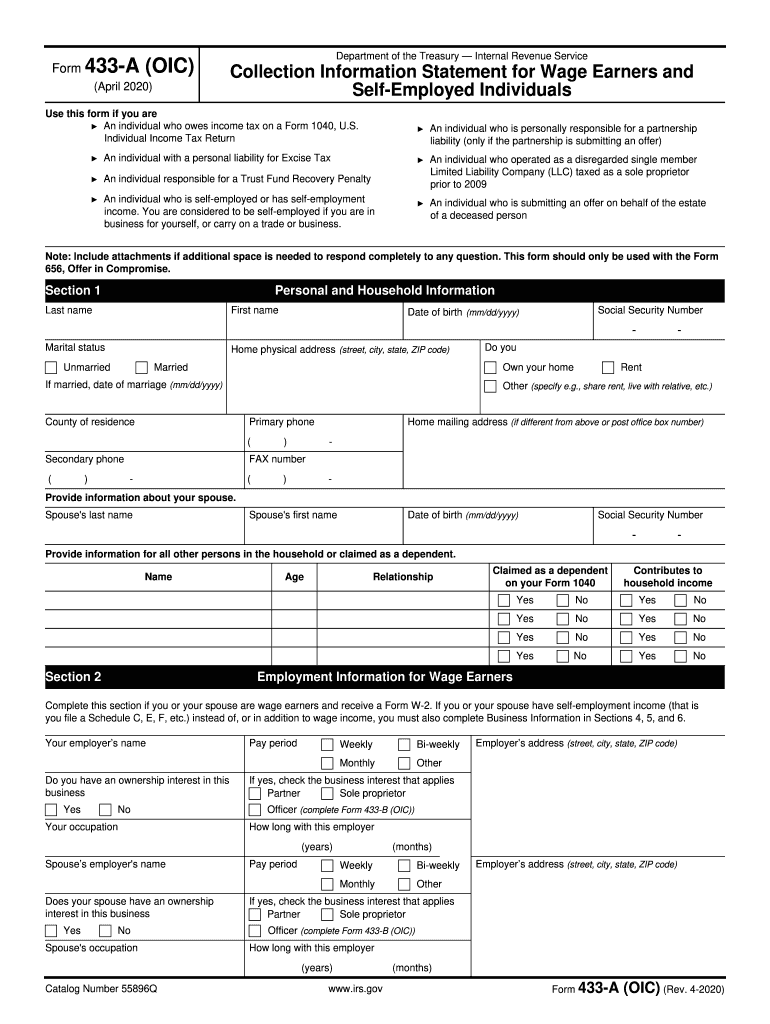
Form 433-A, also known as the Collection Information Statement for Wage Earners and Self-Employed Individuals, is a crucial tool used by the IRS to collect detailed financial information from taxpayers who owe back taxes. This form serves the purpose of assessing an individual's ability to pay their owed taxes by gathering extensive details about personal finances, assets, income, and liabilities. It is an essential step in negotiating payment plans or Offers in Compromise with the IRS, allowing taxpayers to potentially settle their debts for less than the full amount owed. The form is divided into sections to categorize various financial elements, aiming to present a comprehensive financial picture.
Key Sections of the IRS Form 433-A
Personal and Employment Information
- Personal Information: Includes name, social security number, and date of birth to verify taxpayer identity.
- Employment Details: Captures current job information, including employer's name, contact information, and monthly wages.
Asset and Liability Assessment
- Asset Valuation: Encompasses detailed listings of owned assets such as real estate, vehicles, and financial accounts. Provides the IRS with a snapshot of market value and ownership.
- Liabilities: Lists all outstanding debts, including loans and credit card balances, to detail the taxpayer’s financial obligations.
Income and Expense Evaluation
- Monthly Income: Requires disclosure of all sources of income, including wages, self-employment earnings, and other income streams like pensions or rental income.
- Monthly Expenses: Detailed accounting of necessary living expenses, such as housing, utilities, transportation, and medical costs, to identify disposable income.
How to Obtain IRS Form 433-A
You can obtain Form 433-A directly from the IRS website in a downloadable PDF format, which ensures you have the latest version. Alternatively, the form can be collected from IRS offices or requested by phone if internet access is unavailable. It's essential to ensure that the correct form version is used to comply with IRS standards.
Steps to Complete IRS Form 433-A
- Gather Documentation: Before beginning, collect all relevant financial documents, including bank statements, pay stubs, and property valuations.
- Fill in Personal Details: Start by completing basic personal details, ensuring accuracy in names, social security numbers, and contact info.
- Detail Employment Information: Provide current employment or self-employment details, including income verification.
- List Assets and Liabilities: Accurately list assets with current valuations and all liabilities, ensuring completeness.
- Record Income and Expenses: Provide precise monthly income figures and categorize expenses to reflect realistic minimum living expenses.
- Review and Confirm: After completing, double-check each section for accuracy and completeness.
Importance of Form 433-A for Tax Resolution
IRS Form 433-A is integral to negotiating settlements such as Offer in Compromise; it allows taxpayers to illustrate financial hardship or limited repayment capabilities. Accurate and honest completion of the form is critical to the approval of any negotiation with the IRS, impacting the agreement terms and potential reductions in tax liabilities.
Variations and Alternatives to IRS Form 433-A
Different versions of Form 433 might be used based on taxpayer circumstances. For example, Form 433-B is used for businesses, while Form 433-F is a simplified version intended for less complex financial situations. It's important to select the appropriate version based on specific needs and instructions from the IRS.
Eligibility Criteria for Using IRS Form 433-A
To use Form 433-A, the individual must be either a wage earner or self-employed facing financial difficulties in paying owed taxes. It serves taxpayers unable to fulfill tax obligations due to genuine financial hardships but aiming to work towards a resolution with the IRS.


Common Scenarios for IRS Form 433-A Submission
Self-Employed Individuals
- Utilizing the form to negotiate a manageable payment plan, acknowledging fluctuating income patterns.
Wage Earners with Substantial Medical Expenses
- When medical expenses significantly impact income, reducing the capacity to pay owed taxes, Form 433-A aids in communicating this to the IRS.
Retirees with Fixed Incomes
- For retirees on fixed incomes who face difficulties meeting tax liabilities, the form helps outline financial constraints and seek mitigated terms.
IRS Guidelines and Compliance for Form 433-A
Strict adherence to IRS guidelines when completing Form 433-A is essential. Maintaining accurate and truthful disclosure is mandatory, as any misinformation can lead to penalties or rejection of applications for tax relief. Compliance also involves timely submissions and cooperation with any additional information requests from the IRS.
Digital vs. Paper Versions of IRS Form 433-A
Though the IRS provides a digital PDF form for ease of use and distribution, taxpayers can also opt for a paper version if preferred or required by personal access to resources. Each form carries equivalent legal validity, and the choice depends on convenience and taxpayer preference for handling tax documentation.
Common Mistakes to Avoid When Completing Form 433-A
Incomplete Asset Information
- Overlooking or underreporting assets can derail agreement processes, so complete transparency is advised.
Misstating Income
- Accurate disclosure of all forms of income ensures the IRS accepts the financial narrative presented in the form.
Inaccurate Expense Representation
- Overestimating monthly expenses can flag inconsistencies, potentially complicating negotiations with the IRS.