



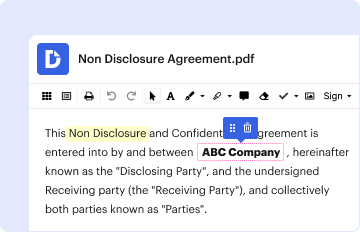
01. Edit your 2019 form 433 online
Type text, add images, blackout confidential details, add comments, highlights and more.

Type text, add images, blackout confidential details, add comments, highlights and more.
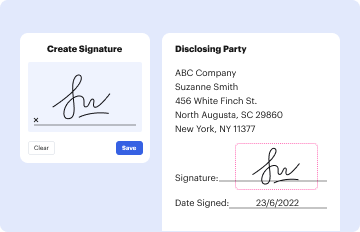
Draw your signature, type it, upload its image, or use your mobile device as a signature pad.

Send form 433 2019 via email, link, or fax. You can also download it, export it or print it out.
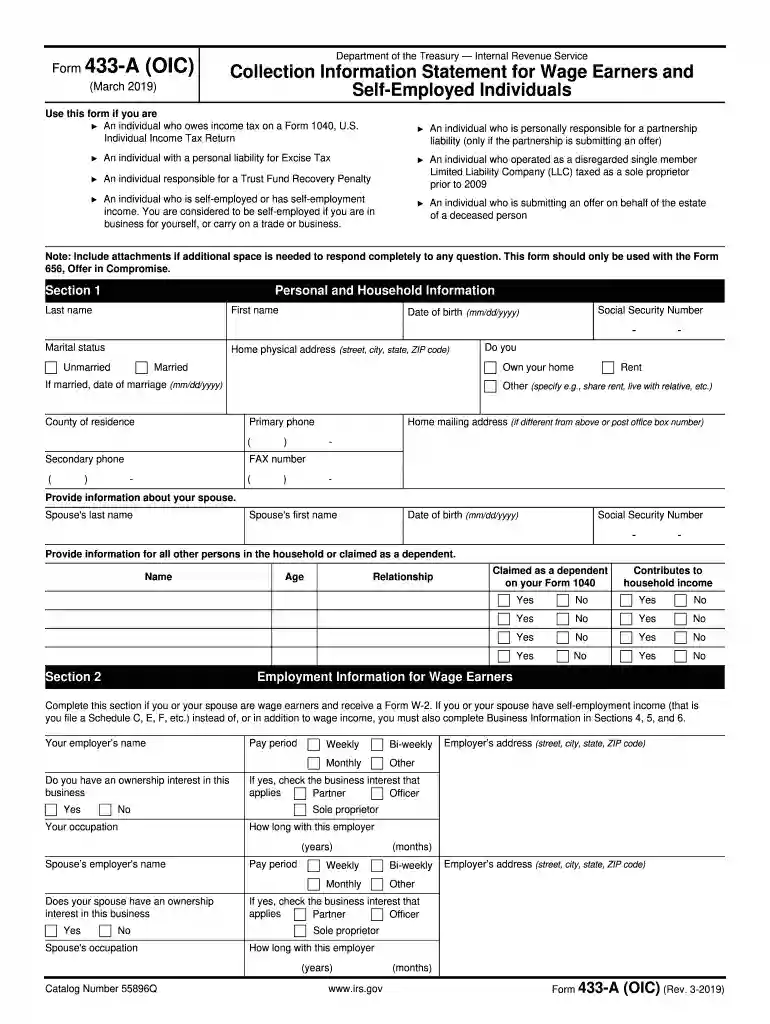
IRS Form 433-A (OIC), known as the Collection Information Statement for Wage Earners and Self-Employed Individuals, is essential for those negotiating an Offer in Compromise (OIC) with the IRS. This form collects comprehensive data on personal finances, helping the IRS assess the taxpayer's ability to settle their tax debt for less than the full amount owed. It is vital for individuals who owe income tax, excise tax, or face penalties to use accurate and up-to-date information to ensure their offer is considered.
The form serves as a documentation tool that allows taxpayers to propose a payment plan to the IRS based on their financial realities. It requires detailed entry of personal, financial, and employment data. When completing it, taxpayers must include information about household income, monthly expenses, assets, and liabilities. This allows the IRS to understand the taxpayer's financial situation fully. Accuracy is key, as any discrepancies can delay processing or lead to denial.
IRS Form 433-A (OIC) can be accessed and downloaded from the IRS official website at no cost. Alternatively, physical copies can be obtained from local IRS offices. It is advisable to use the most current version of the form, which is typically updated annually to accommodate changes in tax laws and regulations.
Gather Required Information: Before filling out the form, collect all necessary financial documentation, such as pay stubs, bank statements, loan agreements, and credit card statements.
Section Completion: Respond to each section with precision:
Review and Double-Check: Ensure all entries are accurate and supported by documentation.
Submission: Submit the form through mail or take advantage of online submission portals if available.
Filing IRS Form 433-A (OIC) is crucial for individuals seeking an Offer in Compromise. It requires displaying an accurate financial overview to negotiate tax settlements successfully. Without this form, the IRS is less likely to entertain settlement negotiations. Therefore, it acts as a foundational element in achieving a favorable outcome in tax debt negotiations.
Primarily, IRS Form 433-A (OIC) is utilized by individuals and self-employed taxpayers who are unable to pay their full tax liabilities. This includes those whose income levels are insufficient to cover their total tax debt, those experiencing financial hardship, and individuals with unmanageable expenses relative to their income.
Taxpayers must submit various supporting documents alongside Form 433-A (OIC). These typically include recent pay stubs, bank statements, mortgage or rental agreements, utility bills, and credit card statements. Providing these documents helps substantiate the claims made on the form, establishing credibility and thoroughness.
The IRS provides explicit guidelines to assist taxpayers in accurately filling out Form 433-A (OIC). These guidelines stress the importance of honesty and completeness. They also outline acceptable proof for income and expenses, making sure applicants understand the criteria for a realistic Offer in Compromise.
Failing to comply with submission deadlines or providing inaccurate information can lead to the rejection of the Offer in Compromise. In some cases, the IRS may impose penalties or additional interest on unpaid taxes. Therefore, proper completion and timely submission are critical to avoid complications.
To be eligible to use IRS Form 433-A (OIC), taxpayers must be up-to-date with all filing obligations. Only individuals in genuine financial hardship situations should apply, as the IRS evaluates each case on its merit. Specific guidelines state that typical eligibility is based on the taxpayer's reasonable collection potential.


Taxpayers may submit Form 433-A (OIC) via mail or electronically, where available. Using electronic submission can expedite processing time, provided all documentation is submitted in the specified formats. It's important to adhere to the IRS's instructions for submissions, as improper filing can result in delays or disqualifications.
We've got more versions of the 2019 form 433 form. Select the right 2019 form 433 version from the list and start editing it straight away!
| Versions | Form popularity | Fillable & printable |
|---|---|---|
| 2025 | 4.7 Satisfied (24 Votes) | |
| 2024 | 4.8 Satisfied (60 Votes) | |
| 2023 | 4.8 Satisfied (43 Votes) | |
| 2022 | 4.5 Satisfied (57 Votes) | |
| 2021 | 4.9 Satisfied (41 Votes) | |
| 2020 | 4.3 Satisfied (130 Votes) | |
| 2019 | 4.3 Satisfied (241 Votes) | |
| 2018 | 4.3 Satisfied (138 Votes) | |
| 2014 | 4.4 Satisfied (1237 Votes) | |
| 2012 | 4.3 Satisfied (61 Votes) |
At DocHub, your data security is our priority. We follow HIPAA, SOC2, GDPR, and other standards, so you can work on your documents with confidence.
iii) Form 656. iv) Form 433. v) Compile documents into exhibits. (1) Do not place more than one document into exhibits. (2) Separate exhibits with tabs. bRead more
This form should only be used with the Form. 656, Offer in Compromise. Section 1. Personal and Household Information. Last name. First name. Date of birth (mm/Read more


